


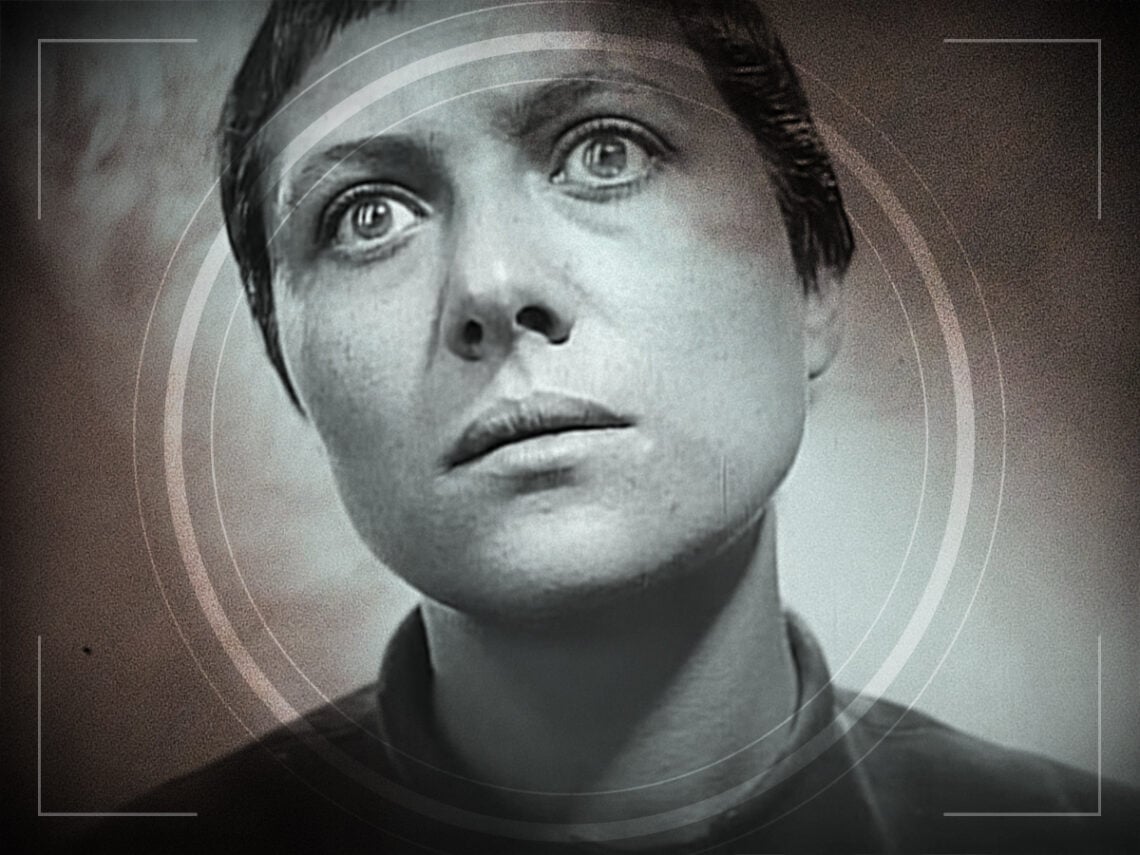
‘The Passion of Joan of Arc’: The lost masterpiece discovered in a broom cupboard after 50 years

The idea seems impossible in this modern age, but there are several important pieces of movie history that are completely lost to time.
The Mountain Eagle, the second movie ever directed by Alfred Hitchcock, was lost, with only a few still surviving. The original cut of The Magnificent Ambersons, Orson Welles’ follow-up to Citizen Kane, was destroyed when the studio wanted to re-edit it to create a happier ending.
Physical film is a very delicate substance that is so easy to damage, intentionally or otherwise. The sad truth is that most of these treasures will likely remain that way forever, as there was simply no other way of preserving them at the time. That being said, sometimes a ‘lost’ movie will be rescued from the shadows of obscurity.
A recorded version of Hamlet starring Welsh actor Richard Burton in the lead role was thought to have been completely erased, as per a stipulation in the star’s contract with the distributor. However, following his death in 1984, a surviving copy of the film was found in Burton’s garage. Similarly, a bonkers-sounding movie called Batman Dracula – directed by Andy Warhol, no less – was considered lost, until clips from it surfaced in a 2006 documentary about its star, Jack Smith. Then there’s the case of The Passion of Joan of Arc.
Released in 1928, this silent film from Danish director Carl Theodor Dreyer tells the story of the titular Maid of Orleans and the final years of her life. The finished product was considered a masterpiece, a breakthrough moment in terms of direction, production, and screen acting. The star of the piece, Renée Jeanne Falconetti, gives one of the most stirring, evocative accounts you are ever likely to see, a performance light years ahead of its time. Sadly, as with most revolutionary things, there were powerful people who didn’t like it.
The Passion of Joan of Arc was controversial from the very start. Hardline French nationalists thought it was outrageous that the story of one of France’s most iconic figures was being told by a foreigner. Government censors working alongside the Archbishop of Paris made several cuts to the film prior to its release, which infuriated Dreyer. Things went from bad to worse when a fire at a Berlin film studio annihilated the only remaining original cuts, meaning that Dreyer’s true vision was now just a legend. That was, until one fateful day in 1981.
A janitor at the Dikemark Hospital, a psychiatric institution in a suburb of Oslo, Norway, was cleaning out a cupboard one day when he discovered three film canisters hidden away. They had come from Copenhagen in Denmark and were addressed to Harald Arnesen, a former director of the hospital. After being analysed by Norwegian Film Institute, it was revealed that one of the canisters contained the original, unedited cut of The Passion of Joan of Arc, as Dreyer had intended it to be viewed.
The film was never shown in Norway, and even if it had been, why had these prints been sent to a hospital, of all places? As KV Turley of Catholic World Report writes in his article about the movie, “On account of the fact that her original accusers had branded Joan and her ‘voices’ madness, the place of this discovery appeared all the more ironic.”
