


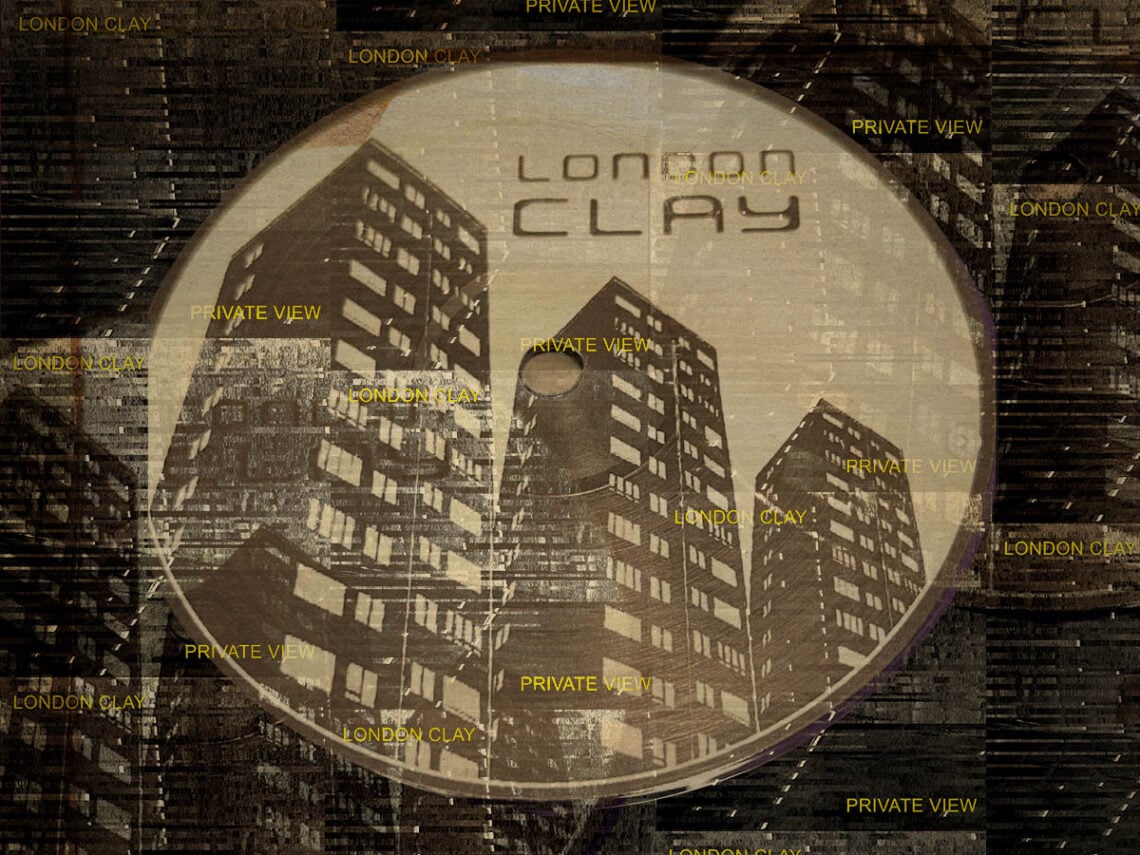
London Clay: post-punk electronics explore the capital’s dreams and malaise

The crowded convergence of post-punk and minimal-synth always works best when conjuring the anxieties of the day.
Amid a vast swathe of uninspired tape hiss noodles clogging Bandcamp or listless drum machine flumps that shuffle aimlessly in a dispassionate fug, a duo like London Clay can rise from the fraught capital’s troubled energy and remind you just how powerful the industrial underground can be.
Drawing on totemic examples set by Cabaret Voltaire or Suicide’s dilapidated electronics with the faint echo of From Nursery to Misery’s artful naivety, London Clay’s concrete synthwave scores a wholly contemporary urban milieu weathered, exhausted, and knackered by austerity’s perpetuity. The atmosphere is dark, the tensions subtle but stark, and each icy synth slice or brittle snare whip anxiously edges like a cornered animal. Behind their overcast swirl and leaden DIY collages lies a visceral electricity pointing toward a realm teeming with disparate energy belied by their mordant front, however.
Hailing from the city’s south, visual artist Gema Oliver and Hygiene drummer Pat Daintith formed London Clay during the depths of the Pandemic, experimenting with discarded instrumentation and free online music software. Ever responsive to a downloaded synth’s online removal or sudden obsolescence, each sketch worked out would exchange hands between the pair, adding layers one minute before peeling back sonic components lost to an online tool’s vanishing from their musical arsenal. Such a temperamental creative method glows from their work, a misshapen ephemerality coated in digital splinters and cracked urgency.
Named after the city’s unique geology, as well as Oliver’s work in ceramics, London Clay forms part of a loose collective that’s reached into the capital’s malaise and wrestled something strangely archaic amid their haunted futurism. As well as sharing kindred sonic spirits with the likes of The Sick Man of Europe or The Kitchen Sink Band, London Clay mines the sediments and layered earth as their name suggests, dwelling in the same mystical orbit of Index for Working Musik or Findom with a pulsing sound that feels connected to the area’s turbulent, woodcutted tapestry, despite their brutalist presentation.
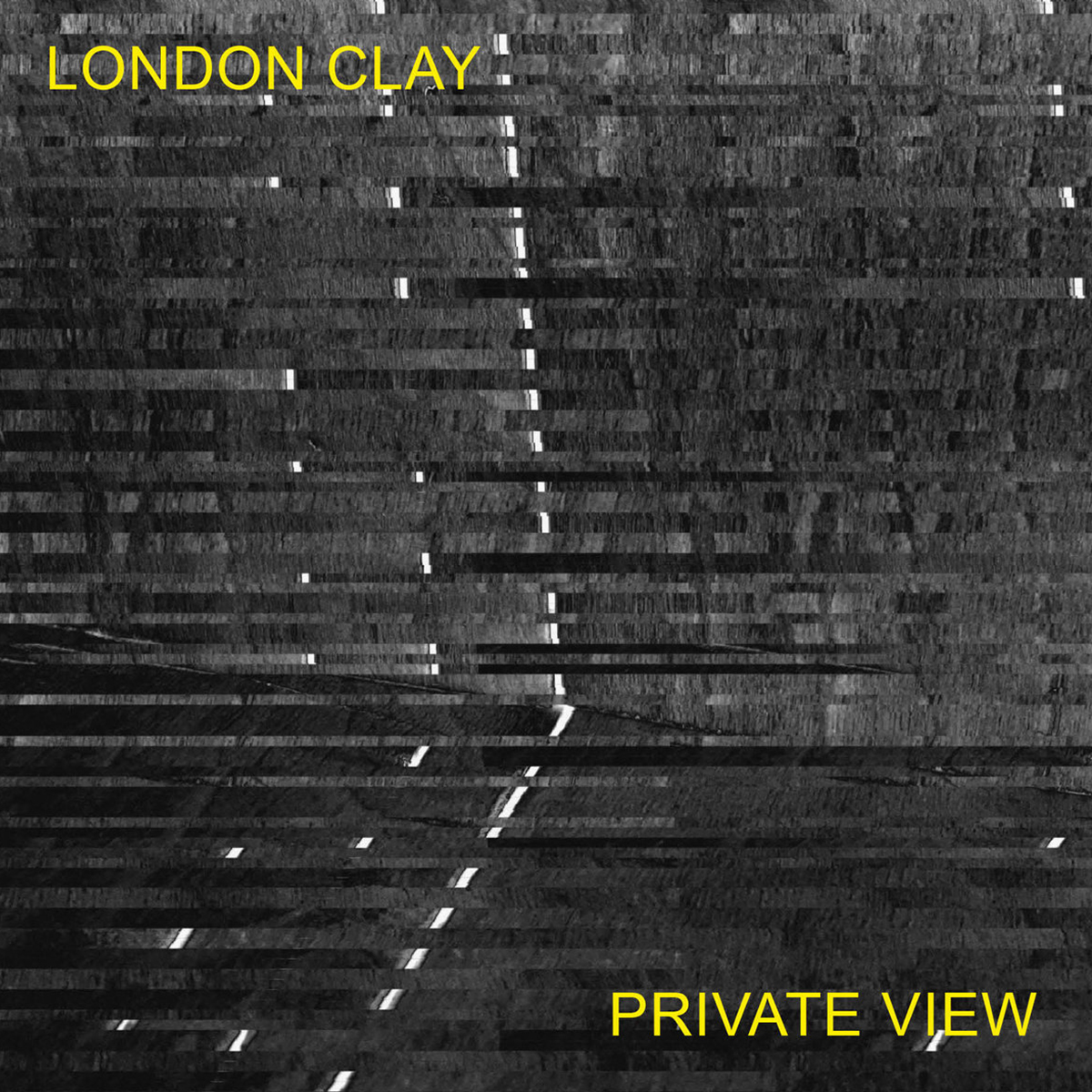
Dropping their debut album with Hackney’s La Vida Es Un Mus three years after their eponymous EP, Private View furthers a conceptual fascination with London, both as a spectral echo of its former, more confident self, as well as the aural excoriation of a metropolis unsure of its trajectory. ‘Semi Detached’ opens the slice of gloomy reportage with martial percussion and slithering synths illustrating the everyday cul-de-sac’s potent dead ends.
‘Desire Lines’ recalls the Dark Entries Records resurrections of 1980s groups like Solid Space, a foggy synth spooks around brittle percussion bites that just about touch a grubby pop hook, and ‘Smashing Time’ emits a forlorn groove akin to acid house at its most skeletal and festered.
Yet, Private View is no draining slog. What keeps the record from lapsing into one-note bludgeoning is the hope that London will shake off its wayward stult. Adopting a flâneuse’s observation of the city as she navigates the post-war ruins of a political terrain leading to its gentrified death grip, each snapshot of an abandoned retail lot, forgotten pub, or luxury apartment that no one can afford pangs with a pained longing for something better, a social landscape that all working-class people deserve, and thus a wish for healing London’s fraying material upend.
London Clay inhabits a wormhole to the 1970s’ pivot, when the post-war’s crumbling promise began to die and make way for the capital class’ reassertion of power. As well as flecks of Throbbing Gristle, early Human League, and The Normal, Private View evokes in the mind the vestiges of the big state dream, a Thamesmead estate that glowed with anticipation before being left to ruin and decay. Likewise, the duo too score a crossroads of the 2020s, a London and wider UK all too aware of the political roads it may hurtle down, crafting an electronic smog that bottles the worried energy of how our future might look like, with a dash of faint optimism that perhaps our collective will will chart the right course to rebuild and renewal.
Anything’s possible. Dreaming dystopian visions that speak to the contemporary rot while unveiling a shadow of what the city once was, London Clay has provided a soundtrack to the capital’s anguished flux that bristles with stale, discoloured essentiality.
Private View by London Clay