


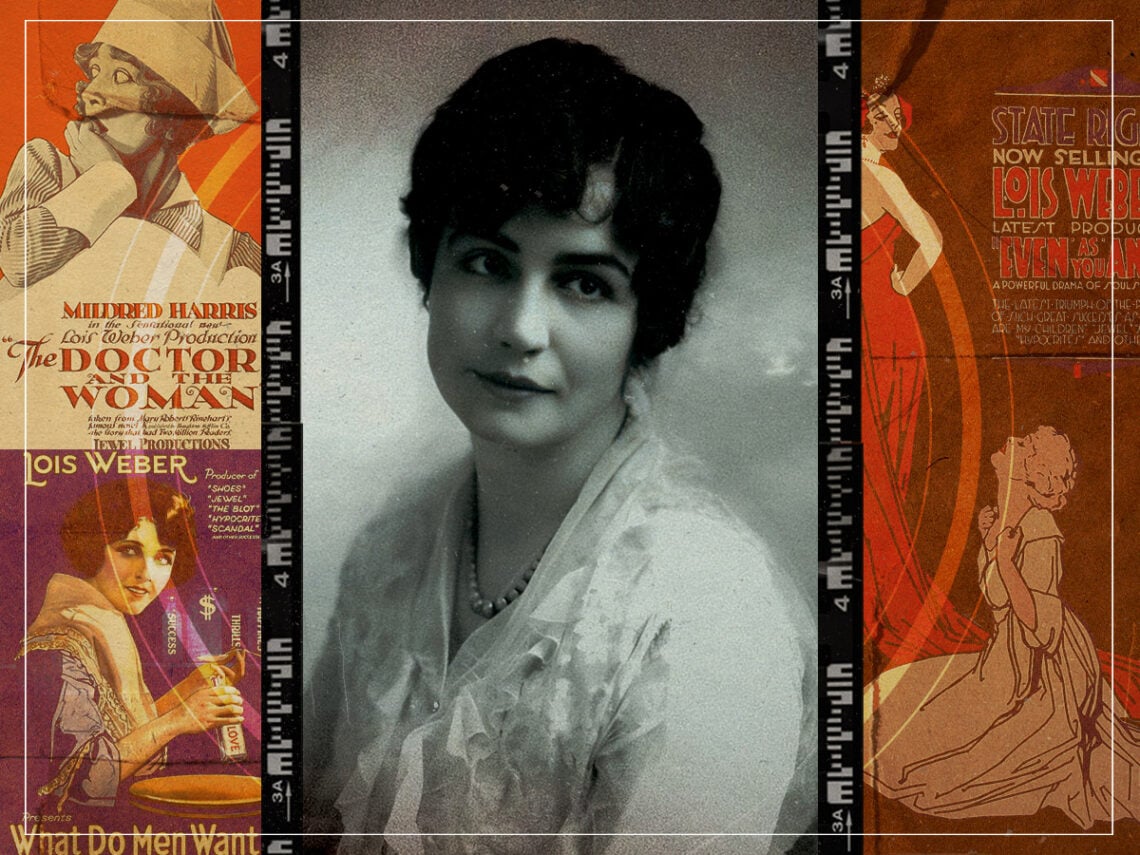
Lois Weber: one of cinema’s most pioneering women

When cinema started to become an art form rather than a new and novel way to depict scenes of everyday life, very few women could get involved in the production process. Besides a handful of female filmmakers who defied boundaries and made pioneering contributions to the medium, such as Alice Guy-Blaché, cinema quickly became a male-dominated playground.
The accessibility of cinema, as a visual medium, allows filmmakers to present a certain message or depict people in a specific way; it harnesses the power to shape the cultural narrative. Back in the early days of cinema, filmmakers were becoming increasingly aware of the power of using visual language to perpetuate certain ideologies, as demonstrated by 1915’s The Birth of A Nation. The film sparked a revival of the Klu Klux Klan, leading to an increase in racially-motivated violence.
With the industry quickly becoming dominated by white male filmmakers, cinema began to reflect an unequal depiction of society, prioritising the stories of men and often framing women or minority groups in stereotypical manners. This is still an issue prevalent in Hollywood today, but thanks to certain female filmmakers who emerged during cinema’s early years, a path was laid out which has helped to bring more opportunities to women with the desire to become directors and screenwriters.
One of these women was Lois Weber, who started out as an actor. She then began working for the Rex Motion Picture Company, where she co-directed her first short, A Heroine of ’76. As she began directing more films, often in collaboration with her husband, Phillips Smalley, it became apparent that she was interested in innovation and pushing boundaries, both thematically and stylistically.
In 1913, Weber helmed Suspense, which used early split screen techniques to depict a phone call, something that has appeared in popular movies ever since, from When Harry Met Sally to Mean Girls. The film is a thrilling early example of a car chase, too, with the narrative following a husband attempting to get home from work after he discovers that a burglar has entered the house while his wife and baby are alone. That same year, she made a film called The Jew’s Christmas, which rallied against anti-Semitism, and a few years later, she explored abortion in Where Are My Children?. Weber constantly attacked social institutions, even if it meant that some of her films were targeted by censorship.
Still, that didn’t stop her from gaining recognition, and she became the most significant female director in the industry. Weber soon started her own company, Lois Weber Productions, demonstrating that women were more than capable of working high-profile jobs in the industry. She championed many other burgeoning female filmmakers while continuing to raise awareness of social issues through her works as the years progressed.
Weber was prolific, and with that came many cinematic firsts, such as the first-ever female nude scene in a movie not used for pornographic purposes. Only in 1896 had the first kiss been depicted on screen – causing mass outrage despite being little more than a peck – so for Weber to show a naked woman in her 1915 film Hypocrites was shocking. The actor, Margaret Edwards, portrayed the ‘Naked Truth’, which is why she appeared, apparition-like, in the nude, causing much controversy in the process.
Weber made many works that veered away from the traditional Hollywood studio production style, but her output soon decreased as she got older (she often penned scripts instead of directing). She died in 1939 with barely any money to her name, having largely been forgotten as cinema rapidly progressed. She deserves to be more widely remembered for her pioneering efforts, blazing a trail which many female filmmakers have been able to walk in her wake.
