


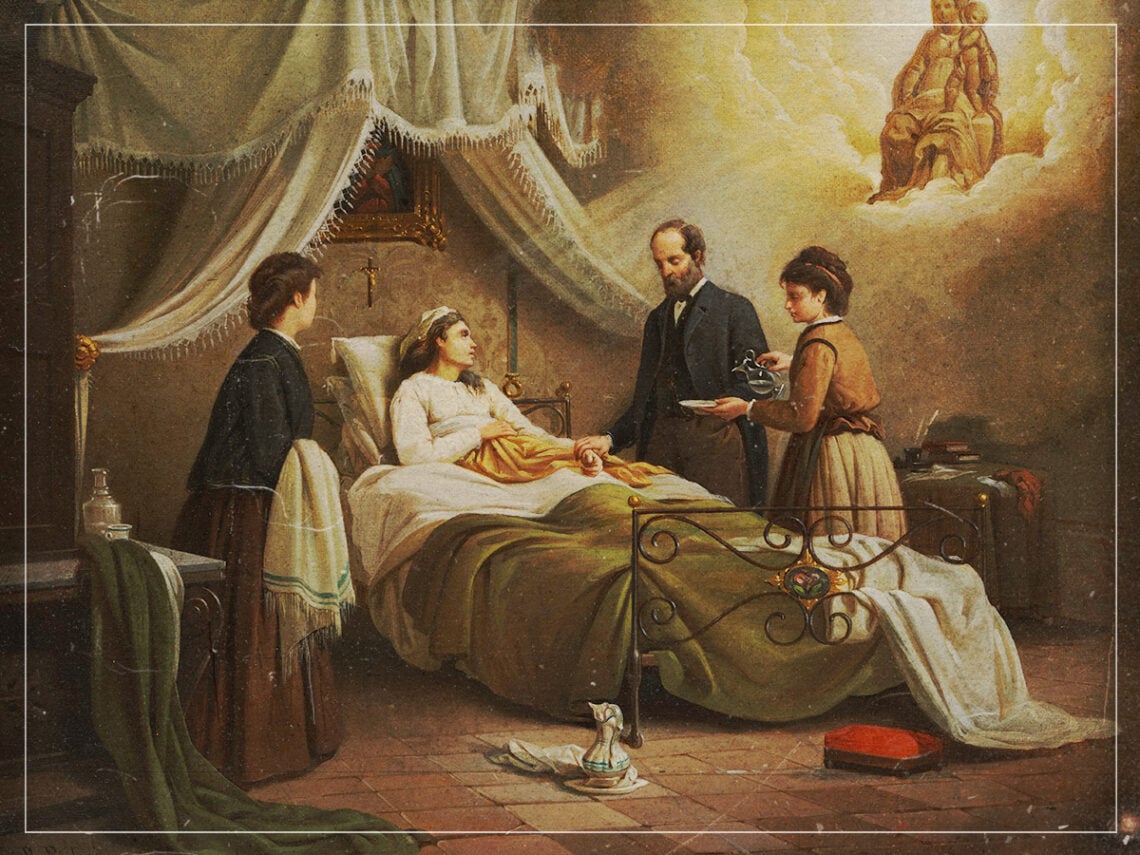
Night brain and flirting headaches: literature’s weirdest female deaths

Women in literature suffer. Whether it’s at the hands of villains, lovers, or bad writing – their role is, more often than not, coloured by some sense of tragedy, and nowhere is that more evident than in writing from around the 19th century. While it was a period marked by progress and great books and novelists emerged from it – the likes of Charlotte Brontë, George Eliot, and Mary Shelley – the female perspective is sorely lacking from many a death scene.
Fragility is a consistent theme, particularly for women written by men, and it takes little more than “cold hands” and “drawing-room anguish” for many of them to meet their end. This chimes with the treatment of women at the time, recalling the ludicrous treatments for hysteria. Characterised by mental instability, anxiety or depressive episodes, doctors would confine women to bed rest, all for cycling through various normal emotions. Treatments like electroshock therapy could be cruel, and enforced rest ridiculous.
It speaks to the societal need to tame women’s emotions and also the urge to exaggerate them as a tool to control. At the time, women were unable to write about this specific mistreatment, likely because “a fondness of writing” fell under the female hysteria symptom list.
Take Emma Bovary from Gustave Flaubert’s Madam Bovary. Although she eventually takes arsenic and dies by her own hand, it was her love of books that drove her to it. After reading too many novels, she became too wrapped up in her romanticised ideals and was spiritually crushed when real life couldn’t deliver them. Likewise, in Alfred Tennyson’s The Lady of Shalott, Elaine of Astolat seemingly dies because she’s so beautiful: “Lancelot mused a little space / He said, ‘She has a lovely face / God in his mercy lend her grace / The Lady of Shalott.'”
Throughout the laundry list of strange deaths, you’ll find that beauty and refined tastes in art and books are real silent killers. These things were considered dangerous in women’s hands primarily because it made them more desirable. While the beauty could be tolerated, in slowly gaining autonomy over their own cultural tastes, they were becoming too independent. The literary answer at the time was simple: punish them with a series of weird deaths with no scientific explanation beyond their inherent weakness.
Some of them make vague medical sense if you take 19th-century diagnoses with a pinch of salt. “Letter reading fits” and “drawing-room anguish” could be taken as shorthand for emotional trauma bursting out in strange ways. The same goes for “night brain”, a curious ailment suffered by the likes of Anna Karenina, which resembles chronic depression and general confusion in the face of heartbreak and disappointment. Other perilous fates were written to illustrate that beautiful women were fallible too, evident in deaths caused by having “beautiful chestnut hair” or, even more simply a “beautiful face”.
When female characters of the time weren’t being holed up in attics like Bertha Mason, they could be found drawing their last breaths when confronted with too many pillows or insufficient shawls. Long before Otessa Moshfegh wrote My Year of Rest and Relaxation, tragic female characters found themselves so affronted by life’s many difficulties (including but not limited to cold hands and flirting headaches) that they died rather than suffer them.
Things women in literature have died from:
- Cold hands
- Beautiful face
- Missing slippers
- Wrist fevers
- Night brain
- Going outside at night in Italy
- Shawl insufficiency
- Too many pillows
- Garden troubles
- Someone said “No” very loudly while they were in the room
- Letter-reading fits
- Drawing-room anguish
- Not enough pillows
- Haven’t seen the sea in a long time
- Too many novels
- Pony exhaustion
- Strolling congestion
- Sherry served too cold
- Ship infidelity
- Spent more than a month in London after growing up in Yorkshire
- Clergyman’s dropsy
- Flirting headaches
- River unhappiness
- General bummers
- Knitting needles too heavy
- Beautiful chestnut hair
- Spinal degeneration as a result of pride
- Parents too happy
- The Unpleasantness
