


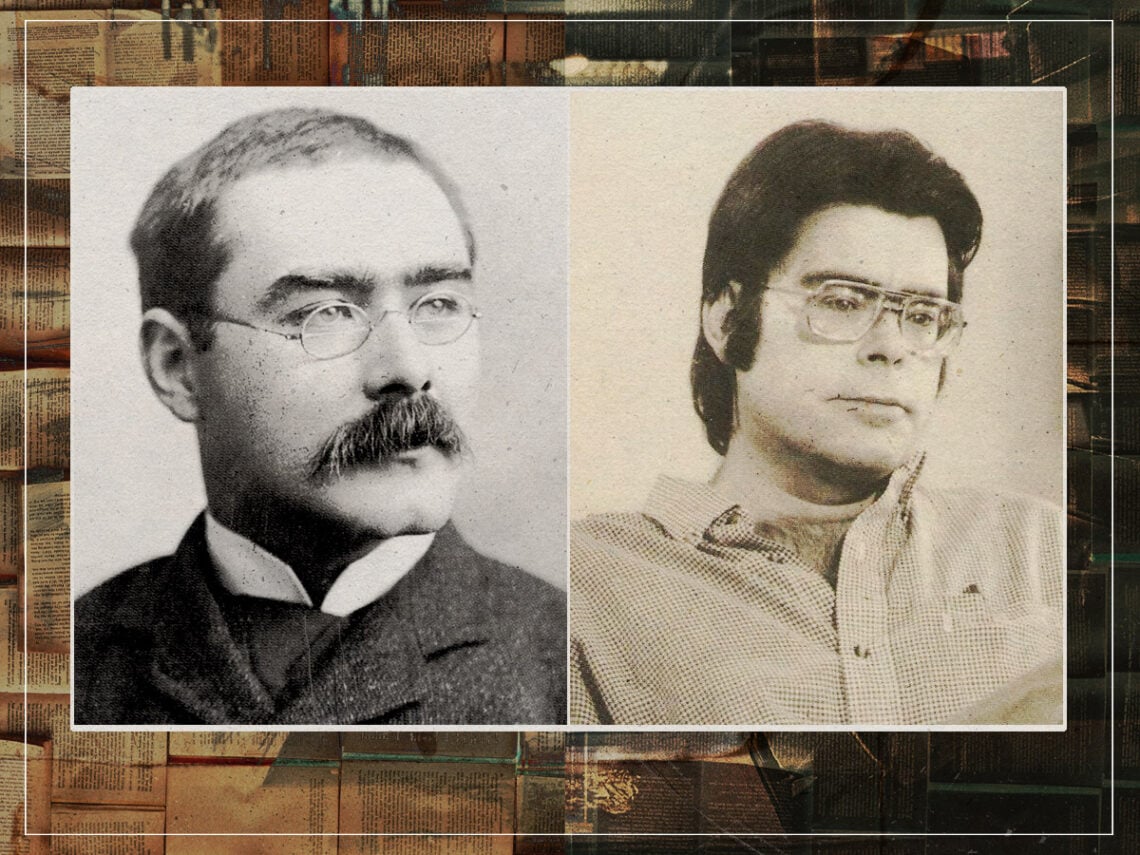
How Rudyard Kipling inspired Stephen King’s ‘Misery’ writing

If there were ever a king of horror fiction, then the crown would simply have to go to Stephen King. After all, King has established himself as the master of the genre and became one of the best-selling novelists of all time, delivering several works of fiction that have been adapted for the screen on many brilliant occasions.
While the likes of Carrie, The Shining, The Green Mile and It can often take the limelight when it comes to King, especially considering their iconic film adaptations, there are many other works to have come from the mind of the Maine-born author. Take 1987’s Misery for example, which itself was the basis for Rob Reiner’s 1990 film starring James Caan and Kathy Bates.
The psychological horror thriller novel focuses on the relationship between a romance novelist, Paul Sheldon, and his psychotic, self-proclaimed number-one fan, Annie Wilkes. The narrative tells of how Paul is injured in a car crash and is taken to Annie’s home by the former nurse for treatment, but soon, he realises that he is being held captive.
Misery was written by King while he was in the throes of his severe cocaine addiction, and he once admitted that Annie serves as the analogue for the white powdery drug that King had developed an unavoidable penchant for. There’s another interesting story surrounding the 1987 novel, and how it relates to the English writer Rudyard Kipling.
Kipling was known for his Jungle Book stories, as well as a number of short stories and poems, including ‘The Man Who Would Be King’ and ‘If-‘, and received the Nobel Prize in literature in 1907. In a conversation at the JFK Library, King once explained the link between his novel Misery and Kipling.
King had been in England, and when staying at a hotel in London, he fell asleep and dreamt about a woman who took a writer prisoner, “skinned him and bound a final book in his skin”. Due to jetlag, King couldn’t sleep properly, although his wife and children seemed to be off in the land of nod.
Always looking to flex his creative muscles, King went downstairs to the hotel and asked someone if there was somewhere suitable for him to write. An employee of the hotel took him back upstairs onto the landing “between the ground floor and what the Brits call the first floor”. Standing before a “beautiful desk”, King was quickly informed that it was indeed the desk of Rudyard Kipling.
King felt that he couldn’t write at such a desk, but the hotel employee absolutely insisted. King explained, “So I sat down, and I started to write Misery at Rudyard Kipling’s desk. And they brought me buckets and oodles and buckets of tea. And I’m writing and drinking tea”.
Eventually, though, nearing the end of his writing session, the manager of the hotel came back up to King at Kipling’s desk and told him that he was sitting in front of the very place where he died. The horror writer noted, “He had a stroke and dropped dead at his desk! And that was one more thing to be scared of.”
A fitting part of the story, then, especially considering his horror leanings, for King to be sat at the desk of a dead writer exactly where he had died, writing about a fictional author about to become mincemeat as a result of his deranged fan, which may just be the most meta moment of Stephen King’s career.
