


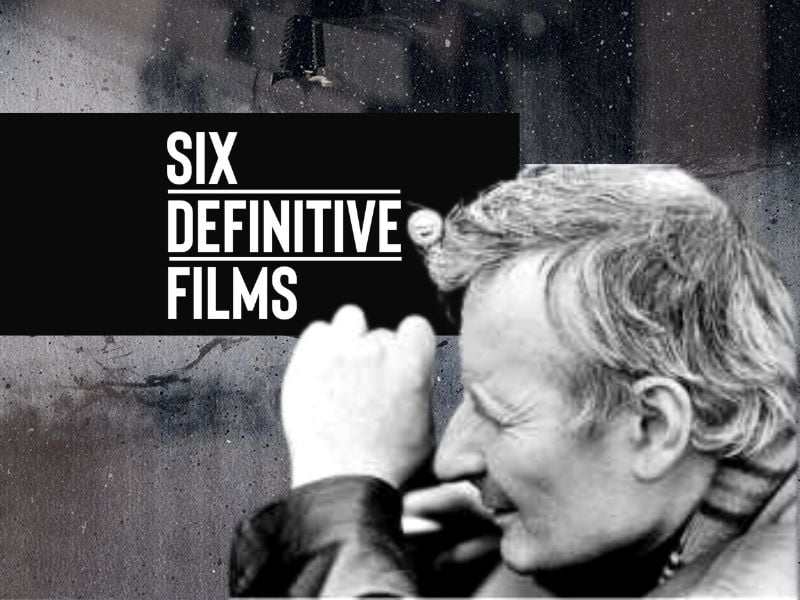
Six Definitive Films: The ultimate beginner’s guide to Lindsay Anderson

Lindsay Anderson is regarded as one of the most important pioneers of the British New Wave. Known for his culturally important works such as If…, Anderson introduced bold ideas to the framework of British cinema and was a major artistic voice during the development of the Free Cinema movement in the country.
Born in Southern India, Anderson served in the Army and worked as a cryptographer during the Second World War. Before he started his journey as a groundbreaking filmmaker, Anderson was a well-known film critic and was deeply influenced by socialist sociopolitical theory, which became the basis of his cinematic vision.
Throughout his career, the British director produced several remarkable features and documentaries, now seen as definitive cultural artefacts from various periods in Britain’s history. To help you get started with Anderson’s filmography, we have curated a list of six essential works directed by him.
Lindsay Anderson’s six definitive films:
This Sporting Life (1963)
One of the major achievements within the domain of kitchen sink realism, This Sporting Life, is an unforgettable portrait of masculinity and existentialism. The film explores the manifestation of human ugliness in a world stripped of its moral cores.
It tells the story of a rugby player who earns all kinds of accolades on the field, but his inner world is completely empty. In an attempt to fill his existence with meaning, he tries to court his landlady, but this has disastrous consequences.
The White Bus (1967)
Another landmark in the history of British cinema, The White Bus is an avant-garde 1967 short feature which incorporates surreal elements. It follows an ennui-filled young office clerk who boards a bus from North London but gets taken on a bizarre journey.
Shot in about a month, The White Bus is one of Anderson’s most personal works because it brings out his artistic sensibilities like no other. This production had other planned sections, but they developed into new projects.
If… (1968)
One of the greatest British satirical works of the 20th century, If… was the film which established Anderson as a major artist within the landscape of global cinema. It is a continuation of Anderson’s anti-establishment tendencies, articulated in brilliant ways.
The film stars Malcolm McDowell and explores the pernicious ideological repression in educational institutions. Anderson films the violent insurrection at an all-male boarding school, capturing the essence of youth rebellions.
O Lucky Man! (1973)
The next step in the legacy of McDowell’s iconic character in If…, O Lucky Man! is a strange musical which serves as a poignant critique of capitalism. Initially, it was developed from McDowell’s experiences as a coffee salesman during his 20s.
Anderson conceptualised it as a documentary about Alan Price, but it became the second instalment of the famous Mick Travis trilogy. Although it didn’t reach the artistic heights of If…, the 1973 effort is still interesting due to Anderson’s innovative techniques.
In Celebration (1975)
An adaptation of David Storey’s eponymous theatrical production, In Celebration, is set in a Derbyshire mining town. It is about three brothers who left searching for professional careers, but their fate has led them to wildly differing places.
Playing with the tension of a family reunion, Anderson created a family drama which is full of suspense and emotions. Featuring wonderful performances from a stellar cast, In Celebration might not be as famous as some of Anderson’s other films, but it deserves more attention.
Britannia Hospital (1982)
The final addition to the Mick Travis trilogy, Britannia Hospital, situates McDowell’s character in a surreal version of Britain. After seeing him as a delinquent student and a coffee salesman, we witness the final leg of his journey, where he appears to be a reporter.
Anderson reflected: “The film ends with a question mark, not a solution, and people don’t like that. They want to be let off the hook, and this film impales the audience on rather a large hook. I think that if we are going to find solutions, we’re not going to get any help from God, or any pre-sold political notions. The big question remains whether we are good enough or intelligent enough to survive.”
