


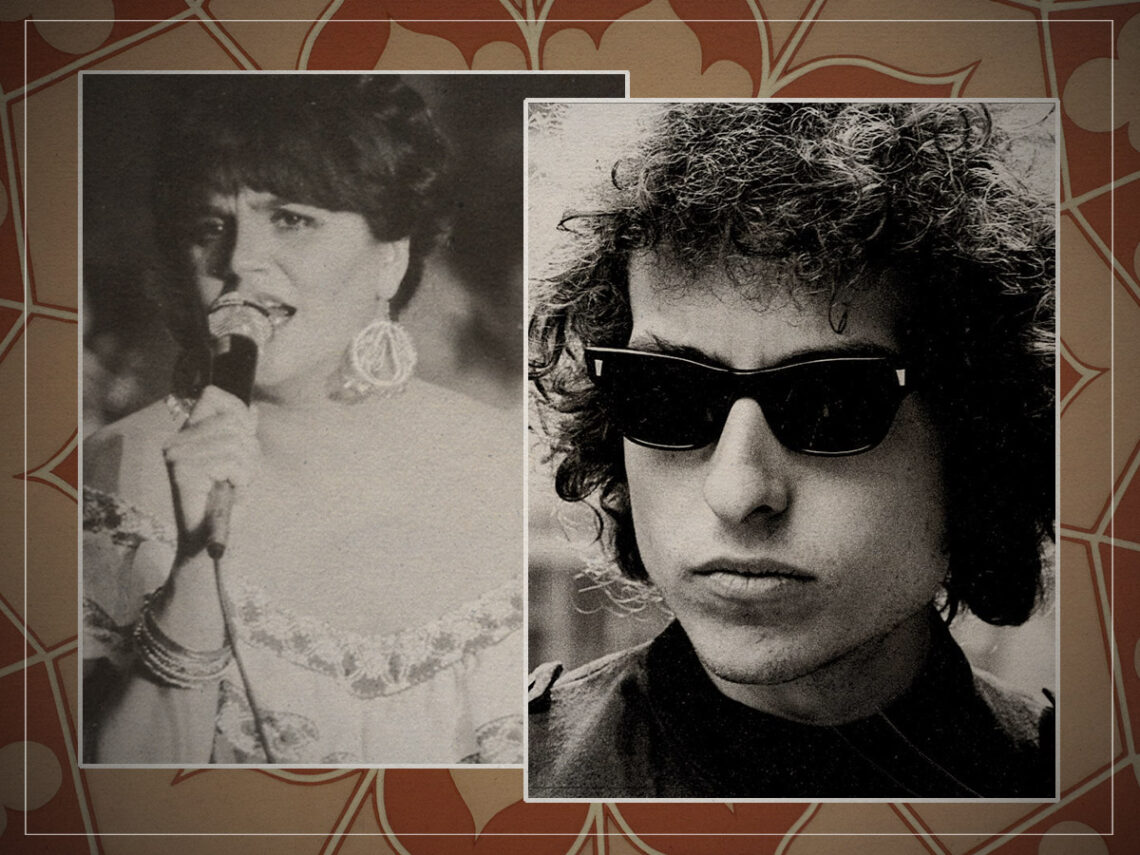
Why Linda Ronstadt “never bought into” Bob Dylan and the hippie movement

When considering the legacies of some of the world’s more historically and culturally significant venues and neighbourhoods, it’s easy to imagine them as bustling creative hubs that everybody wanted to be a part of. While that, for the most part, was true, Linda Ronstadt often provides a more ambiguous recollection, suggesting that behind the magic was a far from perfect realm.
Perhaps this is because, unlike many of her peers, Ronstadt never set out to “make it”. In fact, she was happy for any opportunity she got, and would have been just as appreciative playing small clubs and pubs as stages big enough to house audiences that made it more worthwhile. However, playing music also meant taking part in some of the more defining scenes, with the Laurel Canyon pool of the 1960s offering a creative community with its coveted locations like the Troubadour.
For Ronstadt, these scenes were brimming with intense ambiguities, with those holding genuine talent and know-how often eclipsed by their louder, less fair counterparts, while others, like her, observed from the sidelines, noticing how the shadows were filled with people too afraid to raise their voice in case they got it all wrong. “It wasn’t completely pleasant,” she once recalled to Mojo, recalling how she felt like many kept to themselves “in case you had the wrong opinion.”
Elsewhere, she told Record Collector that the Troubadour was also “a little microcosm” that was sometimes entirely magical, filled with people who influenced each other and even sometimes offered a shoulder to cry on. It seemed like the perfect place to start, until platforms grew too large and the place was left behind, collecting dust as a mere chapter in an otherwise storied journey. While she remains fond of the achievements of the Eagles, Jackson Browne, and JD Souther, she seemed less sure of another defining ringleader and cultural moment.
“I’ve been around situations where everybody was trying to be hipper than thou and pull all of the hip people into one corner of the room and laugh at the people that weren’t hip,” she bluntly opined. “There was a lot of that in the ’60s, around Bob Dylan and a lot of those English bands. I never bought into that. It was so competitive and all about looking down at other people and trying to make them look bad.”
Ronstadt’s dismissal evidently came from a more protective place, especially as someone who knew and understood the hard work needed to step foot in these circles in the first place. In her view, it didn’t matter who was “hipper”; success and respectability were defined by who was in it for the right reasons and tried to make the best art they possibly could. And those who pushed a movement that often felt synthetic only ended up seeming that way themselves.
Around this time, it was often difficult for people to decipher which stood firmly on which side, especially with acts like Dylan, who seemed more like a resigned, mysterious figure who had no choice in becoming a pillar of the counterculture movement. However, that uncertainty drew people in more, with many assessing his intertwining with cultural rebellion as an admirable quality. Still, whether counterculture was as crucially artificial as many implied it to be remains a point of contention.

Never Miss A Tale
The Far Out Bob Dylan Newsletter
All the latest stories about Bob Dylan from the independent voice of culture.
Straight to your inbox.