


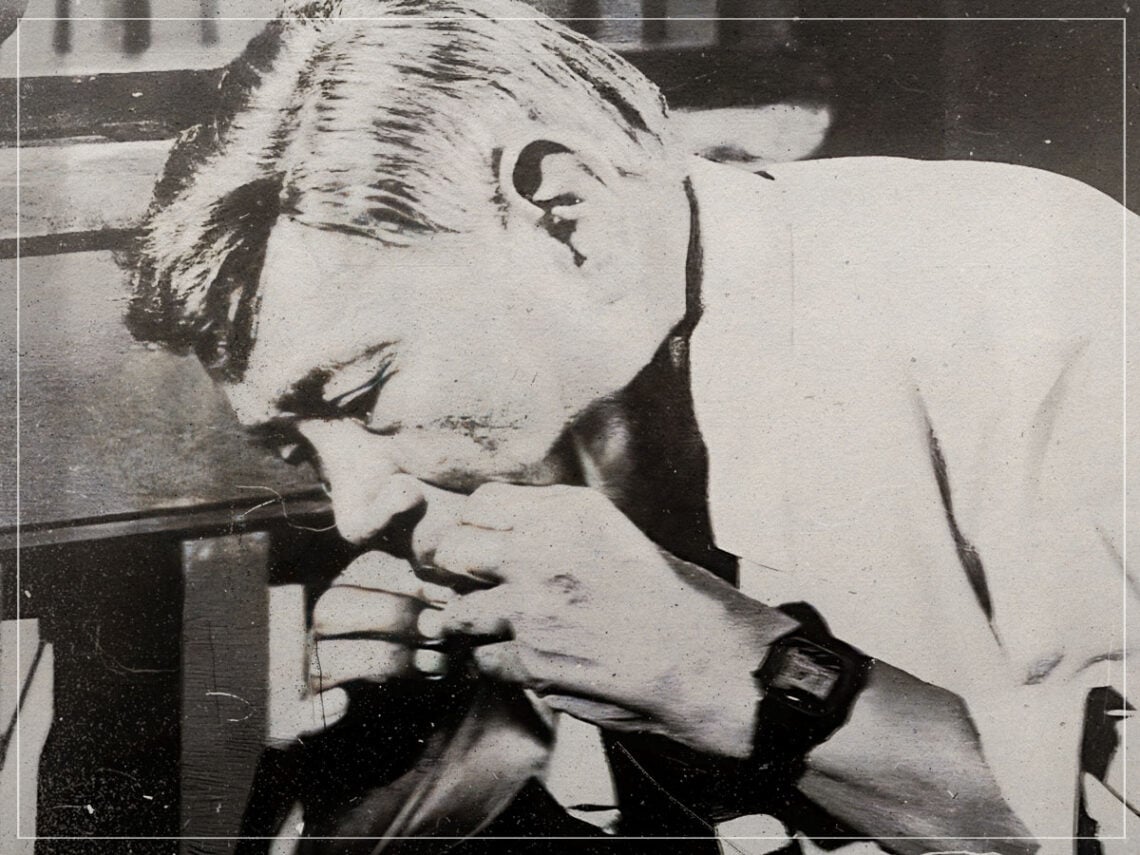
The story of Levi Celerio: “The only man who could play music using the leaf”

You’ve heard of the weird and wonderful ways musicians create their music, like using objects to experiment with sounds, but have you heard of composers using a leaf? Levi Celerio wasn’t just a prolific world-class composer and lyricist. He was also a Guinness World Record holder for “the only man who could play music using a leaf”.
Born in 1910, Celerio sought solace in music as an escape from his working-class background, which was made possible by his mother being a harpist and a member of the church choir. His mother encouraged him to get involved in music as a distraction from the conditions of their neighbourhood – and so he did, taking up violin lessons when he was 11 years old.
After becoming a member of the Manila Symphony Orchestra – one of the oldest orchestras in Asia – Celerio accidentally fell and broke his wrist. During this time, he shifted from composing to writing, creating poetry and then songwriting, eventually becoming credited for writing more than 4,000 songs, some dedicated to his wife and children.
Celerio became one of the most sought-after lyricists in the Philippines overnight, and those who worked with him said that he could put together a song in 20 minutes using a borrowed pen and the inside of a cigarette pack as paper. Music composers Ernani Cuenco and Restie Umali recounted times when they would present a melody to Celerio and patiently await his mastery in weaving words into it. This swift creative synergy yielded a profusion of songs that encompassed themes like love, the celebration of life, nationalist fervour, and philosophical reflections.
Levi’s ascent as a composer is often ascribed by various experts to his humble beginnings. His lyrics possess an unforced quality, flowing in a manner that mirrors the ease of everyday conversations on the Filipino streets. In a rare instance of candid self-reflection, Celerio once shared that: “There is no formula for my songwriting success, […] My cardinal rule is to write simple lyrics that do not offend anybody’s sensibilities.”
So, when did he learn to play the leaf? According to his daughter’s accounts, Celerio had an encounter with Japanese soldiers during World War II and had to convince them that he was a musician. His quick thinking, in that moment, led him to pick up a leaf with which he played a song, an action that ignited a realisation within him of his newfound artistry.
As a man who had significant lyrical and musical talent alongside unmatched creativity, his allure became something unusually special among other players in the country at the time. Celerio garnered widespread attention when he guested on The Merv Griffin Show, accompanied by 39 musicians, where he performed the song ‘All The Things You Are’ while playing a blade of grass like a harmonica.
Like many, however, Celerio has become an unfortunate victim of forgotten talent in death, with the dust settling on his legacy to most of the world except the corners in which he originated. However, his impact lives on in many modern composers, and the use of objects like leaves continues to be used as innovative tools in music. In fact, Celerio’s party trick lives on in only a select few musicians today, existing as a reminder of the beauty present in both music and nature.
