


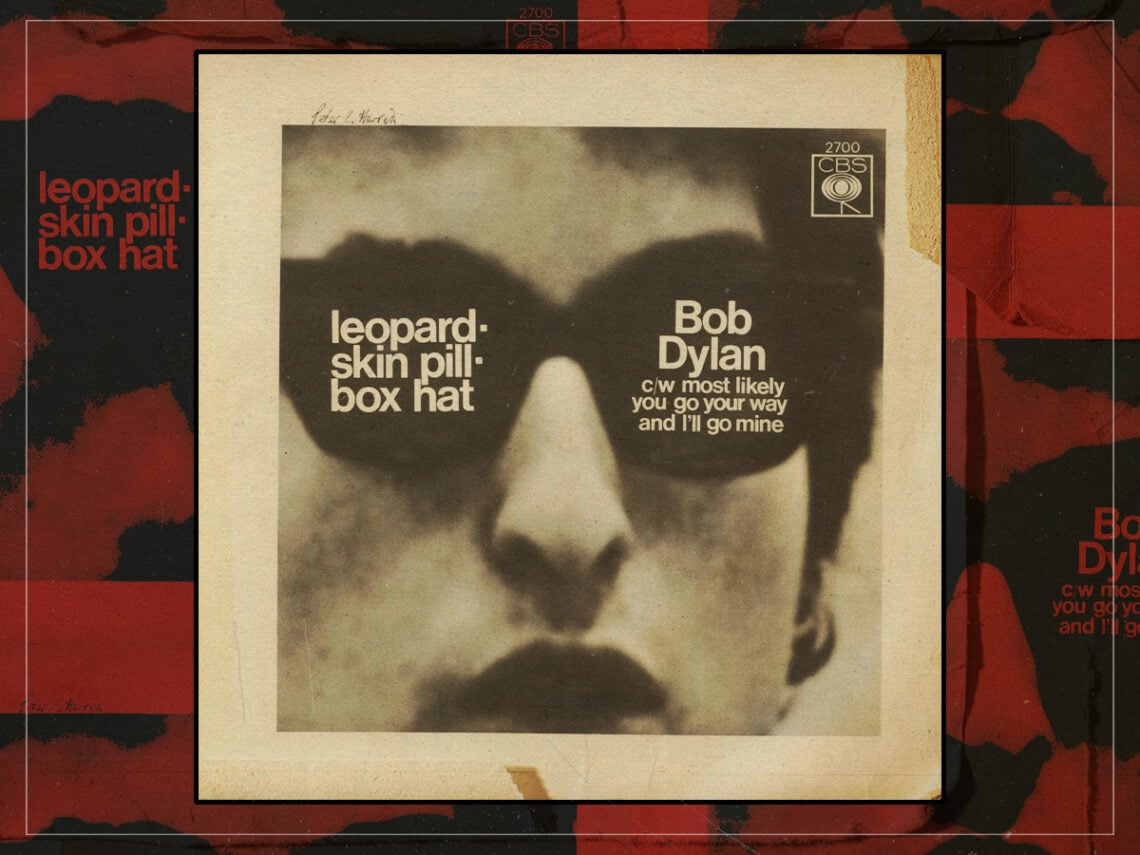
‘Leopard-Skin Pill-Box Hat’: Bob Dylan’s cruellest song

Worship him or not, the meanness of Bob Dylan is well documented.
Though his whole spiel back in the day was to simply be a man of the music, a man who desired to be untouched by celebrity life and only wished to be left alone to make great art, that art was often just as gossipy as any magazine column. He would never confirm any targets, but he also rarely hid them well, like when he released ‘Leopard-Skin Pill-Box Hat’, and everyone knew the victim.
In his lengthy discography, nastiness arguably comes up just as much as love. ‘Idiot Wind’ is such a masterclass in the form that Sinead O’Connor claimed it taught her how to be angry and write angry songs. ‘One of Us Must Know (Sooner or Later)’ is a gaslight anthem, ‘Ballad in Plain D’ is a bitter diss track of a breakup song, and if you listen close enough to ‘Like a Rolling Stone’, you’ll realise that too is basically a point-and-laugh set to music.
Point-and-laugh is really the whole point of ‘Leopard-Skin Pill-Box Hat’, but while other tracks hide that with a bit more poetry, this doesn’t even bother with that. With the repeated, pedantic mention of this fashion accessory, using words that feel so alien in Dylan’s mouth, it is clear that they’re plucked from someone else’s. Something in the tone he sings them too feels more like a mock than a lyric, as if the song is nothing more than him taking the piss out of some fashionista.
Maybe that would be more acceptable if it were ‘some fashionista’, but it wasn’t—it was Edie Sedgwick. Search her name online and soon you’ll find her draped in leopard print, adorned in the styles of the season, with her big eyes shining out under a hat. What you won’t find, though, is a picture of Dylan and Sedgwick together, despite the fact that their romantic connection has been confirmed by basically everyone close to them, except the songwriter, who still likes to pedal the line that they barely met.

“I never had that much to do with Edie Sedgwick,” he’s claimed, “I’ve read that I have, but I don’t remember Edie all that well…. I know other people who, as far as I know, might have been involved with Edie. Uh, she was a great girl. An exciting girl, very enthusiastic. She was around the Andy Warhol scene, and I drifted in and out of that scene.”
That makes no sense, though. Dylan’s issues with Warhol are well-documented, and what else would have brought him into that world that he was so obviously at odds with other than Sedgwick and their connection? Bob Neuwirth was open about the time he spent around Sedgwick during this period as Dylan’s closest associate. She also pops up time and time again in his songs from that era. Patti Smith once wrote, in a poem dedicated to the superstar, “she was the true heroine of Blonde on Blonde”, and it’s easy to find her there in ‘Just Like a Woman’, ‘Temporary Like Achilles’ and here, in this song; a deeply mean one.
Because the end of their love was unpleasant. Dylan had seemed to become yet another man in Sedgwick’s life who let her down. Warhol abandoned her, moving on to other starlets and leaving her in debt after using her image for years, never once paying her. No one really stepped in as she spiralled further into addiction. And Dylan, in the exact same move that hurt Joan Baez, who he was also connected to at the time, got married in secret and let both women find out about it in the press.
But the cruelty of the track doesn’t come in the comments about her clothes; it’s in the setting. “Well, I asked the doctor if I could see you / It’s bad for your health, he said,” Dylan sings. Given that Sedgwick was famously in and out of mental institutions and was admitted again around the time of Dylan’s marriage, it gets dark, landing only as a punchline that also includes a dig about Sedgwick’s own other romantic connections. “Yes, I disobeyed his orders / I came to see you but I found him there instead / You know, I don’t mind him cheatin’ on me, but I / Sure wish he’d take that off his head / Your brand new leopard-skin pill-box hat”.
Sprinkling in some extra comments about her drinking for good measure, all this really is is a point-and-laugh song about Edie Sedgwick being mentally ill. It’s a caricature of her; the drunk, high, ditzy girl, always draped around a man and wasting her money on outlandish clothes despite her circumstances. It’s another kick in the teeth, another let-down experience by the figure against someone who was simply in need of support.

Never Miss A Tale
The Far Out Bob Dylan Newsletter
All the latest stories about Bob Dylan from the independent voice of culture.
Straight to your inbox.