


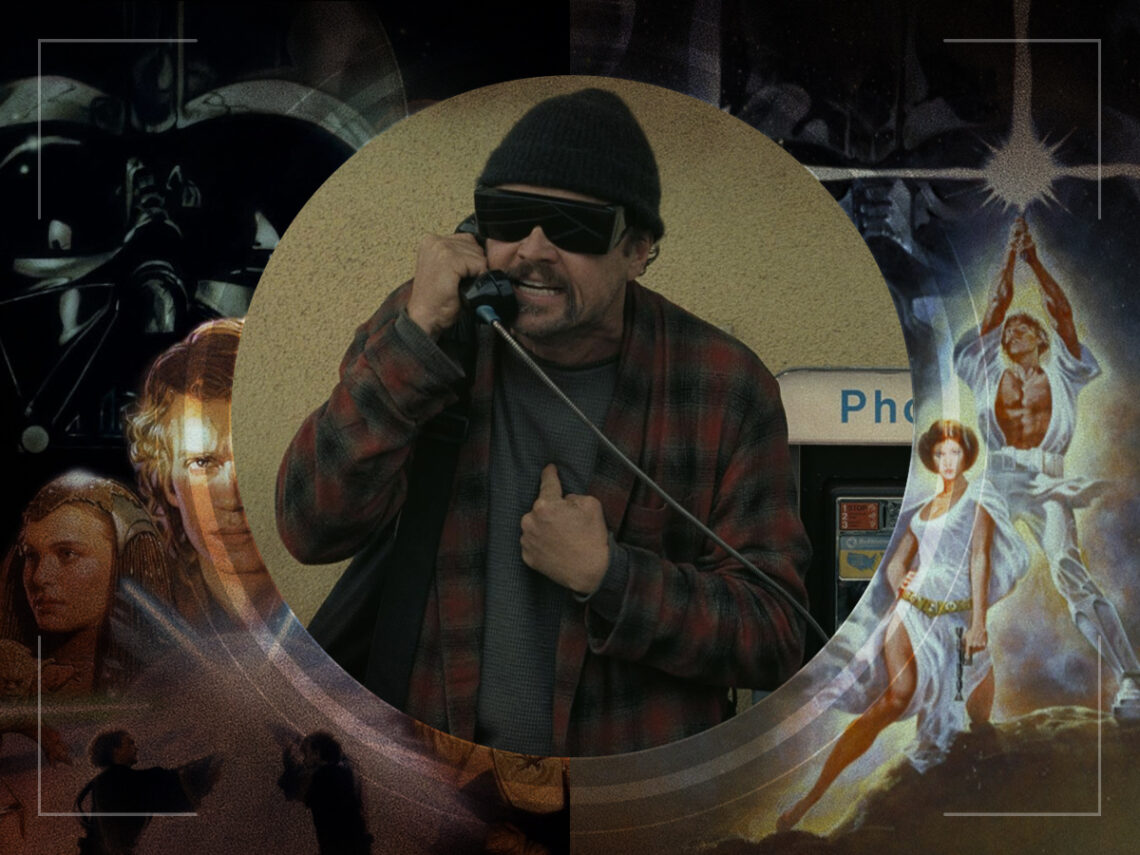
Leonardo DiCaprio’s hidden ‘Star Wars’ influences in ‘One Battle After Another’

It has been nearly 50 years since George Lucas first introduced Star Wars onto the silver screen, and yet its presence continues to dominate the realms of cinema and popular culture to this day, either through Disney’s dedication to wringing any iota of life from that long-deceased horse or through the franchise’s endless influence on other filmmakers.
Although it is difficult to imagine now, when looking back on the original Star Wars movie, but audiences had never witnessed anything remotely close to the tales of the Jedi before, what with its newfangled special effects, ridiculously ambitious set design, along with the vast and complex universe created by the film, which is still expanding to this day. In particular, Star Wars captivated the youth of 1977, and a lot of those astonished young folk ended up pursuing careers in the film industry themselves.
It is no surprise, therefore, that virtually every actor under the sun would cut off their own right hand with a light sabre for a chance to act in a Star Wars movie, but that is a privilege afforded to only a select few. The next best thing, then, is to inject your own films with a slice of that Star Wars magic; something that has been attempted by countless filmmakers and actors over the previous five decades, from Ridley Scott to Katsuhiro Ôtomo.
Most recently, Leonardo DiCaprio has embraced the sci-fi mastery of the Star Wars universe with his role in Paul Thomas Anderson’s newly released One Battle After Another. Although the film, starring DiCaprio as a former far-left revolutionary tasked with rescuing his daughter from Sean Penn, who plays a rather reprehensible former Colonel, doesn’t exist in a galaxy far, far away, and there are no Ewoks to be seen, it doesn’t take much stretching to connect it with Star Wars.
After all, Star Wars is, at heart, a tale of good and evil, of resistance against authority, in a similar fashion to how One Battle After Another pitches (albeit retired) revolutionaries against a morally bankrupt authority figure. Inevitably, those parallels weren’t lost on DiCaprio, who chose to lean into the intergalactic connotations within his character. “There’s the weird Star Wars theme to this movie,” the actor shared, per USA Today. “I had this vision of these wraparound optical glasses like Boba Fett. Those are the ones I had to choose.”
Then, in a separate interview with Rolling Stone, DiCaprio expanded upon the Star Wars connections, beyond his bounty hunter sunglasses of choice. “They share the same integral values of freedom and what is right and what is not right—he has a line that freedom means no fear, and it’s something that my character’s forgotten,” he explained. “Sensei [Benicio del Toro] is kind of Bob [DiCaprio]’s Obi-Wan Kenobi who makes him believe in himself.”
Of course, this is Paul Thomas Anderson we’re talking about, so there’s a lot more than meets the eye going on within One Battle After Another, but as DiCaprio attests to, the Star Wars influences on the film are hard to disprove.
Admittedly, guerrilla warfare from a small group of wannabe revolutionaries versus the all-encompassing power of a despicable authoritarian isn’t the most unheard-of plotline in cinematic history, and there were countless examples in the days before Star Wars. In this specific instance, though, One Battle After Another does seem indebted to the ever-expanding empire of George Lucas, at least in the mind of Leonardo DiCaprio.
