


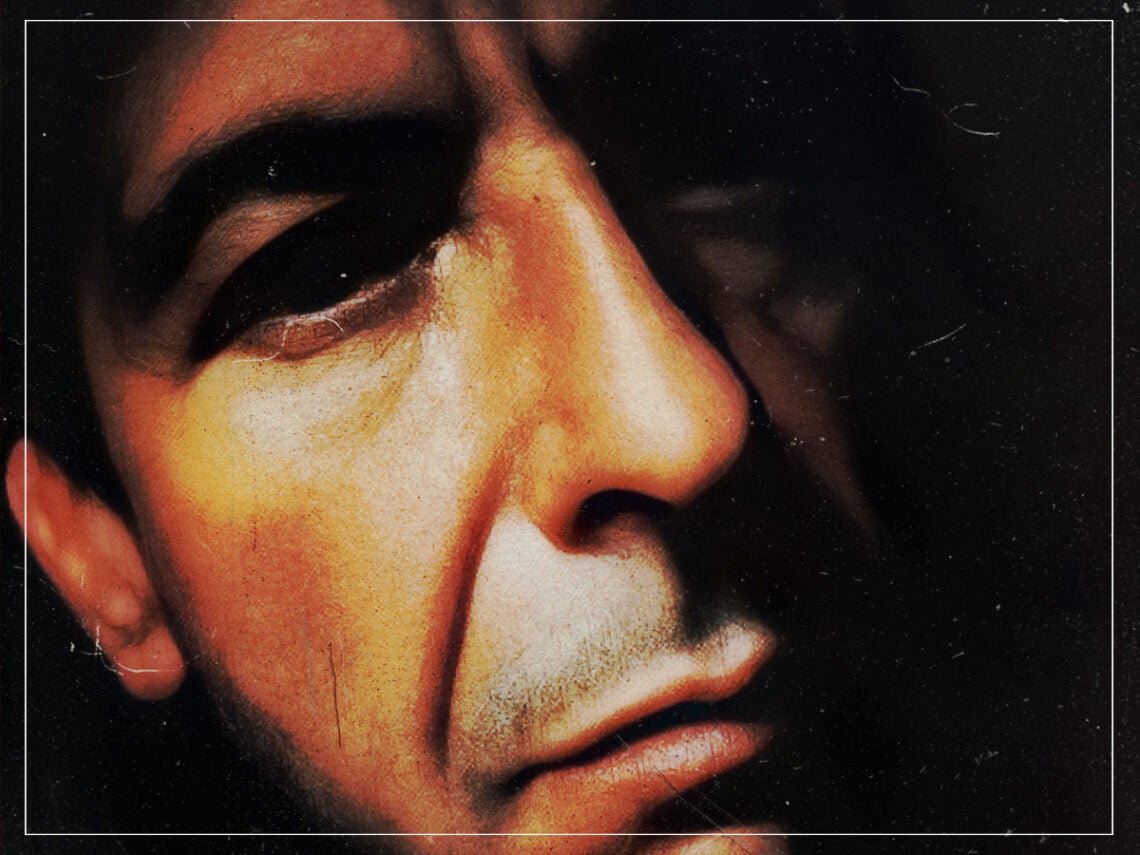
‘First We Take Manhattan’: Leonard Cohen’s study of the polarised modern world

Imagine this: you’ve been a devoted fan of Laura Marling since her early days nearly two decades ago. Her subtly brilliant songwriting, poignant lyricism, and deft touch with an acoustic guitar have always been her trademarks. You eagerly queue up her latest album, click play, and are greeted by a pounding AG Cook-produced hyperpop banger. Congratulations—you now understand exactly how Leonard Cohen fans felt when ‘First We Take Manhattan’ hit their ears for the first time.
It shouldn’t have worked. Cohen was a) over 50 years old and b) Leonard fucking Cohen—yet here he was, unleashing slick disco-pop as if he were a middle-aged INXS. How was this man not ridiculed out of the music industry and into a Buddhist monastery five years ahead of schedule? The answer, without hyperbole, is straightforward: because he’s Leonard Cohen, and he’s utterly phenomenal at this whole music thing.
Yes, the production is a touch livelier and features more synth slap bass than anyone could have anticipated—granted, the initial expectation was precisely nil—but at its core, this track remains Cohen at his sly, dark-hearted finest and eerily more relevant today than ever. At its essence, it’s a villain song. Cohen’s narrator, barely disguising a wicked grin, strikes back at those who “sentenced [him] to 20 years of boredom” and, “guided by the beauty of our weapons,” lays out his vision of a self-styled holy crusade.
So far, so typical, you might think. Stop the presses: a sensitive folkie predicts the end of the world. We’ve seen this waltz before with ‘A Hard Rain’s a-Gonna Fall’, and we’re still spinning to it with Bo Burnham’s ‘That Funny Feeling’. What sets ‘First We Take Manhattan’ apart—what makes it truly unsettling—isn’t just the apocalyptic imagery. It’s how enticing, how utterly seductive it all feels. This isn’t merely a song about the desire to control the world; it’s a song about why so many people are convinced someone should.
Cohen spoke about this in an issue of Song Talk, saying, “I felt for some time that the motivating energy, or the captivating energy, or the engrossing energy available to us today is the energy coming from the extremes.” This is a song for everyone that, in his words, “shares this sense of titillation with extremist positions”. In a truly dark way, that’s everyone.
We’re represented here by Cohen’s backing singers cooing how they “love your body and your spirit and your clothes”. Look at the world over the past ten years. If you don’t believe we can be that easily conned out of our morals by a captivating leader for such shallow reasons, then you haven’t been paying attention. Cohen does lace a layer of humanism into the ending, though, with the narrator wistfully recalling the times he “used to live for music”. Is he wishing for those times to come back or bidding them a fond farewell?
In all, though, this is the very soul of a true songwriter. Whether they’re delivered by nothing but a battered Spanish guitar or something that isn’t a million miles away from a Scott, Aitken and Waterman production, the heart stays the same. They are all songs of freedom in one way or another.
‘First We Take Manhattan’ is a highlight in a career full of them. Darkly charming, yet still chilling. Just like the man himself.
