


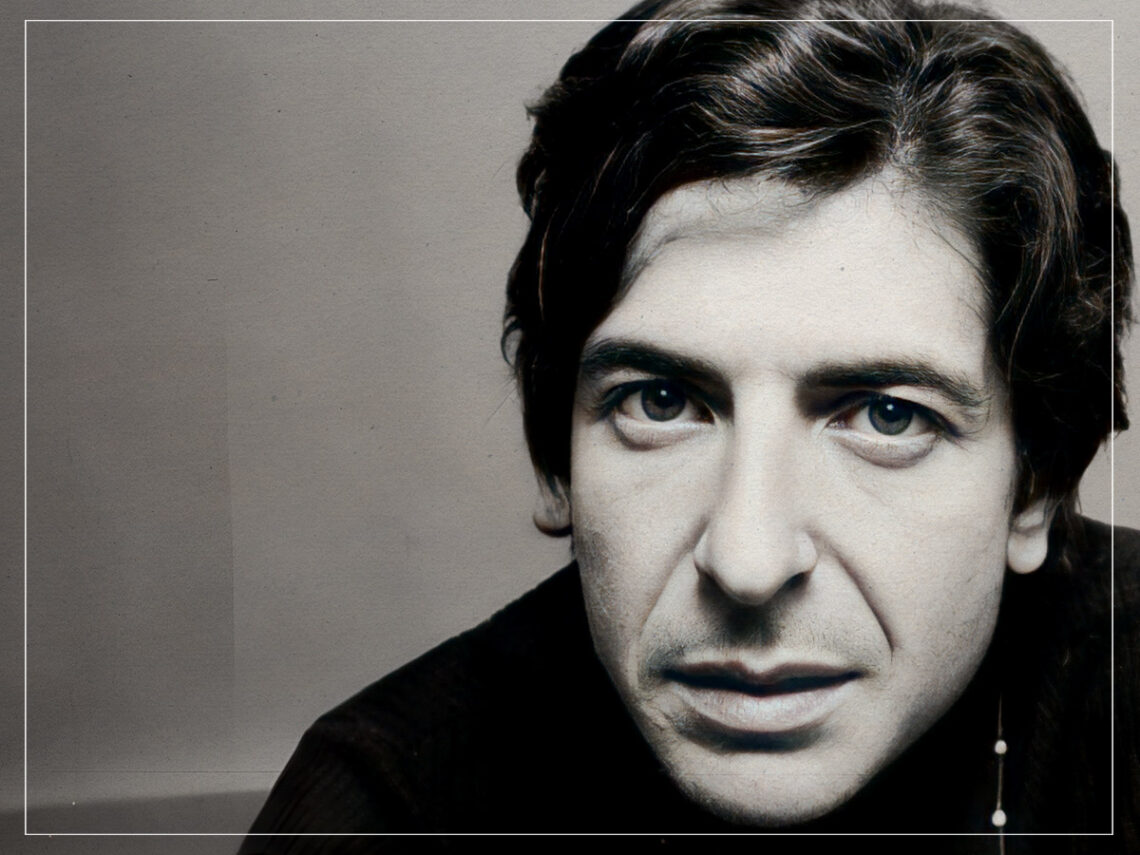
Happiness is a tuna sandwich: Leonard Cohen’s lessons in dealing with depression

Stepping back beyond the incredible music and his enduring legacy, the story of Leonard Cohen’s life is one of searching. From the beginning, it seemed that the writer-musician was looking for a sense of something, whether that be belonging, religion, or notoriety. However, as everyone eventually must come to learn, no external factory can ever bring peace to the inner self. Cohen figured that out eventually when the simplicity of a tuna sandwich and a sunny morning suddenly made everything make sense.
Cohen’s biography is a transient one. He was born in Montreal and stayed there for a while, studying at McGill University and trying to figure out his purpose through reading and writing. When he couldn’t find it there, he followed the mission for it to New York and to Columbia on the trail of the Beat Generation, but he felt like maybe he’d just missed it. So then he went to London and then to the Greek island of Hydra, where, for a while, he thought he had found it in the Beatnik community there and his lover, Marianne. But that’s exactly when it shifted, and the purpose he was chasing down as a writer turned its focus to music and to fame and raced off to New York again, leaving him to follow it.
It kept going, as these things do. Even when Cohen acquired the fame and notoriety he’d wanted when his songs were on the radio, up popped the problem of God, sending him on another wild chase from Scientology sessions to months spent in a Zen Buddhist monastery, still too busy trying to find the meaning of his life to truly live it.
As is usually the case, the desperate search for answers shrouded the joy in Cohen’s life and left him depressed. No amount of success was enough, no song was good enough to silence his inner critics, and no day was free from a nagging voice telling him countless things he should be doing instead.
But then suddenly, in his late 60s, there was a quiet and peaceful day. It was the early 2000s, and he’d just come out of a five-year seclusion at the top of Mount Baldy in a Buddhist retreat. However, what seemed to be the breakthrough moment for him wasn’t a grand moment of religious or spiritual clarity; it was a quiet, ordinary instance back home in the day-to-day movements of life.
“There was just a certain sweetness to daily life that began asserting itself,” Cohen told The Guardian. “I remember sitting in the corner of my kitchen, which has a window overlooking the street. I saw the sunlight that shines on the chrome fenders of the cars and thought, ‘Gee, that’s pretty.’”
Suddenly, in that second, Cohen not only realised that he had been depressed before but realised that perhaps the clouds had lifted as he felt happy and acutely normal and able to understand people. He continued, “I said to myself, ‘Wow, this must be like everybody feels.’ Life became not easier but simpler. The backdrop of self-analysis I had lived with disappeared. It’s like that joke: ‘When you’re hitting your head against a brick wall, it feels good when it stops.’”
He found happiness in the simple life. Now, the rushing pressure of youth was gone, and his desire to desperately seek out something he felt was missing was gone. What was left was the joy of the present moment that felt heightened and palpable. He recalled, “When you stop thinking about yourself all the time, a certain sense of repose overtakes you.”
But in his instance, it wasn’t water; it was a really nice tuna sandwich. He would go to work with no pressure but instead, with a sense of purpose and enjoyment, pausing for a long, enjoyable lunch when he would make, as his team of producers and musicians put it, “the meanest tuna salad sandwich in North America”.
