


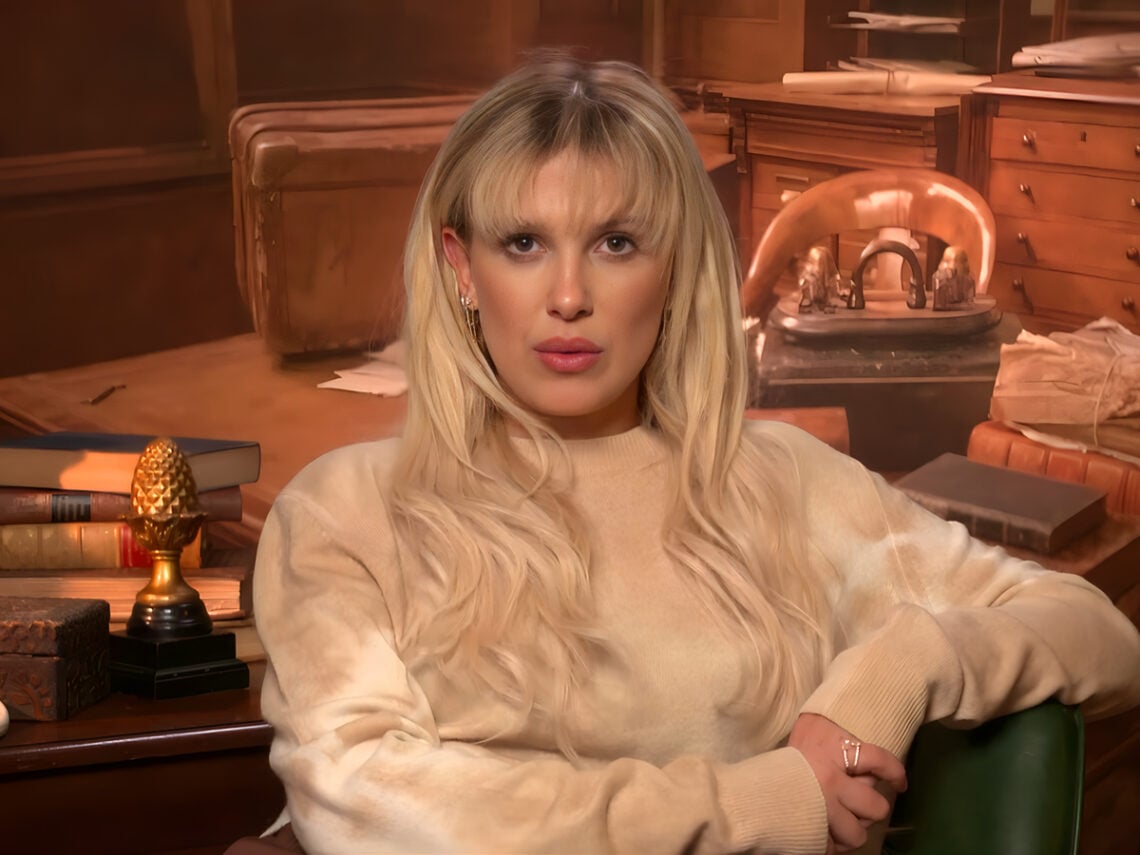
The legendary actor Millie Bobby Brown called “everything I strive to be”

It seems like every actor from Netflix’s hit horror series Stranger Things endured a speed run of everything they’ll ever encounter in fame, especially Millie Bobby Brown.
As a young woman in film, Brown experienced many of the industry’s highs and lows from an extremely early age (12, to be exact), especially as one of the show’s main characters and an actor who was pushed into the spotlight of promo cycles every single season. And while she can laugh about some of it now, it can’t have been easy.
Put it this way, most people struggle with criticism in smaller, more localised spaces, and when you’re an actor, especially one as young as Brown was (and still is), this amplifies tenfold. When Brown was first starting out, she had people placing everything under the microscope, like her personality, her views, her acting, all while making memes out of her live videos (“some may say I’m a dreamer…”).
She still experiences this in a lot of different ways. Even at 22 years old with a fully established career, Brown still experiences many of the film world’s misogynistic undertones, something she has been forced to call out on social media in the past. In fact, just this past year, Brown posted a video criticising the media for going after her appearance, saying that “the fact that some of these articles are written by women makes it even worse”.
Things didn’t stop there. Anyone who was paying close attention to the rollout of the final season of Stranger Things will have noticed that criticism for Brown reached new highs. If it wasn’t her appearance, it was her stoic acting, which, crucially, is something that has been a definitive aspect of Eleven’s characterisation since the first season.
This is even more frustrating when you think about the fact that, beneath the surface, Brown is genuinely connected to every role and project she does, especially her role Stranger Things, which wasn’t just about feeling emotionally connected to her character but everything about the setting – the 1980s, she’s said in the past, is one of her all-time favourite “eras”.
Mainly, this was because of the fashion and music, but she’s been drawn to many other aspects of pop culture across history for similar reasons, and some of its towering figures have shown her the way by marrying grace and beauty with strength and resilience. Arguably the biggest figure who embodies these traits, Audrey Hepburn, also happens to be her biggest role model.
As she explained to Elle, “I think women represent beauty. Someone I look up to is Audrey Hepburn, for all the work she put into humanitarianism and also her acting work.”
She also said that she “represented everything I strive to be” because she loves everything about her, from her makeup and beauty to her fashion.
When you look at it this way, it’s easy to see a lot of the same traits in Brown, because after all, Hepburn also faced a lot of scrutiny while she was alive, and people still have opinions about her impact on mainstream culture, but like Hepburn, Brown maintains strength in dignity, choosing her moments to speak up against that which she believes in the most.
