


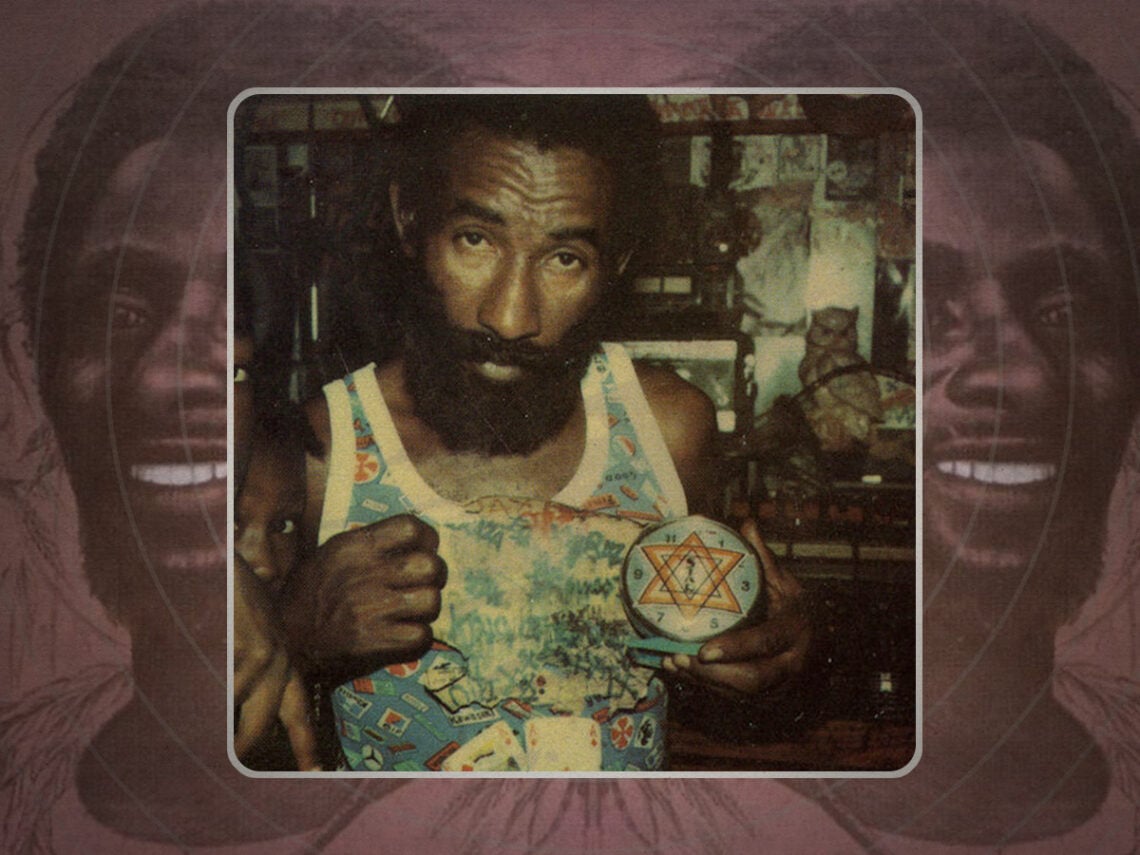
‘I Am the Upsetter’: How Lee “Scratch” Perry’s anthem of defiance changed reggae forever

From its grassroots origins on the island nation of Jamaica, reggae music has infected virtually all corners of the globe, its off-beat rhythm and compelling grooves soundtracking many a long, hot summer and resonating with a plethora of artists spanning the spectrum from The Clash to Cat Stevens.
Without the efforts of Lee “Scratch” Perry, though, the reggae landscape would be virtually unrecognisable.
Reggae, as a genre, was born from an amalgamation of different influences, rooted in the post-independence sounds of ska and rocksteady, which, in themselves, were originally intended as an evocation of American R&B stars like Fats Domino. So, while there are countless figures who could be regarded as the true progenitors of reggae, whether it’s Prince Buster, Coxsone Dodd, or even Jimmy Cliff, there is no taking away from the fact that Lee “Scratch” Perry’s countless contributions to the genre were utterly essential in carving out its inherent sound.
It was during the 1950s that Perry got his start in the music game, working odd jobs for Coxsone Dodd and his legendary Studio One recording facility. Pretty soon, though, it became evident that Perry’s sights were set on higher, more independent climbs. Eventually, then, Dodd and Perry began to clash, and that difference in personality spelt the end of the future reggae icon’s time at the studio. He soon moved to Joe Gibbs’ label, but conflict followed him and, by 1968, he was out on his own.
One of the first records Perry recorded back in 1968 was the pioneering reggae anthem ‘I Am The Upsetter’, a musical act of defiance against Coxsone. “My style is to criticise, to warn with rain and fire,” he told Uncut back in 2018. “Is a fire-style! I am the burner.” More than being a mere criticism of his old boss, though, the single ended up changing reggae music and culture forevermore.
Not only did the song contain a flavour of Perry’s pioneering production style that would soon be expanded upon, but it also gave the songwriter a name for his own record label, Upsetter Records, and its house band, The Upsetters. Worthy of an extensive article in their own right, The Upsetters quickly became a beacon for ska and reggae excellence across the globe, providing the early skinheads of the UK with a soundtrack in the form of anthems like ‘Return of Django’.
As if that wasn’t enough, The Upsetters also went on to form the basis for The Wailers, the backing band Bob Marley used throughout his journey to the absolute peak of the global reggae scene. As far as house bands go, then, Lee “Scratch” Perry’s formation of The Upsetters made them one of the most important ‘backing’ groups of all time, as well as altering the entirety of reggae’s future.
Spurred on by those iconic Upsetters records, Perry managed to strike a distribution deal with London’s Trojan Records during the late 1960s, bringing global audiences into the exciting new realm of Upsetter Records and helping to popularise the sound of reggae long before the likes of Bob Marley emerged onto the scene.
What’s more, Upsetter Records forever changed Perry as a producer, allowing him to experiment and hone his skills away from the criticism of bosses like Coxsone and Gibbs; the label essential spurred on the emergence of the Lee “Scratch” Perry that we all know and adore to this very day, five years since his passing.
‘I Am The Upsetter’ might have started out life as a two-fingered salute towards Coxsone Dodd, but it ended up giving rise to one of – if not the – most essential figure in reggae’s history and, a little further down the line, infiltrating the wider world outside the Caribbean with the sun-soaked rhythms of the scene.
