


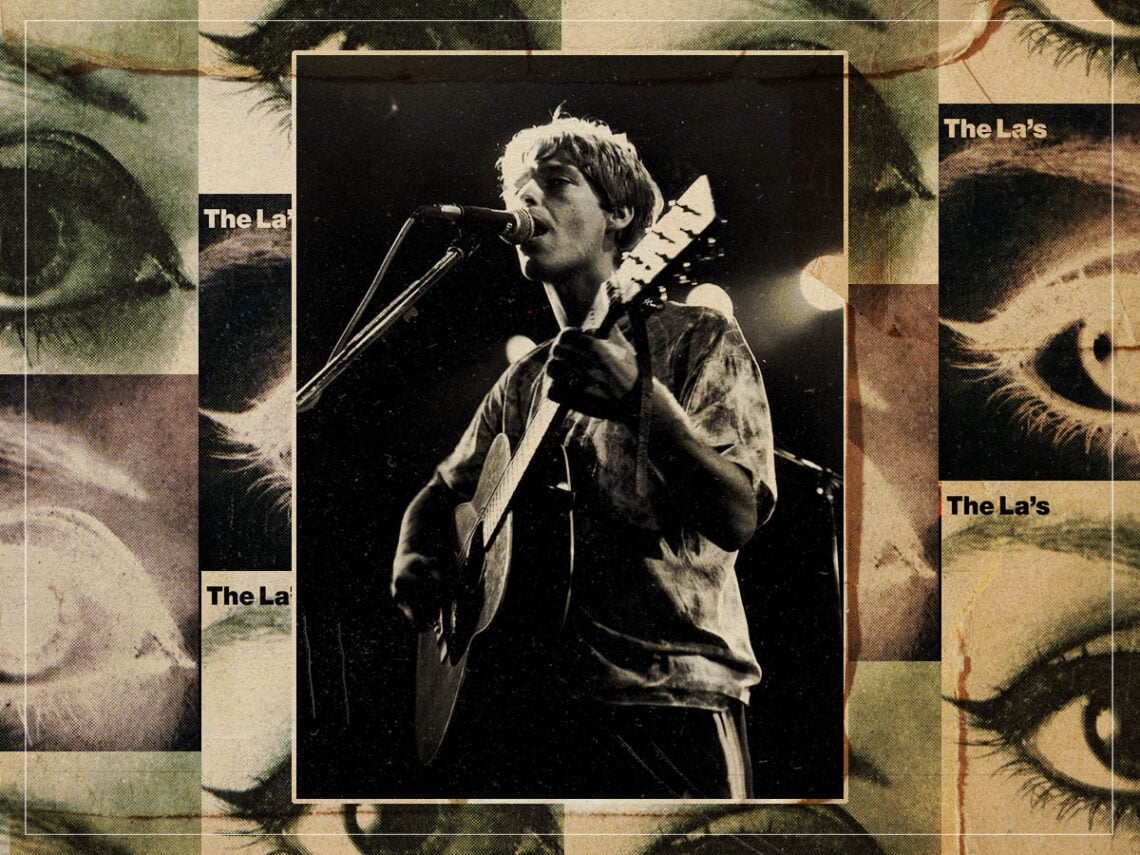
The pursuit of precision: Did Lee Mavers’ perfectionism hold back The La’s?

When we talk about all of the bands and artists who made one album and called it quits, there might be all sorts of names that spring to mind as having never realised their full potential on their sole release.
Whether you wanted to hear more from Castle Donington’s dance-punk upstarts Late of the Pier or the self-described ‘heavy pop’ outfit Wu Lyf, there are plenty of acts that dipped out of the public consciousness after just one classic album, resigning themselves to becoming footnotes in musical history. However, one name that appears to constantly feature in the list of acts that ought to have had a more illustrious career is the Liverpool Britpop precursors, The La’s.
Releasing their self-titled and only album in 1990, the group were clearly onto something special, or so it seemed. Blending together sounds from previous decades of British pop music, the foursome seemed on the surface of things to be equally as indebted to The Beatles and Bo Diddley as they were to The Smiths, but even from a single 12-track LP, it was evident that they were not only working with a much wider range of influences but were primed to develop into something that could have defined a new era of British indie music. The La’s could have been huge.
Their biggest problem was that they clearly didn’t want to be, or at least their frontman, Lee Mavers, gave the impression that he wasn’t interested. Writing an album laced with immediately arresting hooks and a seemingly unstoppable ear for melody wasn’t enough for Mavers – in fact, he wasn’t even that convinced that he’d made that. By most people’s estimations, The La’s was a perfect debut album by a band that were ready to usher in the next generation of indie rock, but by his reckoning, it was an unfinished mess that should never have seen the light of day.
It’s obviously not a problem to be a perfectionist or hold yourself to incredibly high standards when it comes to publishing your art, but in Mavers’ case, it was an obstacle that his band were never able to overcome. We’ve seen this level of perfectionism plague artists in the past and send them spiralling out of control, with songwriters such as Brian Wilson having to accept defeat in his pursuit of topping Pet Sounds with his proposed opus, Smile, but while Wilson and the Beach Boys were able to periodically recover from this, The La’s weren’t.
“The closer you get to perfection, the closer you get to imperfection.”
Lee Mavers
Their debut album was scrapped multiple times after Mavers attested that none of the producers they had hired could get the precise sound that he was after and after settling on the acclaimed Steve Lillywhite to finish the album after three arduous years of striving for the perfect incarnation, the end result was still not to Mavers’ satisfaction. Despite the near-unanimous praise that the record received from the contemporary music press, the band chose to disown the record and move on.
However, they’d ultimately fail to follow up their debut with a better indication of how they should sound, and in 1992, the band all went their own separate ways, with bassist John Power most notably going on to form the band Cast. Mavers, on the other hand, became even more retiring from the press than he already was, and when he finally chose to speak to NME in 1995 about why he had been away from so long, his reasoning for his decision to not release music was chaotic and scrambled.
“It gets clearer, and it gets vaguer,” Mavers cryptically revealed. “Before every dawn, there’s a night; before every calm, there’s a storm. It’s like, the closer you get to perfection, the closer you get to imperfection, simple as.” This, of course, is far from simple and only goes to illustrate how painful Mavers’ pursuit of perfection was for him.
The band might be living comfortably off the acclaim that they received for the album, and especially from the mainstream success of ‘There She Goes’, but the version that the public was privy to was ultimately something that Mavers and the rest of the band weren’t proud of. It’s a shame to think that we may never hear the ‘official’ version that gets mythologised, even if several producers have attempted to remix and remaster the album in years since, but as far as one ought to be concerned, The La’s is a masterclass in songwriting that deserves to be praised in whatever form.
