


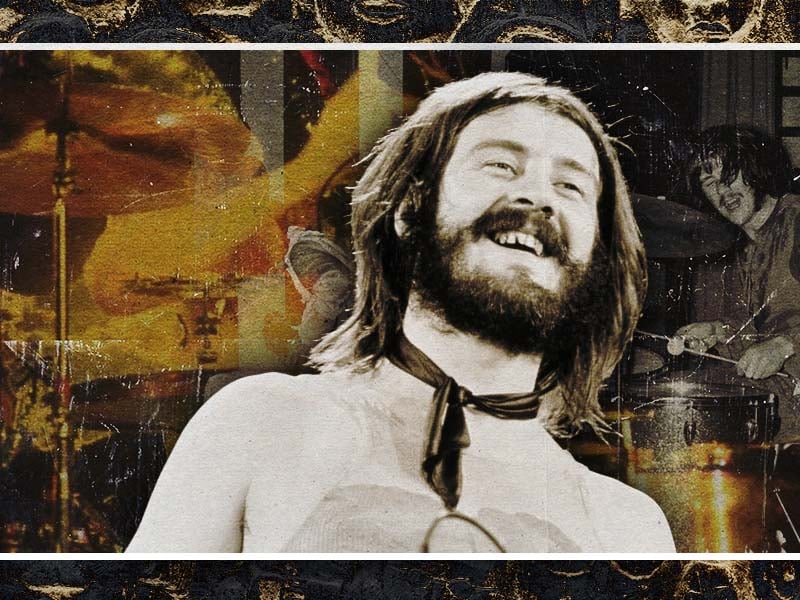
John Bonham’s favourite band of all time: “Listen to his, it’s great”

Led Zeppelin’s rhythmic maestro John Bonham is perhaps the most iconic figure in drumming history. Although he passed away at 32 in 1980, to this day, Bonham’s work is still revered by critics and fans alike. For that reason alone, he is often considered the greatest percussionist of all time. And, while he may not have given himself that attribute, there’s good cause to say that he would have reluctantly agreed with it.
When considering the best drummers ever to pick up sticks, you’re typically met with the same faces, and for good reason. Neil Peart, Ginger Baker, Dave Grohl, Keith Moon, and so on. Given how rare it is for a drummer to be truly astounding, the list of certified “great” drummers is relatively short compared to that of guitarists and frontmen.
Dextrous, versatile and more often than not slightly unhinged, drummers are a rare breed. Billy Moony, the sticksman in Roddy Doyle’s 1987 novel The Commitments, is a perfectly accentuated take on this stereotype. If there was one drummer on whom this archetype was based, then looking too far away from the Led Zeppelin man may well be wasted energy. Rivalling Ginger Baker in technique and surpassing Moon in style, Bonham is hailed as the greatest drummer of all time by many.
But Bonham hit the drums incredibly hard, and his fluid playing style set him out from the crowd. Speed, power and groove were his forte, and with him, the esoteric might of Led Zeppelin flourished. Taking his style in equal parts from jazz, rock and world music, Bonham’s tactile and varied style is one that many have tried and failed to imitate.
Due to the mythos he created in life through his work, coupled with the peculiar human craft of canonising an artist when they die prematurely, today Bonham is one of the ultimate examples of a ‘rock god’, for want of a better term. His legend precedes his music, and since his death, fans have strived to get to know him a little better, given just how captivating of a musician he was.
Whether it was his drumming heroes, off-stage lifestyle, or even his beer of choice, Bonham’s life has been meticulously dissected by fans worldwide, eager to understand and emulate the legendary musician. While Bonham was undoubtedly a towering figure in rock, his influences extended beyond the genre. Most notably, he frequently cited jazz drummer Gene Krupa as his ultimate drumming hero, showcasing the depth and diversity of his musical inspirations.
Discovering the inspirations behind a favourite artist’s work is a pastime many fans enjoy, and for Bonham, it feels all the more poignant given his relatively brief time in the spotlight. Despite his untimely departure, fans have tirelessly pieced together fascinating insights about his influences. One particularly surprising revelation highlights just how eclectic Bonham’s musical tastes were: his admiration for British art-rockers Supertramp and, more specifically, their 1974 third album, Crime of the Century.

Featuring iconic tracks like ‘Dreamer’ and the hard-hitting ‘Bloody Well Right’, Crime of the Century was a major success upon release and is now regarded as a classic of the experimental mid-1970s. Legendary producer Ken Scott, who helmed the project, later shared an intriguing detail in his 2012 book, Abbey Road to Ziggy Stardust. Speaking of Crime of the Century, Scott revealed: “Even John Bonham, drummer of Led Zeppelin, was a fan and would invite people over to hear the album at his home, often at noise-crushing volume.”
What a vivid image Scott’s account paints. Unfortunately, details about Bonham’s admiration for Supertramp and their 1974 masterpiece remain limited. However, a deeper dive uncovers that journalist Chris Welch was the first to report this connection in the now-defunct Melody Maker. Published in 1975, the article titled John Bonham: Over The Hills And Far Away detailed Welch’s visit to Bonham’s rural Worcestershire home, The Old Hyde Farm.
A revealing report, it painted a picture of Bonham that was the complete opposite of the hard-rocking, hard-partying drummer of Led Zeppelin. Welch wrote that after a customary “sojourn at the pub”, he and Bonham “returned to the farmhouse to sample some brandy and the delights of a quad sound system that threatened to stampede the sleeping herd of Herefords”.
Welch continued: “‘Listen to this. It’s great.’ John put on the Pretty Things’ new single ‘I’m Keeping’. They’re a band who seem to be enjoying a whole new lease of life since they signed to Swan Song, Zeppelin’s own label. He was also raving about Supertramp’s album and admitted a new interest in country music.”
If this doesn’t perfectly encapsulate John Bonham, nothing will. Welch’s depiction places him outside the constraints of being a member of one of the world’s biggest bands, enjoying a drink and passionately discussing some of the era’s finest new music. Later, in a 2007 article for Traps Magazine, Welch offered another candid glimpse of Bonham, once again highlighting his fondness for the eclectic British group: “We sat in his lounge in front of a big juke-box loaded with his favourite Supertramp tracks, and Bonham confided that he was suffering from panic attacks before every concert.”
In addition to suffering from crippling nerves, Welch said that on his farm, Bonham was “someone who preferred bricklaying, decorating, and gardening to the itinerant life of a rock star – Bonham busied himself running the farm and breeding cattle in the peace of the countryside”.
Welch and Scott’s assertion of Bonham’s love for Supertramp is highly significant. They dispel the myth of him being a larger-than-life, out-of-control ‘rock god’ and show him to be the gentleman he truly was. An ordinary man who, regardless of his genius, was a lover of music, a tipple, and the simpler things in life, just like the rest of us.

Never Miss A Beat
The Far Out Led Zeppelin Newsletter
All the latest stories about Led Zeppelin from the independent voice of culture.
Straight to your inbox.