


The 1956 song that changed Jimmy Page’s life forever: “I was having a go”

When diving into the musical annals of history, it is easy to find cultural touchstones from which the music world we live in today sprung from. It’s fair to say that with The Yardbirds, in-studio sessions and, of course, Led Zeppelin, Jimmy Page influenced thousands and thousands of musicians.
The iconic guitarist’s image was up on bedroom walls around the globe and his music is still powered through speakers across the entire planet.
Yet, like many of Britain’s greatest rock musicians, Page’s musical education began far away from the thunderous riffs that would later define Led Zeppelin. Before hard rock existed as a genre, young guitarists across the UK were absorbing skiffle, folk and American blues records, using them as a gateway into a much broader musical universe.
Even icons have their own heroes, and during an interview for Bob Boilen’s book Your Song Changed My Life, where the veteran journalist speaks to music legends about their favourite songs, Jimmy Page’s response was quite telling. When asked about the tune that launched his career, the answer became rather obvious.
Like most musicians his age, when Page was a young boy, rock ‘n’ roll was so far from Britain that it wasn’t even played on the radio. It barely even flickered on the cultural scale as the country still battled its way out of the post-war slump. As an eight-year-old, Page moved houses and, upon arriving at his new bedroom, found himself a guitar left by the previous residents. Though the young Page had no interest in the instrument, he kept it around as part of a lucky find.

Rock ‘n’ roll would, of course, eventually land on British shores, and Page himself would do a good job of bringing his own flavour to the new sound. In fact, Page immersed himself in every piece of the delta blues he could find, giving himself a vital education as he did. But as Boilen revealed: “So many Brits of that age talk about skiffle music [and] Lonnie Donegan was king.”
However, there was something different about Page’s relation to the Scottish singer who brought rock ‘n’ roll to Britain. Boilen continues: “But it wasn’t till I began to think of how Donegan changed the blues and ‘skiffled it up’ that I made the connection to how Jimmy Page took Donegan and electrified it to shocking and long-lasting effects.”
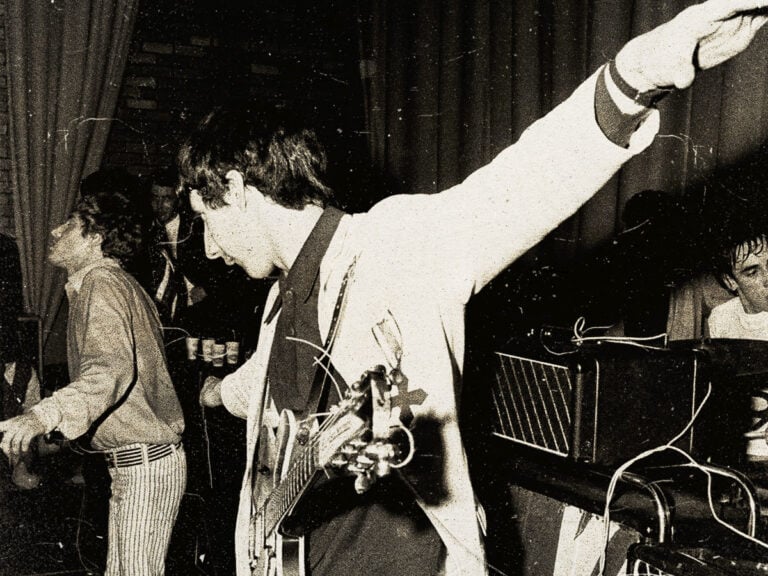
The guitarist’s unique ability to transfer between the more eccentrically British sound of skiffle into the blues and rock music would not be born solely from that of Donegan. He would head towards the Delta blues to find the other half of his sound. Page was never intent on making himself into a British version of an American product, though, “I wanted to have my own approach to what I did. I didn’t want to … do a carbon copy of BB King, but I really love the blues. The blues had so much effect on me and I just wanted to make my own contribution in my own way.”
That mindset would ultimately become one of the defining features of Page’s career. While deeply indebted to American blues traditions, he constantly searched for ways to reinterpret those influences through a distinctly British lens, blending folk, psychedelia and hard rock into something far more expansive than straightforward blues imitation.
Lonnie Donnegan’s cover of the blues standard ‘Rock Island Line’, a song about two Chicagoan institutions, Rock Island and Pacific Railroad line and made famous by Lead Belly, found its way onto the radio. Page certainly heard it many times, and it likely landed in his subconscious as an example of how one could make a distinctly American sound suddenly feel British. But it wasn’t until a friend of Page’s, Rod Wyatt, played the song live that something in Page was ignited.
Page told Wyatt of the guitar he had at home, with Wyatt promising him that he could both tune and help Page play the instrument. “It was a campfire guitar … but it did have all the strings on it which is pretty useful because I wouldn’t have known where to get guitar strings from,” remembers Page. “And then [Rod] showed me how to tune it up … and then I started strumming away like not quite like — not quite like Lonnie Donegan, but I was having a go.”
“He really understood all that stuff, Lonnie Donegan,” Page tells Boilen. “But this is the way that he sort of, should we say, jazzed it up or skiffled it up. By the time you get to the end of this he’s really spitting it out … he keeps singing ‘Rock Island line, Rock Island’ [and] you really get this whole staccato aspect of it. It’s fantastic stuff! So many guitarists from the sixties will all say Lonnie Donegan was [their] influence.”
It’s not particularly easy to hear Page’s sound in the guitar lines presented by Donegan on ‘Rock Island Line’. The mammoth solos of ‘Stairway to Heaven’ and the chunky riff of ‘Whole Lotta Love’ are more than far removed. However, the way Donegan could make something that seemed so distant from his life tangibly attach itself to him as an artist and, by proxy, the audience, was surely a huge influence on the guitarist who would bring the blue guitar to London and leave it there for all to use.

Never Miss A Beat
The Far Out Led Zeppelin Newsletter
All the latest stories about Led Zeppelin from the independent voice of culture.
Straight to your inbox.