


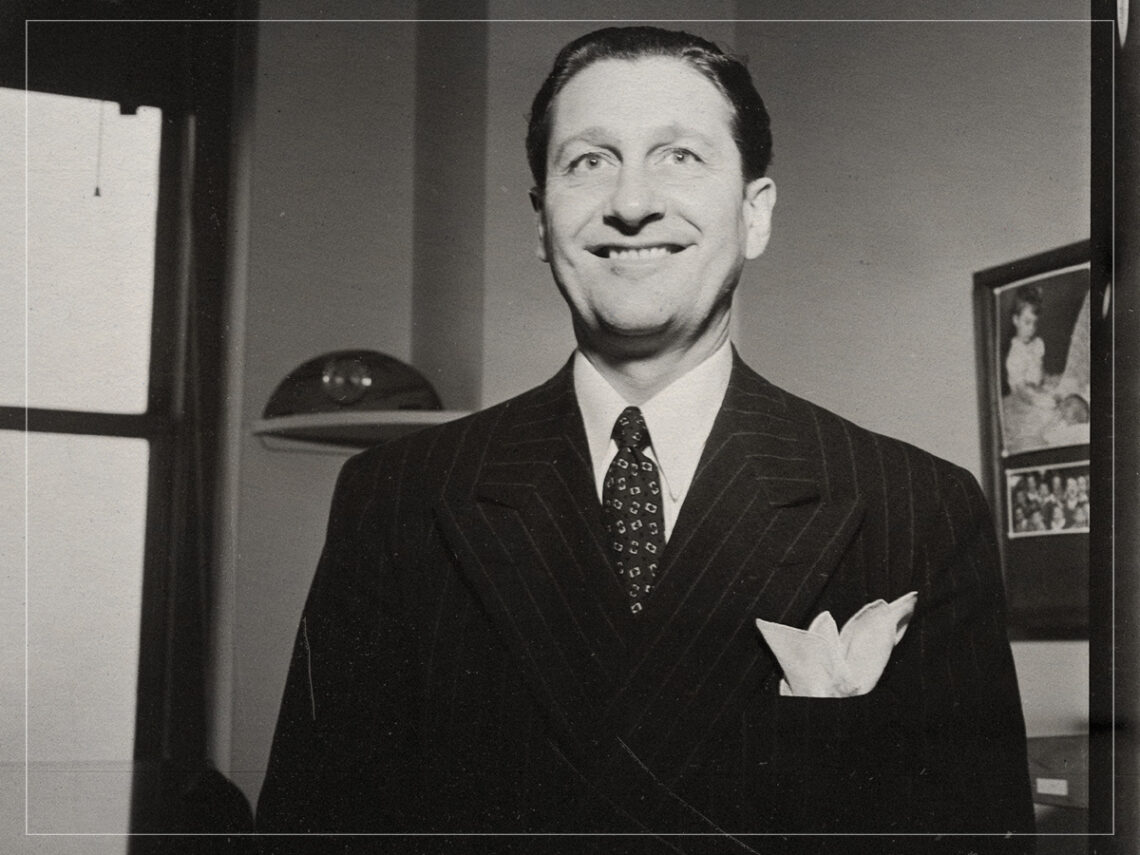
Lawrence Welk: America’s most unlikely musical giant

In the late 1950s, the US was going crazy for rock and roll, and the emergence of these raucous new styles and trends seemed to have those concerned with keeping conservative values alive quaking at the prospect of their children seeing something as provocative as Elvis Presley.
How dare a man play his instrument loudly, and gyrate his hips in such an alluring fashion, eh? These were, presumably, the words of those who believed his music to be a signal of society’s end and the dawn of Satan gaining control over the Earth.
Music, to some audiences, ought to have been family-friendly and contain nothing which could corrupt the younger generation by giving them unsanitary thoughts, or frankly, allow them to have fun. Detractors would argue that Elvis fit the bill on both counts.
So what would have been more acceptable to this sort of audience, and what did they seemingly propose as the alternative? Well, as it turns out, for all of Presley’s successes in the latter half of the decade, people were still considering Lawrence Welk as “the most popular musician in US history” over Elvis, and if you were to look at some of the facts and figures, then you’d realise that this wasn’t far from the truth.
But who exactly was Lawrence Welk, and how did he become popular to the point that his success apparently dwarfed that of all of the biggest names in popular music at the time? He may have only reached the top of the Billboard charts once, in 1960 with his song ‘Calcutta’, but it was more than just his record sales that saw him become an American icon of the period.

If you were to try and describe his sound, then ‘easy listening’ would certainly be one of the most apt tags. Performing as an accordionist alongside a big band, Welk’s forte was playing light and whimsical music that was inoffensive to a fault, and while his skill on the instrument was something to be marvelled at, you can hardly say that it was anywhere near as invigorating as some of the new acts topping the charts.
Yet, despite his music having little going for it, with Welk himself even surprised by the levels of his own popularity, he used to rake in approximately $3–4million every year through a combination of television appearances, record sales, and concerts. Life was the publication which made the bold claim that he was more popular than any other musician in the history of the US in 1957, who proclaimed that despite a modest upbringing and a less-than-entertaining life, he had defied the odds and become a star, admittedly for making background music.
“He is neither glamorous nor especially charming,” Life derogatorily said of Welk’s demeanour, before listing a number of his less-than-appealing qualities. “He speaks haltingly with a German accent. He has no swimming pool and few worries. He has never in his life smoked a cigarette, drunk a drop of liquor or used profanity.”
He may not have been everyone’s idea of a superstar, and was less so his own idea of one. Welk was more than aware that he could have been making things that weren’t based on polka and that were much more in line with contemporary trends, but knew that that’s where the money was coming from.
He didn’t need to live an exuberant lifestyle to show that he was the most successful; he just needed to get up on stage and do what he was evidently put on this planet to do—play accordion. What’s more, he did it all without causing the slightest bit of offence, which is more than Elvis can claim to have done.
