


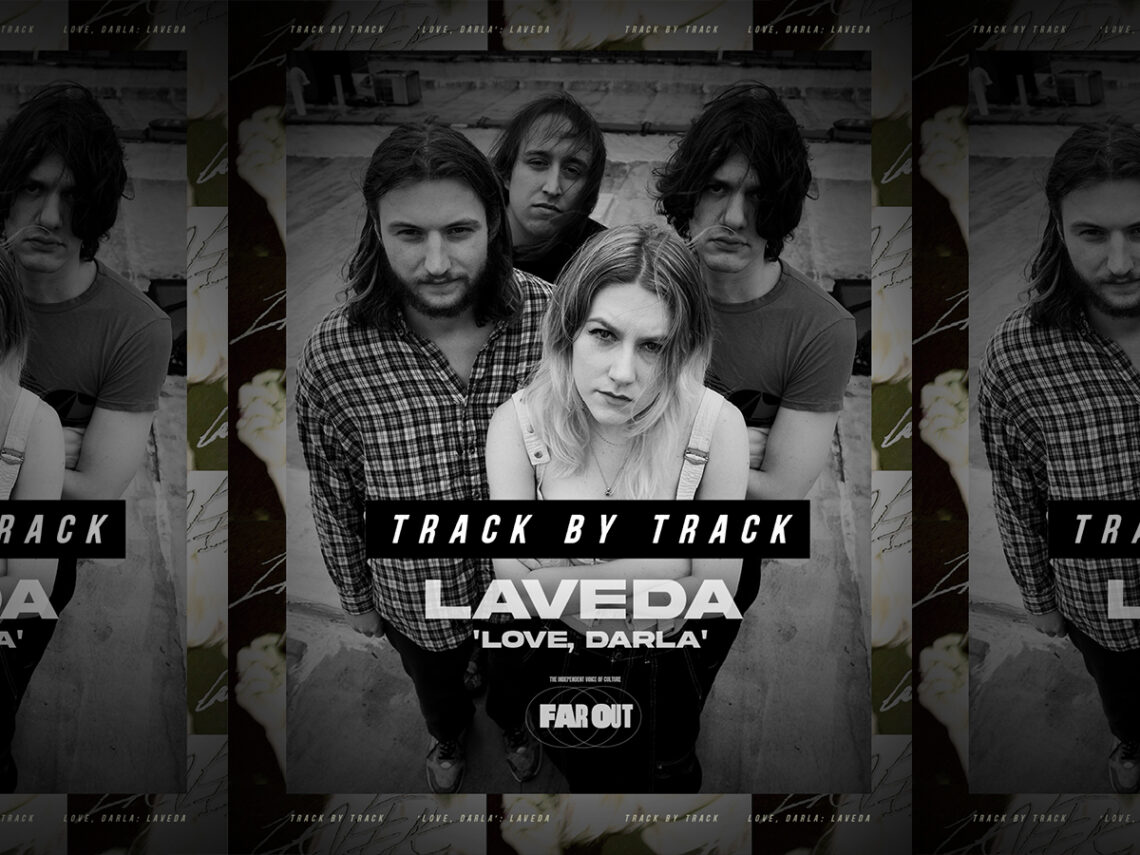
‘Love, Darla’: Laveda talk us through their third album, track by track

New York isn’t for everyone. There’s a fierce competition in the streets; commuters try to get to big box buildings the fastest, bars compete to see who can charge the most for a weak gin and tonic, and bands thrash out on stage to see who can unleash the most skewiff guitar riff to a crowd of sceptical onlookers.
On their third album, rock band Laveda take this self-flagellating momentum and create the monumentous, chaotic, and triumphant Love, Darla.
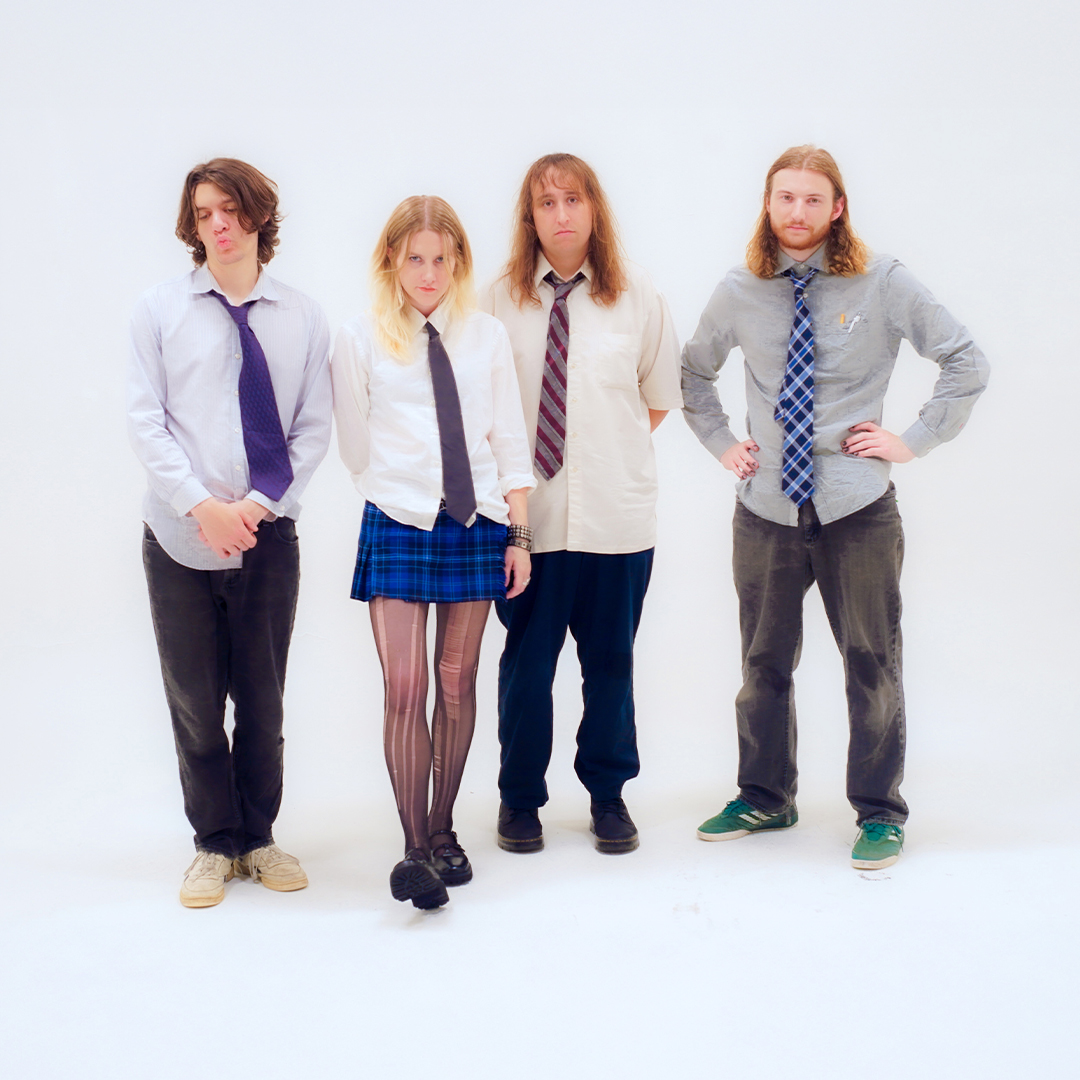
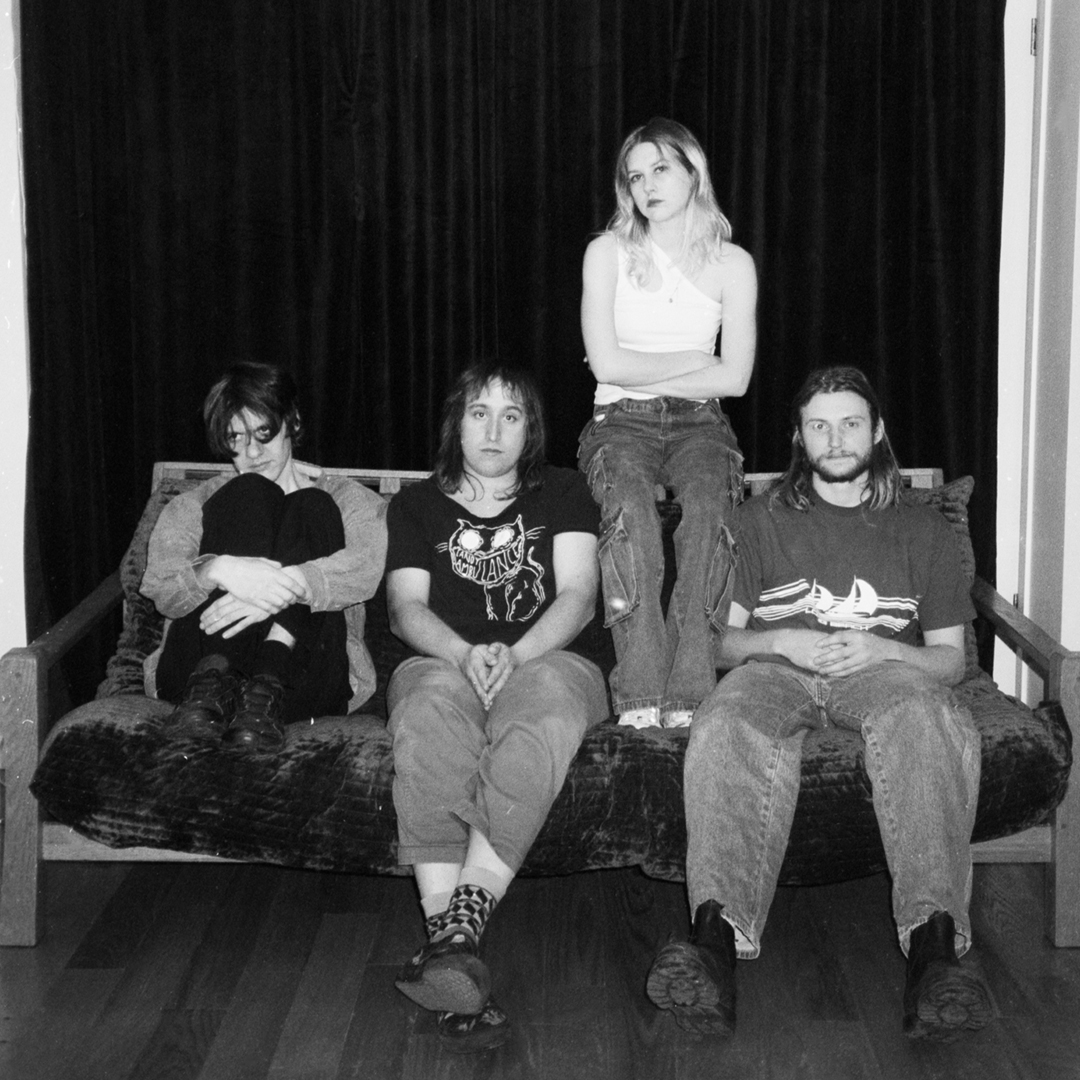
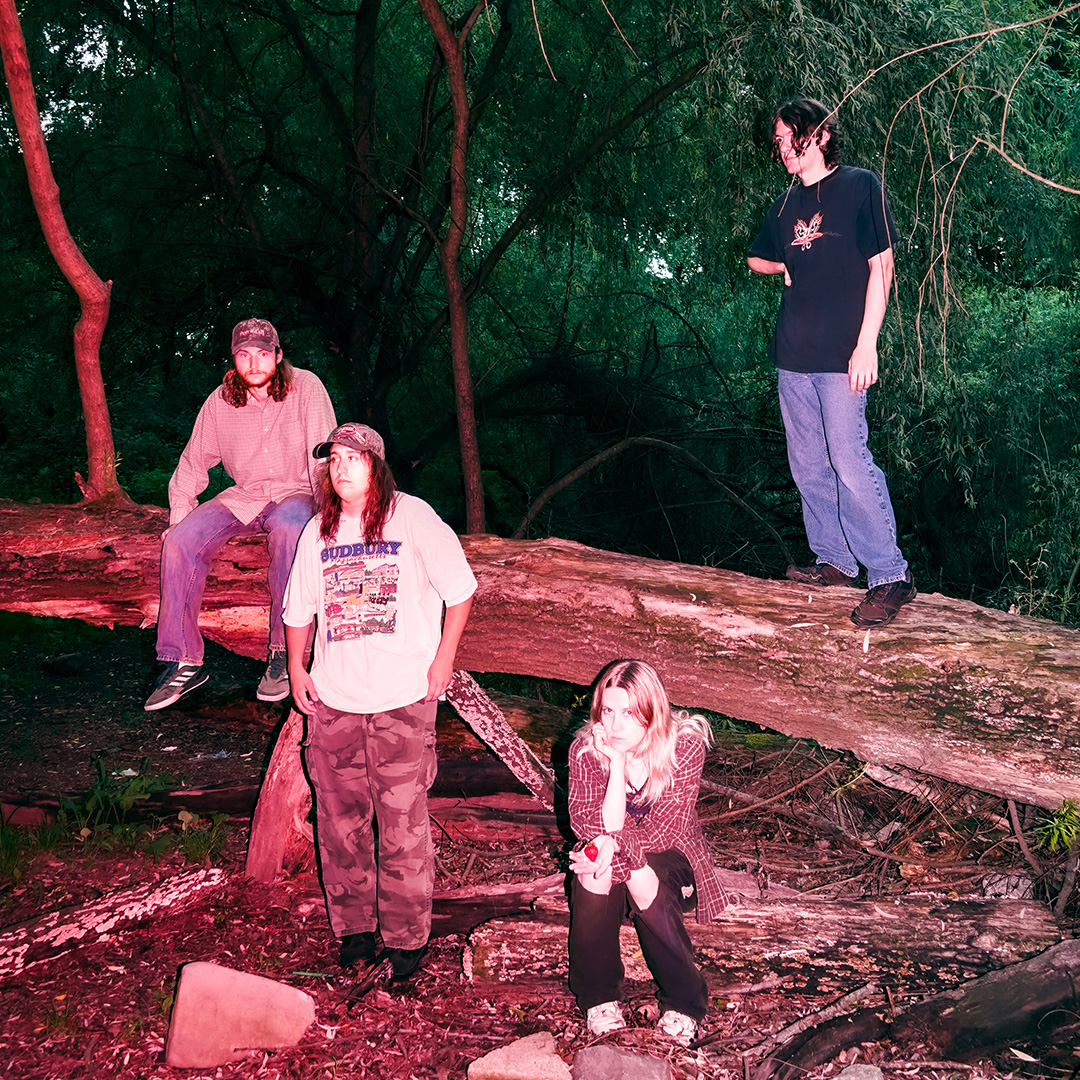
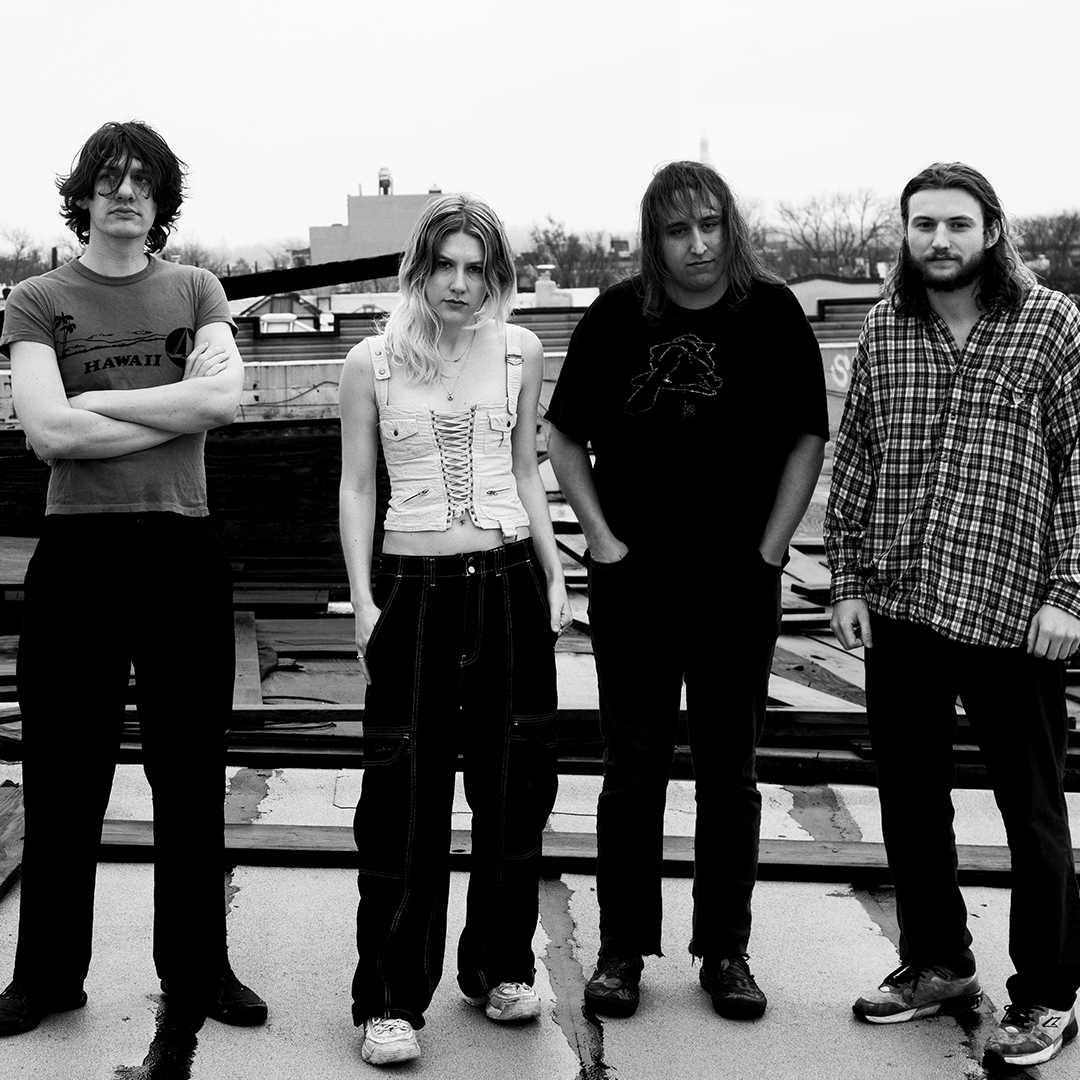
Those yearning for the cataclysms of 1980s punk, or the frenetic pace of ’90s rock, can halt their otherwise fruitless search. Laveda, consisting of vocalists and multi-instrumentalists Ali Genevich and Jacob Brooks, bassist and guitarist Dan Carr, and drummer Joe Taurone, boast the playful grit of a band like Hole, and the dark, sardonic melodies of a band like The Breeders.
Though the band are new to the city, having moved from Albany to Queens in 2023, they claim the sound of gloomy streets and stuffy subways as their own. Over the course of Love, Darla, Laveda drag us into dark patches of isolation and self-loathing, and into the mania of drug-fuelled nights, like on fan-favourite single ‘Heaven’.
Laveda are the type of band that would soundtrack an incredible indie movie categorised lazily in the back of an internet archive, only available to stream every fourth new moon. Their coy playfulness is addictive, evidence of years spent together finding the best way through a genre overflowing with lazy guitar work and unimaginative drumming patterns. Laveda, underground and somewhat undiscovered, the further you roam from Brooklyn, might just be one of the best rock bands of our generation.
From frantic exhaustion to Dave Grohl impersonations, toxic relationships, and hungover regrets, Ali, Jacob, Dan, and Joe talk Far Out through each track on the third album. What we’re left with is a greater understanding of a city, and a sound, otherwise too cool for categorisation.
Love, Darla track by track
‘Care’

As album openers go, Laveda plunge right into the thick of things on ‘Care’. I’ve been known to say living in a big city is like living in a tumble-dryer; for Laveda, it’s like living inside of an amp, all distortion and feedback and a sonic charge easy to choke on.
“I don’t care, I don’t care, I don’t care,” Ali sings defiantly, as the chaos rattles on, only to peter out into a pining, reflective end.
Ali says: “My move to NYC shaped everything about ‘Care’ both sonically and lyrically, so it felt like the obvious choice to open the album with. Guitar feedback throughout the song mimics the sound of trains. The frantic exhaustion of trying to keep up with everyone in New York is exciting and romantic yet so overwhelming.
“Since moving here, everything in the outside world and everything going on inside my head is growing and changing at an exponential rate. There’s a paired anxiety with every distraction here, and it can cripple my sense of self. It’s easy to forget who you really are, because you can be anything. Towards the end, the song breaks apart into a slow section, which to me resembles the morning-after burnout. You’re hungover as shit, and all you want is for someone to cancel on you. Ultimately, you’ll wind yourself up to do it all over again.”
‘Cellphone’
The verses on ‘Cellphone’ have that charming, hot, formulaic-without-being-clinical feel to them that only great alternative songs can grasp.
In the bridge, an impressive melody shirks off to the side as if lounging in the smoking area sexily, cigarette dangling slyly from lip. ‘Cellphone’ might be the best way into the Laveda sound.
Ali says: “‘Cellphone’ came out of a jam session we did out in LA with our friend Dylan. It’s one of the older ideas that made it onto Love, Darla. I wrote the lyrics on the spot and tried to change them to something more sensical, but everyone liked the originals best, so I decided to roll with them. It’s not really about anything specifically, but I like to channel the feeling of chucking my phone out a car window when we play it live.
“We’re all so overstimulated, over informed, comparing ourselves to others all the time, it’s fucking dumb. When we were in the studio doing the live tracking for the record we couldn’t seem to get a good take of this song. It wasn’t until Dan suggested that maybe we were trying too hard and should slack off a little more that we nailed it.”
Dan says: “This record has been the most fun to play live, songs like these just make me giddy when they come up on the set list. Such a cool song that gives no fucks and reminds me what playing music is all about. I’m lucky to be able to sit back and enjoy some classic Ali and Jake songwriting on this one. Jake and I shouldn’t be allowed to play guitar at the same time.”
‘I Wish’
“I think you should break my heart eventually,” Ali calls for on this thrilling, dark, and confessional track. Inside the mind of a lover lost to the fumes of toxic obsession, the sound wanders and jilts between heavy-set drumming and a sonic thwack.
Ali says: “This song started as an Ableton demo that I made the night after hanging with one of my childhood best friends. She used to see this total monster of a guy, and we were reminiscing about their time with one another. I think I wrote the lyrics in five minutes or something, it was like I got inside her head, just had to get the words to fit into the rhythm of the bass line.
“The demo was just bass and vocals initially, and it took us some time to figure out what it was the song wanted to be in the full band setting. We were live tracking most of our rehearsal sessions, and there was this one take where Joe tapped into this scary, intense energy behind the kit. After that, it all made sense.”
‘Dig Me Out’
‘Dig Me Out’ is the kind of track that you can tell came straight from the etchings scribbled in the belly of a diary, twisting through non-sequiturs on desire, lust, and abandonment. It builds steadily, a masterclass in tension, a journey through a psyche in free-fall.
Ali says: “This was another demo I started, it was just guitars and vocals in an Ableton session. Jake added a lot of really interesting stuff, the guitar harmonic lines are some of my favourite things on the whole record. The lyrics are just word vomit. I remember imagining I was in the graveyard that’s down the street from where I live in Ridgewood.
“For some reason, my brain specifically was revisiting a handful of very specific memories from my relationship while I was on the mic. I’ve always found graveyards sorta romantic so I guess maybe that’s why. I kept almost all the lyrics from the first take in the demo.
Jake says: “Figuring out the groove for the chorus was the most difficult part of bringing this song into a full band instrumentation. It almost led us to not having any drums in the song at all but we ended up fleshing it out the day before we left for the studio.”
‘Strawberry’
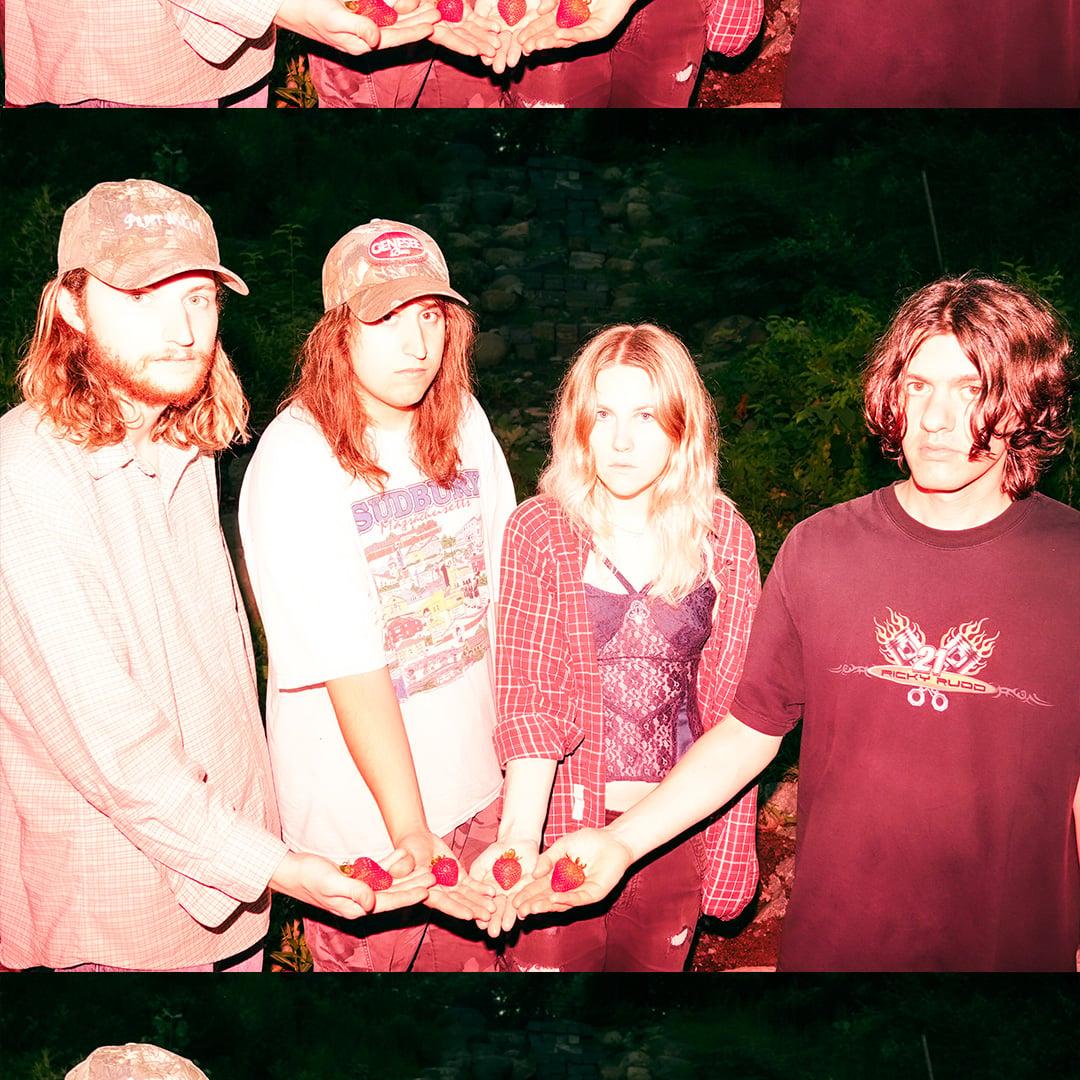
At the album’s halfway point, Laveda only seem to pick up the pace. This one roars with a formidable charge that only really exists in the thump of live music. Jake says it best: “‘Strawberry’ was an integral part of discovering the landscape that the other songs would eventually live within.”
Ali’s gritty vocals dazzle above the furious sonic wall, flitting between opposing statements. Plus, a mistake on drummer Joe’s part provides one of the best moments in the album.
Jake says: “‘Strawberry’ started as a jam between Ali on bass and me on guitar. The demo of this came along really quickly. We sent it to Joe with my demo electronic drums to figure out a part on his own. He took what I did and completely expanded it into this sick drum part. This and ‘Heaven’ were the first two Love, Darla songs we played on tour. The cool thing about playing unfinished music live is that you can really figure out what makes the song tick. You can feel how the audience responds to the music.
“We made subtle tweaks over time and eventually ended up with something much more refined than the initial version of the song. ‘Strawberry’ was an integral part of discovering the landscape that the other songs would eventually live within.”
Joe says: “We initially tracked ‘Strawberry’ a bit earlier in the Love, Darla sessions and felt good about the performance. However, once we landed on this wide open, grunge snare sound for ‘Lullaby’, Scoops suggested we try it again. I’m very glad we decided to go through with it, not only because I prefer the drum sound but because we played it a bit faster and more aggressively this time around. I even accidentally went to the ending fill early but it created a cool moment I’m proud of”.
‘Heaven’
Laveda bares all on a tell-all dive into euphoria. The picture of a drunken escapade comes through patches, the chorus beginning, “A song / A dull light / We could be so much.”
It’s easy to lose yourself in, and the guitar comes to life with its racing charge. An untouchable night, and an undeniable vibe that ends abruptly, just like the feeling does.
Ali says: “I was listening to a lot of The Cleaners From Venus around the time I wrote ‘Heaven’. Almost all of their songs are earworms, and whether it’s the shimmery sonic style of a guitar line or all in the vocal melody, it somehow doesn’t feel like they’re even trying at all. I remember thinking I really wanted to have a song that embodied that sorta style. What I love most about ‘Heaven’ is that it has this “fuck it” energy about it. You’re doing drugs at a party and feeling untouchable. Not the most original concept, I know, but it’s fun.”
Dan says: “‘Heaven’ and ‘Care’ were some of the first songs that Jake and Ali showed Joe and I from this record. So every other song we worked on I kinda put in the ‘heaven’ category, or the ‘care’ category. After we started playing ‘Heaven’ out at shows Juliana and Tori (mine and Joe’s partners) would start singing the chorus back at us and were asking for the rough mixes and stuff so I figured that one was pretty good and catchy. And ‘Care’ made me feel like I wanted to get in a fist fight.”
‘Highway Meditation’
Things get chaotic on ‘Highway Meditation’, a tricky song that required all four brains to push the zygote out from its unwilling immaturity in all its sticky glory. It might do well in some apocalyptic dystopian movie, while the world burns violently.
Some of my favourite lyrics on the album come to fruition here, too: “I like when you sew yourself into my hand / I like you like that.”
Jake says: “‘Highway Meditation’ started out as a very energetic jam between Ali on bass and me on guitar. The part that we initially intended to be the chorus never made the final demo. When we eventually got burnt out of rehearsing this fast chorus idea, we broke down into a much slower and simplified two-chord section. This is what ended up being the major launching point for the song. We tried to record it to tape without a click, like five or so times, and eventually gave up and recorded a tempo-mapped demo to Ableton.
“After rehearsing it a couple of times with Joe on drums, Dan on bass and me on rhythm guitar, we figured out that Ali was the one who had to play bass for this song. We asked Dan to do the rhythm part, and I would do a lead over it. With some time rehearsing and playing this song, Dan brought his own chaotic style of playing to the song, which I think was lacking in the demo.”
Ali says: “It took a while for Jake and I to find ‘Highway Meditation’’s final form. We were itching to get it finished because we both liked it so much. We’d jam on it whenever we could for almost a month straight, me on the bass and Jake playing guitar. Around that time, I was kinda obsessed with Natural Born Killers, one of Tarantino’s earlier films. I was constantly envisioning scenes from the movie while we’d play through the song. It ended up becoming my analysis of the movie”.
‘Bonehead’
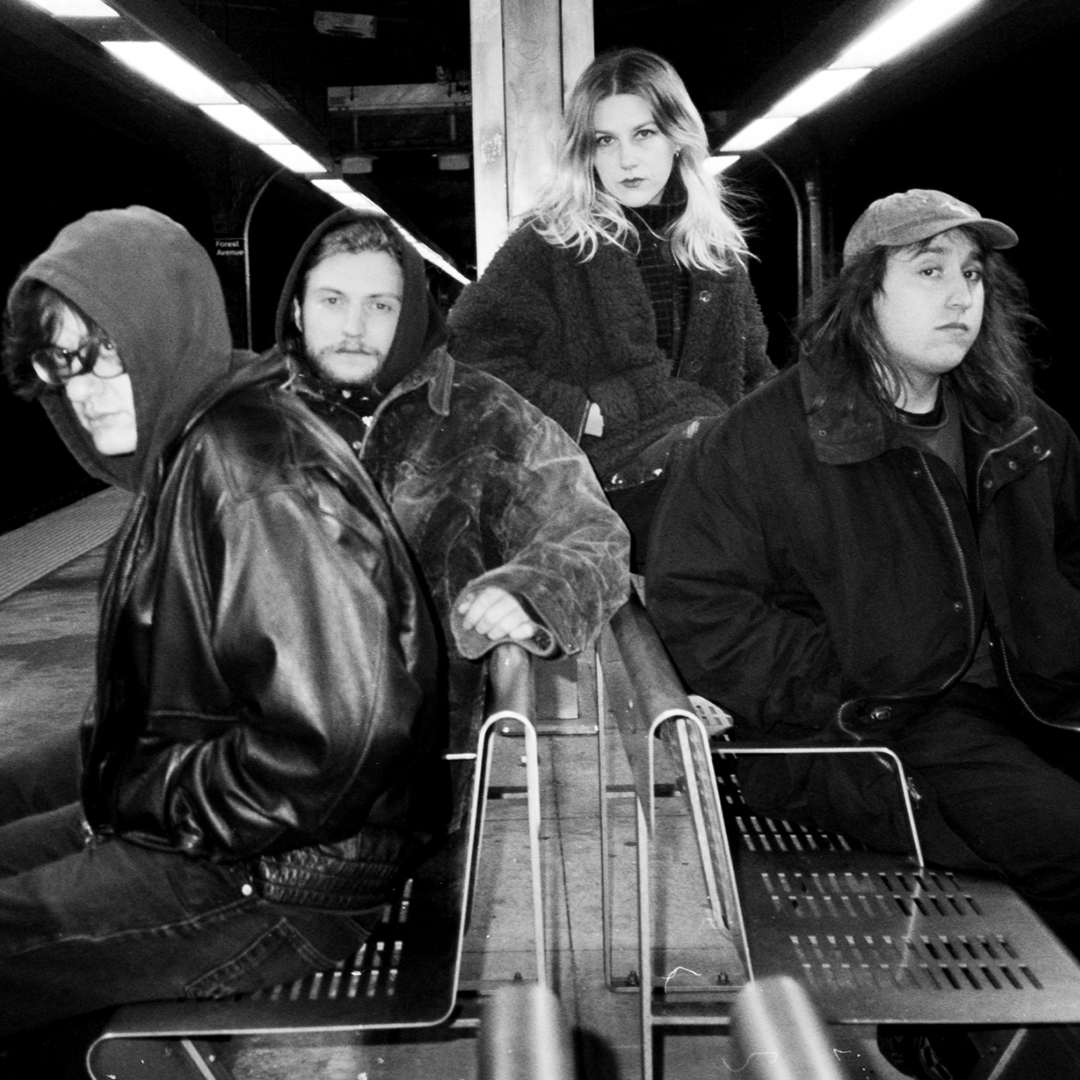
Back with a Blonde Redhead-type beat, the band proves their dreary reflections on the shuddering momentum of the modern age can also turn inwards. In a five-minute epic, Laveda tease a Foo Fighters moment, call back to the Hole Heydey, and flirt with a Sleater-Kinney sound.
The wait is long, but the pay-off is huge; the jabbering refrain of “anyway you are” is symptomatic of the perfect ’90s rock song. This is the sound of the past reinvigorated.
Ali says: “‘Bonehead’ was a fairly fleshed-out Ableton demo that I made alone. I think I had something like nine guitar tracks layered on top of one another. I almost didn’t want the ear to be able to distinguish one track from another, it was a very wall-of-sound type beat. Jake thought it might be better to achieve a simplified version, so he started combining the most important lines from each guitar track together into one part and dropping ones that we felt weren’t adding much.
“We were able to scale down the final version of the song to a total of five different guitar parts. I didn’t truly start to feel excited about this track until Joe wrote the drum part. We all joke that it’s so Dave Grohl. It rocks.”
Joe says: “‘Bonehead’ makes me feel like Dave Grohl.”
Dan says: “One of my favorite moments on the whole record is at the end of this one when Ali starts singing ‘anywhere you are anywhere you are’. It’s just a super catchy and powerful moment that feels like I’m reaching the end of a tunnel, the tunnel being how battering and tough the majority of ‘Bonehead’ can be.”
‘Tim Burton’s Tower’
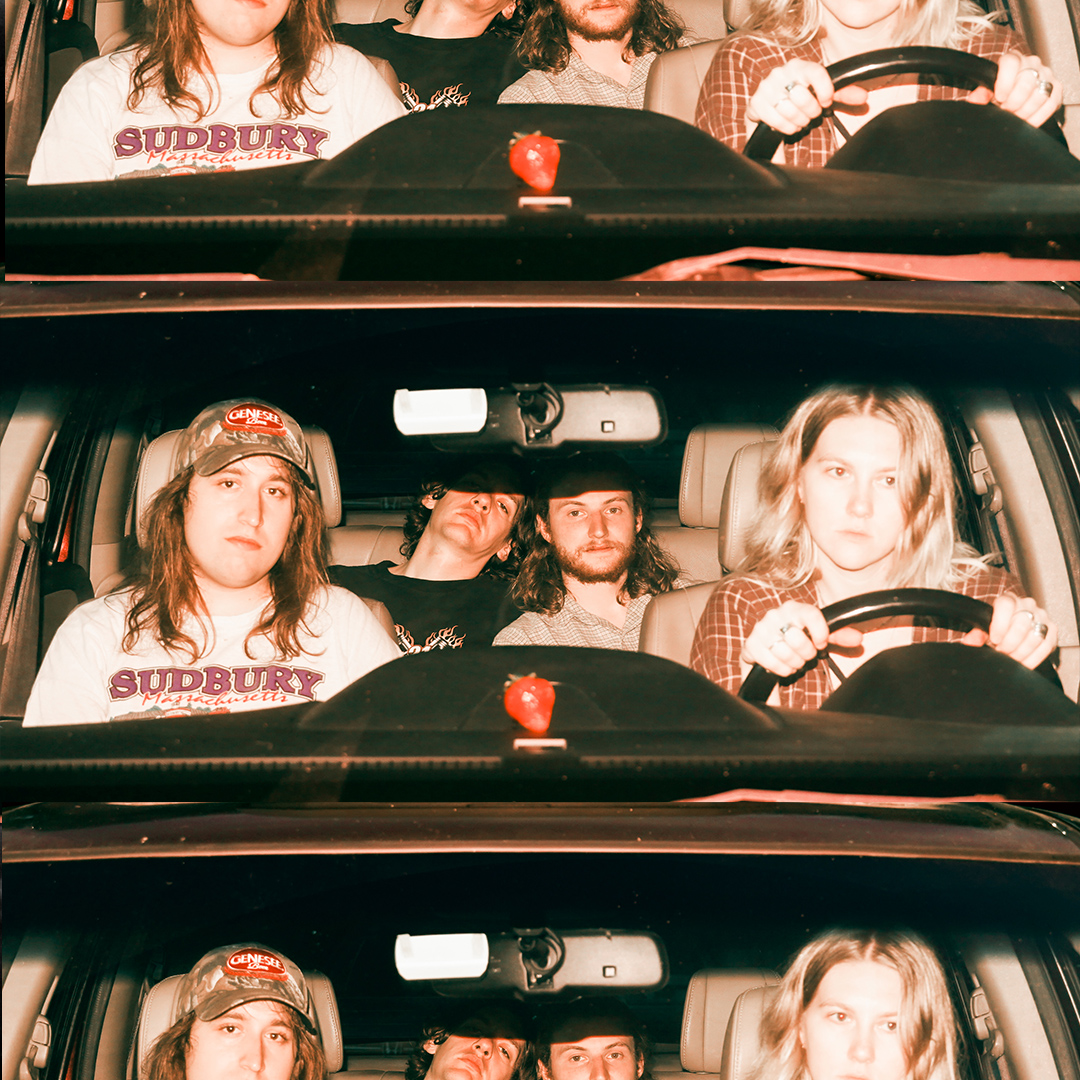
The band brings the vibe down for a song to play with some new textures, like the fresh jangle of a keyboard whistling from the fog. In a call back to their last two records, which were written before their move to New York spun the world in vast, neon circles, the wide space of a forever-place is examined. The title perfectly captures the dark, brooding, emo heart of the song.
Ali says: “‘Tim’ is the oldest song on the album. It started as a garage band demo I made on my phone. I pretty much wrote the arrangement in a day. It was the only song that made it onto the album that was started before Jake and I moved to Ridgewood. There’s this old church that you could see from our living room in Troy, and it always reminded me of something out of a Tim Burton film. I think I named the demo and planned on changing it at some point, but it stuck.
“There were a lot of older Laveda tropes in the initial demo, but we managed to strip it down a bit with the live band. We felt that the song was strong enough at its core where we could really interpret it in any way and still make it sound cool, so we just rehearsed and recorded it in the same style as everything else on the album. I think it serves as a nice breath of fresh air on the record”.
Joe says: “This song was sneakily one of the more challenging songs for me. The vocals dance around the rhythm in a way that doesn’t follow an even meter, at least to my ear. Now that we’ve played it a hundred times, I think it’s one of the strongest Laveda songs, and it’s so much fun to play. Dan’s really holding it down.”
‘Lullaby’
Laveda have pulled us through a whirlwind of resplendence and ugliness, love and hatred, fear and loathing in equal measure. There’s only one way to end it: “Sludgy weirdness.”
Ali says: “It’s about limerance. Being so romantically obsessed with someone and just hoping that they feel the same way. When I scream at the end it feels like all the overwhelming intrusive thoughts are coming to a head.”
Jake says: “When Ali showed me the demo of ‘Lullaby’, we both knew the record was done being written. It was the last song added to the track list and very much fit as the closing track in our minds. I loved the natural sludgy weirdness the demo had. I wrote the guitar line for it immediately upon first listen. This track came together real quick. It was almost going to be a drumless song but Joe insisted that adding drums would make it even better and he was definitely right. We debated doing a soft ending as well but keeping the theme of the record in mind, it had to be an explosive ending.”
Joe says: “This song has such a strong emotional connection for me. I can’t explain it exactly, but every time we get to the end section it feels like all of my negative energy is coming right out onto my drums.”
