


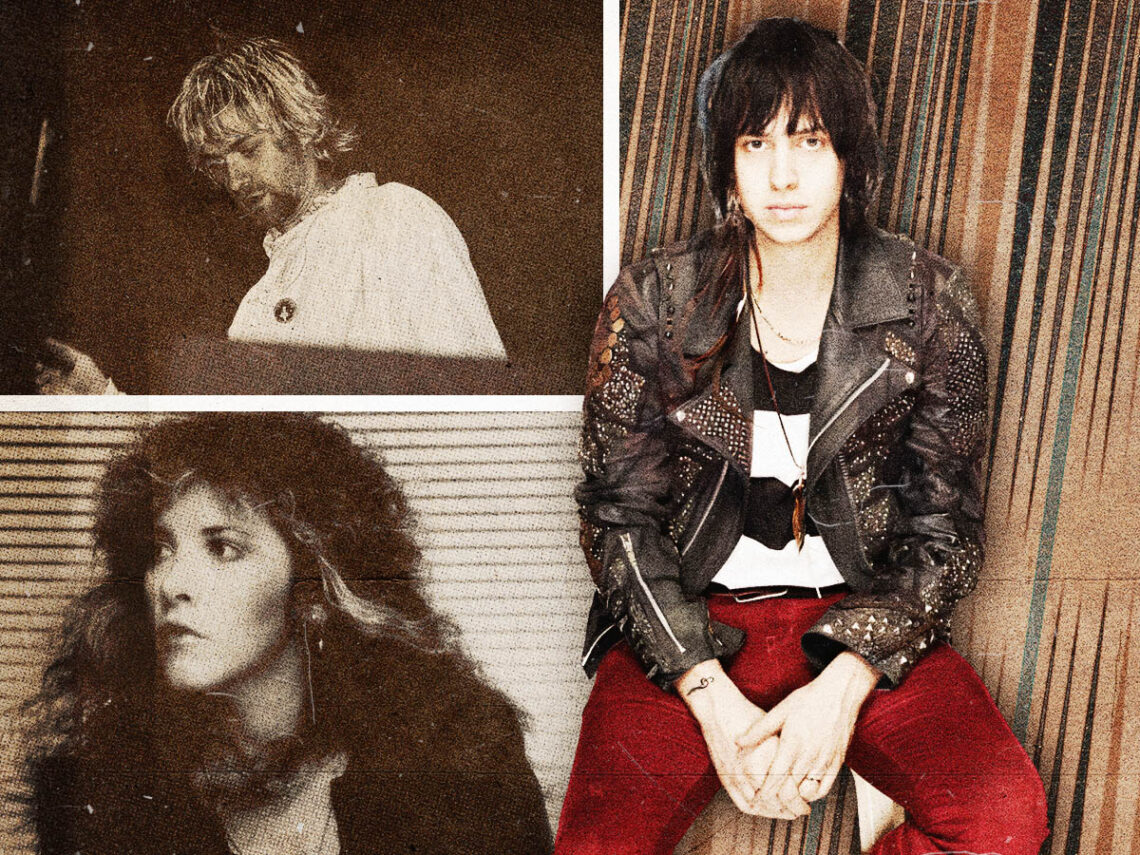
10 demos that are better than the studio recording

As I traverse the joyous expanse of recorded sound, I often find myself rolling my eyes, internally uttering the phrase, “less is more”. All too often, bands and artists will take the delicate pearl of an idea and wrap it in so many layers of bubble wrap that the initial intention is intangible. Especially in the modern day, raw artistic character often found in demos is removed by the crystal clarity of overproduction and auto-tuning. Even acts such as The Strokes and Fleetwood Mac have fallen into this trap.
Music is an art; hence, like an oil painting, it should have blemishes and personal stroke marks that make it distinctive and add character. Nobody could argue, for instance, that Bob Dylan or Leonard Cohen’s vocals were orthodox, but they were perfect for reflecting the true gravity of their lyrics.
During an appearance on Dutch TV, Mick Jagger of The Rolling Stones once defended Dylan’s vocals, stating: “It’s like a voice that’s never been one of the great tenors of our time, but it’s got a timbre, a projection, and it’s got a feeling to it. You were talking earlier about as you get older, your voice takes on a different resonance, different pitch and so on. So there’s something to be said for that.”
Beyond perfect autotuned vocals, artists often tamper with a near-perfect idea in favour of adhering to stylistic expectations. While in conversation with Uncut, Liam Gallagher discussed one of his rare songwriting contributions to Oasis. After explaining that his track, ‘Little James’, was inspired by John Lennon’s ‘Beautiful Boy’, Gallagher revealed how it was transformed following its inception.
“Originally, I wanted it to be acoustic. Have you heard Lennon’s demos? They’re dead crackly, and it’s just on a guitar, and that’s the way I’d like to write music. But if it’s gonna go on an Oasis album, it’s gotta be big, hasn’t it? So then I played it to Noel, he went away with the band, and he goes: ‘What do you think of this?’ I went: ‘It’s fucking top.'”
Granted, most early demo ideas benefit from a little sprucing up, but sometimes, a rough and ready demo is just the ticket. Today, we remember ten perfect demos that were better than the eventual studio recordings.
10 demos that are better than the studio recording:
Bob Dylan – ‘Every Grain of Sand’
Following Bob Dylan’s prolific and powerful spell through the 1960s, his output has been undoubtedly brilliant, but the moments that flash with gold have been scarcer. In 1981, Dylan released his 21st studio album, Shot of Love. The release was given mixed reviews, but few could deny the powerful, poetic flawlessness of ‘Every Grain of Sand’, its poignant farewell.
‘Every Grain of Sand’ marked a return to lyrical form for Dylan, with some arguing it as one of his finest songs of all time – it was certainly his best since 1976’s ‘Hurricane’. For me, this 1980 demo recording carries a raw passion in Dylan’s lyrics and the stripped-back instrumentals that frame the haunting words much better than in the album version.
The Strokes – ‘You Only Live Once’
This selection is likely to divide Strokes fans out there. ‘You Only Live Once’ was released in 2006 as a single and the first track on The Strokes’ third studio album, First Impressions of Earth. With this release, The Strokes found it difficult to live up to the expectations set out by their masterpiece debut but had they included this demo, perhaps the tides wouldn’t be so unequal.
‘You Only Live Once’, as we know it on the album, drives with a fast-paced electric rhythm section you could comfortably tap your foot and bob your head to at the indie disco. The below demo version is a far cry from the atmosphere conjured in the eventual studio take – even the title is different. Under the original title, ‘I’ll Try Anything Once’, Julian Casablancas brought beautiful poignance to the lyrics in this raw, subdued piano demo.
Men At Work – ‘Down Under’
In 1981, the Melbourne-based new wave band Men At Work released one of the decade’s most instantly recognisable singles. ‘Down Under’ was nothing short of a global sensation, shooting to the top of the charts in the UK, USA and Australia. The track was unusual but thanks to a danceable reggae-inspired beat, Colin Hay’s comically immersive lyrics and Greg Ham’s infamous flute solo.
The flute solo was found to be similar to a children’s song written in the ’30s, leading to a heated legal dispute in the late 2000s. However, fewer of us will be aware that an early demo of the hit was released in 1980 as the B-side to the band’s first local single, ‘Keypunch Operator’. Perhaps it’s because I’ve worn out the now-well-known version, but I currently side with this more laidback incarnation – mostly thanks to its more prevalent guitar parts.
David Bowie – ‘Ziggy Stardust’
After a slow rise to prominence through the late ’60s, David Bowie became world famous in 1972, thanks to the release of The Rise and Fall of Ziggy Stardust and the Spiders from Mars. The album marked the pinnacle of the glam-rock era and introduced the first and most famous of Bowie’s alter egos, Ziggy Stardust.
Though the album follows a running concept, the titular star receives his most obvious welcome in ‘Ziggy Stardust’. While the record is packed with highlights, the titular song is one of its shining moments. For that reason, I’ll probably ruffle a few feathers when I claim the stripped-back demo below is more enjoyable, thanks to its less glossy visage. In this version, Bowie’s vocals take on a graver, more captivating tone.
The Velvet Underground – ‘All Tomorrow’s Parties’
Before The Velvet Underground found their manager an artistic mentor, Andy Warhol, Lou Reed and John Cale would sit together and jam along to early ideas. Thankfully, over the years, some of these early jams have been recovered for public release. Although the band never set a foot wrong in their early albums, the acoustic demos tapes are home to some absolute gems.
This sprawling 18-minute demo of ‘All Tomorrow’s Parties’ is among those gems. The song appeared on the Velvets’ 1967 debut album, with the lyrics handled by Nico. Although I adore the more polished original, these raw instrumentals and vocal harmonies between a pre-fame Reed and Cale make for a charming eye-opener any Velvets fan will appreciate.
George Harrison – ‘All Things Must Pass’
In the dying days of The Beatles, tensions simmered as Paul McCartney began to take the reins. Although George Harrison had shown his songwriting prowess over some of the band’s albums in the late ’60s, he struggled to muscle his ideas in amongst the turgid might of the Lennon-McCartney output.
During some of the final Beatles sessions, which resulted in material appearing on Abbey Road and Let It Be, Harrison, in his frustration, decided to record demos for some of his own tracks without the rest of the band’s input. One of these Beatles-era demos was ‘All Things Must Pass’, the eventual title track for Harrison’s first post-Beatles solo album. I hope you’ll agree that this demo is nothing short of exquisite.
Fleetwood Mac – ‘Dreams’
After welcoming Lindsey Buckingham and Stevie Nicks to their ranks in 1975, Fleetwood Mac became the world’s biggest pop-rock sensation. After turning heads with their eponymous album, the band positively shook the ground with 1977’s follow-up, Rumours. The album was the seventh best-selling LP of the decade and remains the 12th highest-selling of all time.
As a legacy-defining release, Rumours is chock full of powerful ballads and pin-point rock-outs, but one of its purest and most memorable moments was ‘Dreams’. In this slower, stripped-back demo, the bubbling, ethereal instrumentals allow Stevie Nicks’ vocals to shine through with a new level of clarity and emotion.
Nirvana – ‘All Apologies’
Following their triumphant 1991 album Nevermind, Nirvana looked to Kurt Cobain for some new material to get cracking on in the studio. Before the frontman’s tragic death in 1994, the band had one more album to offer, 1993’s In Utero. One of the album’s defining moments came with ‘All Apologies’, the album’s second single, which shared a double A-side with ‘Rape Me’.
As Nirvana’s immensely popular MTV Unplugged in New York sessions of 1994 attest, Cobain’s voice was framed particularly well in a more stripped-back setting. For me, Nirvana’s acoustic demos and the MTV sessions boast some of the band’s most enjoyable material and this demo version of ‘All Apologies’ just about beats its studio counterpart.
Oasis – ‘Hello’
As suggested by Liam Gallagher in the above introduction, bands can often feel duty-bound to adhere to a particular style with which they’re associated. For a band like Radiohead, who have evolved over time to broaden their style-stock, this wasn’t such an issue, but throughout the ’90s, Oasis built a fanbase that expected texturised, anthemic tracks, whether brooding ballads or rock-outs.
In 1995, Oasis hit a creative and commercial peak with their masterpiece album, (What’s the Story) Morning Glory?, among its soaring stadium fillers was ‘Hello’. In the final album version, Liam took lead vocals in a polished studio recreation of what was once a more delicate acoustic gem, as brilliantly demonstrated by Noel below.
Nick Drake – ‘Place To Be’
After releasing his first two underappreciated LPs, Drake recorded one final album, 1972’s Pink Moon. The stripped-back, acoustic masterpiece came as a gloomy foreshadowing of his tragic death two years later. Among the album’s highlights is ‘Place To Be’, a song that gives one of the purest and most emotive examples of Drake’s lyrical genius.
I’m certainly not here to suggest that there is any particular fault with the album version, for which Drake opted to strum his acoustic rhythm. However, upon listening to this early homemade demo, in which Drake melodiously fingerpicks the chord sequence, I can’t help feeling he could have worked some of this magic into the final studio version – even if just for a few bars.

Never Miss A Tale
The Far Out Bob Dylan Newsletter
All the latest stories about Bob Dylan from the independent voice of culture.
Straight to your inbox.