


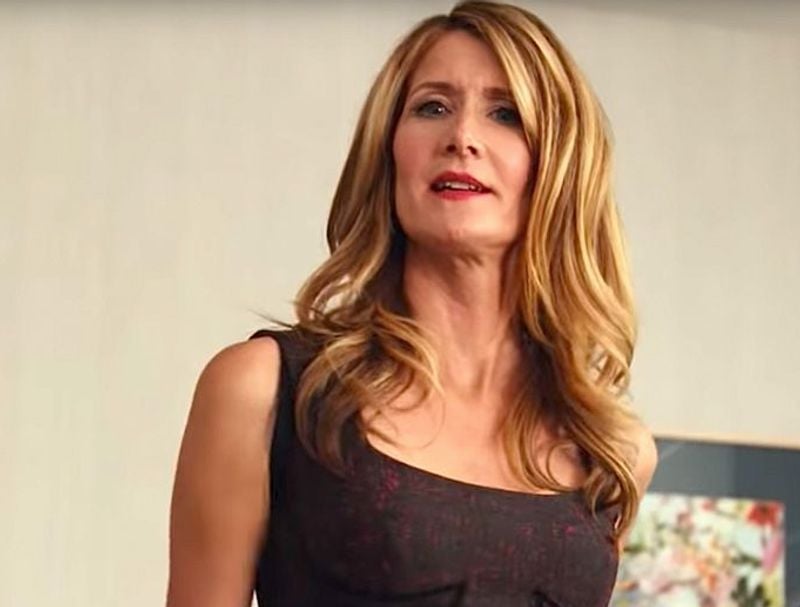
Laura Dern discusses the positive changes in contemporary cinema

There are many reasons to love Laura Dern. An icon of cinema, she’s starred in many of our most cherished flicks, and more often than not, she has played strong female roles that show up their male counterparts, a refreshing point when you note Hollywood’s tendency to put men front and centre of cinema.
From Wild at Heart to the Jurassic Park films, she’s delivered many performances that have been lauded as stellar, with her invariably backing up her acting talent with an affable personality that is refreshing for an actor of her status.
Dern is most famous for her collaborations with surrealist master David Lynch, and in addition to 1990’s Wild at Heart, she’s also starred in Blue Velvet, Inland Empire and Twin Peaks. Outside of the Lynch universe, she’s also lent her talent to Star Wars: The Last Jedi and Greta Gerwig’s Little Women.
One of her greatest recent roles came in Noah Baumbach’s celebrated 2019 title Marriage Story. She leant her maturity to the role of Nora Fanshaw, Nicole’s lawyer, a prominent supporting role in the film. When she sat down The Talks, she discussed the project before shedding some thoughts on how the movie industry is changing, with women becoming more prominent after years of being sidelined by men.
At one point, the attention turned to her celebrated monologue in Marriage Story and how she could relate to both her and Scarlett Johansson’s characters. She said: “I don’t know about the other women out there. But I feel like I did enter a relationship kind of wanting to please and make it right and only later going, ‘Wait a minute, you never asked what I wanted, but I never said what I wanted either because I didn’t know I was allowed to.'”
Asked if she thinks things are changing for the better, Dern opined: “I think we’re all learning together what it is to be in partnership because for most of our parents, the man was the one setting the rules. So, yes, things are changing and evolving, so I think we all have to evolve together and not resent men for not considering what we wanted when we weren’t expressing what we wanted. It’s complicated. And hopefully this is something that has shifted for my daughter, who feels very fierce in her voice. I think that’s being spurred by a horrific political climate in our country — there’s a lot of really loud, angry girls in America right now! It’s a very exciting thing.”
She concluded: “I do think there is a permanence in the fact that corporate America has been shamed by their consumer saying, “Well, what does your board room look like?” So now, slowly, they’re starting to see that they have to have a woman on the board of 13, maybe there are one or two women on that board. I do think those numbers will grow because it matters to the people who are buying their product — and that is where the change is. The change is about money. It’s not about us becoming more conscious. I naively thought in my twenties that we are going to become evolved, there’s going to be parity. No, it’s when people stop paying. But I think anytime we see advancement, history shows us that fear rises at the same time. So we can be very proud of ourselves as we affect any change.”
