


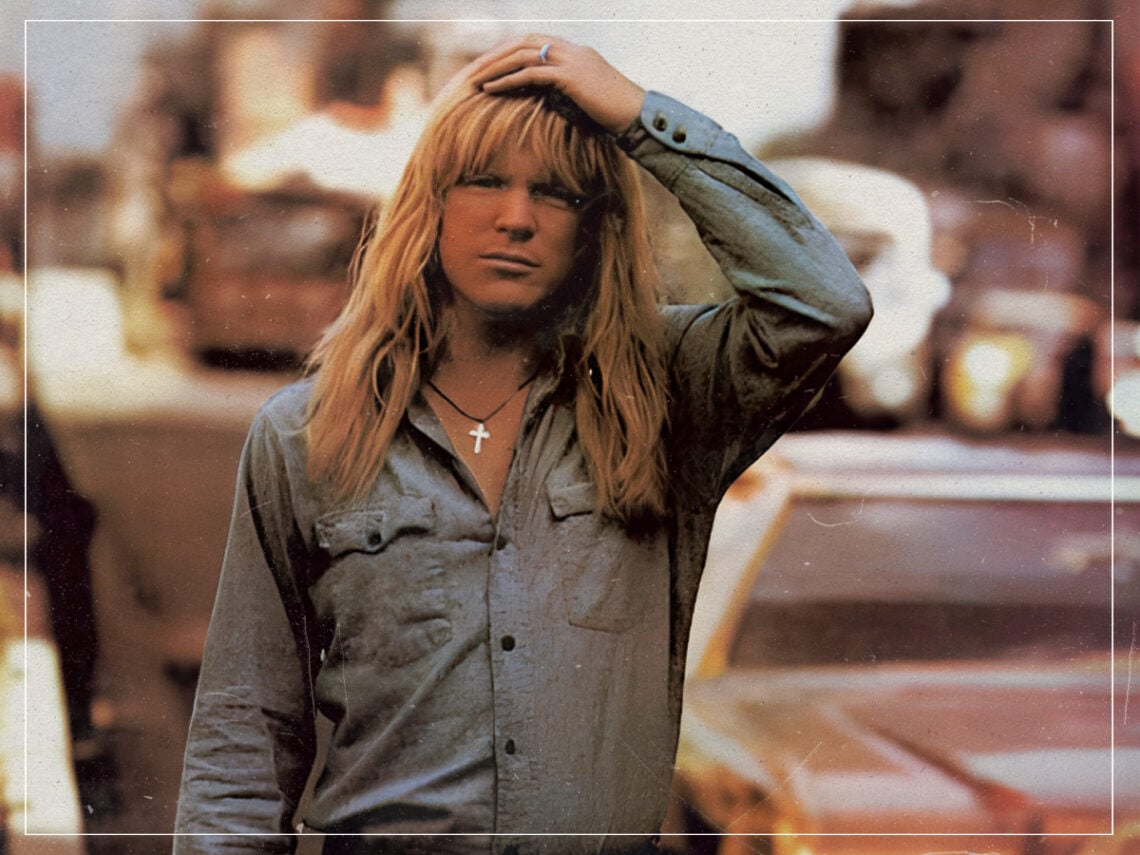
Larry Norman: the strange life and times of rock music’s original ‘Jesus Freak’

Rock music, and indeed that of the 1960s and 1970s, usually brings to mind the tired old clichés of sex, drugs, and all the other trappings of fame fans mythologise about. However, some trod a different path, motivated by more righteous means. The most notable of these radicals was Larry Norman, music’s original ‘Jesus Freak’. In many ways, he was the Jimi Hendrix of Christian sonics and laid down many classic licks on the Fender Stratocaster, including ‘Why Don’t You Look Into Jesus?’
Born in Texas to a Southern Baptist family, Norman’s belief system would converge with that of California’s nascent hippiedom after they relocated to the San Francisco area, the future centre of the counterculture, which would impress its spirits upon his God-fearing self. This strange paradox ultimately created Christian music for the contemporary era.
Although he never learned to read or write notation, Norman formed The Back Country Seven in high school, also featuring his sister Nancy Jo. After graduating, he continued to play the local circuit. Destined for a life full of wandering and spreading the gospel through music, he dropped out of university to throw himself at it.
In 1966, Norman opened a concert for the group People! in Pacific Grove, California. Making a splash, it was only a short time before he was hired as the headliners’ primary songwriter, sharing lead vocals with his Country Seven partner Gene Mason. An industrious outfit, they performed roughly 200 shows annually, including formative ones with hedonistic icons such as The Animals, The Doors, The Dave Clark Five, Jimi Hendrix, Janis Joplin, and Van Morrison.
A couple of years later, they released a cover of The Zombies’ ‘I Love You’, a hit single that sold over a million copies. Pete Townshend even once suggested that The Who’s masterpiece Tommy was inspired by the rock opera ‘Epic’ by the group, but he later denied it. Nevertheless, Norman evidently had musical chops that could compete with the era’s atheistic greats.
Norman left the band soon before Capitol released their debut. Not long after quitting, he experienced a powerful spiritual encounter that forever changed his life’s direction. It was the Holy Spirit, with flowers in his hair and Harem pants, outstretching his hands, showing him the way. Already well-versed in the scriptures and the power of rock music, this was the start of a long road to the apex of the musical Mount of Beatitudes, from which he would transmit his sermons.
Now a changed man, his musical journey morphed into something else entirely. In July of that year, Norman was offered a job writing musicals for Capitol Records, which saw him move to Los Angeles, also spending time spreading the gospel on the street. He would relentlessly stroll up and down Hollywood Boulevard numerous times daily, talking to everyone he encountered, from hippies to businessmen. Following the teachings of his faith, he claims he spent half his royalties from People! on opening a halfway house and buying food and clothes for those he converted.
During this period, Norman started to pioneer the rock-gospel genre. In 1969, he released his debut solo album, Upon This Rock, which is now widely deemed the first Christian rock album. There are spurious claims that it was the aptly named Crusaders’ 1966 effort, Make a Joyful Noise with Drums and Guitars, but Norman’s angle was much more unapologetic. Just listen to the ‘Sweet Sweet Song of Salvation’.
Despite the sentiment, it was a flop, and the label dropped him. However, slowly, the record started to resonate with the religious branch of the counterculture, and sales increased after it was distributed in Christian bookshops.
In later life, Norman explained his complex relationship with the church and the Christian music industry he helped create. He wrote in 2007: “I love God, and I follow Jesus, but I just don’t have much affinity for the organised folderol of the churches in the Western World.”

Creating music confronting social issues such as politics, free love, commercialism and religious hypocrisy, Norman also revealed how he appealed to so many despite the supposedly fusty nature of religion. He said: “My primary emphasis is not to entertain. But if your art is boring, people will reject your message as well as your art.” He would also criticise Christian popular music’s contemptible lyrics, metaphors and generally “sloppy” nature. A true innovator.
In the early 1970s, Norman’s star rose further. He performed to large audiences, including at Explo ’72, the six-day evangelist conference in Dallas, dubbed the “Jesus Woodstock”. Following it, he had attracted legions of disciples. In 1974, he founded Solid Rock Records to promote Christian artists who rejected commercialism. Later that year, he continued to legitimise the genre by founding the Christian booking agency Street Level Artists Agency.
In 1976, he released In Another Land, the best-selling album of his career. It distilled his Christian rock approach in anthemic form, featuring tracks such as ‘I Am a Servant’ and ‘Hymn to the Last Generation’.
Tragically, though, his time delivering sonic sermons from the summit would be cut short. In 1978, Norman was injured in an aeroplane landing at Los Angeles International Airport. He suffered mild brain damage after being hit by parts of the cabin roof, leaving him unable to complete his art. The next time he would try to record an entire album would be the derided 1986 effort, Home at Last. That was the sound of a pastor whose congregation had all but renounced him.
Norman trudged on, giving the most star-studded show of his career only the following year. There, he affirmed his status in the annals of Christian music when performing for fellow believer President Carter and 1,000 other guests in the Old Fashioned Gospel Singin’ concert at The White House. Yet, he could not stem the tide of change. Soon after, idealistic, musical and other disputes with several Solid Rock artists led to them organising an intervention in June 1980, which resulted in him closing the company. Like Judas Iscariot, the apostles had betrayed their saviour.
Following his former friends betraying him to the Romans, Norman fled to England with his father and founded Phydeaux Records to compete with the bootleg market by selling his rarities. It was a moderate success, and he returned somewhat renewed to his homeland in 1985. However, it seemed as though God had forsaken him once more, and the company collapsed when the head of distribution was arrested for check forgery, and the FBI seized their merchandise.
In February of 1992, Norman endured a nine-hour heart attack that caused permanent damage and saw him hospitalised 13 times afterwards. He had a defibrillator fitted three years later, allowing him to keep performing. Plagued by health issues, throughout the remainder of his life, he persisted in playing and releasing albums to raise funds for the expenses his heart problems yielded. He died on February 24th, 2009, aged 60, at home in Salem, Oregon, after posting a farewell on his website the previous day.
If it wasn’t already clear from his best efforts, Larry Norman crossed the spiritual divide like none other. He might have asked us to look into Jesus, but even if that specific request was ignored, people certainly delved deep into his complex and full-bodied sonics. With disciples in U2, Pixies and Modest Mouse, it didn’t matter what he was singing about; it was authentic and, most importantly, incisive.
