


The landmark court case that changed sampling forever: “Stealing is rampant”

You know your glitzy label lawyers aren’t going to be able to salvage much when the court opens its judgment with a quote from the book of Exodus: “Thou shalt not steal”. The creative sampling wave that sent hip-hop flourishing in the 1980s seemed like it would just keep on growing.
Artists were attaching small pieces of different samples together into danceable mosaics, with creators like Beastie Boys including up to a hundred samples in one album. Constraints around collaboration were pretty lax, but in the true fashion of musical corporate greed, it wasn’t meant to last.
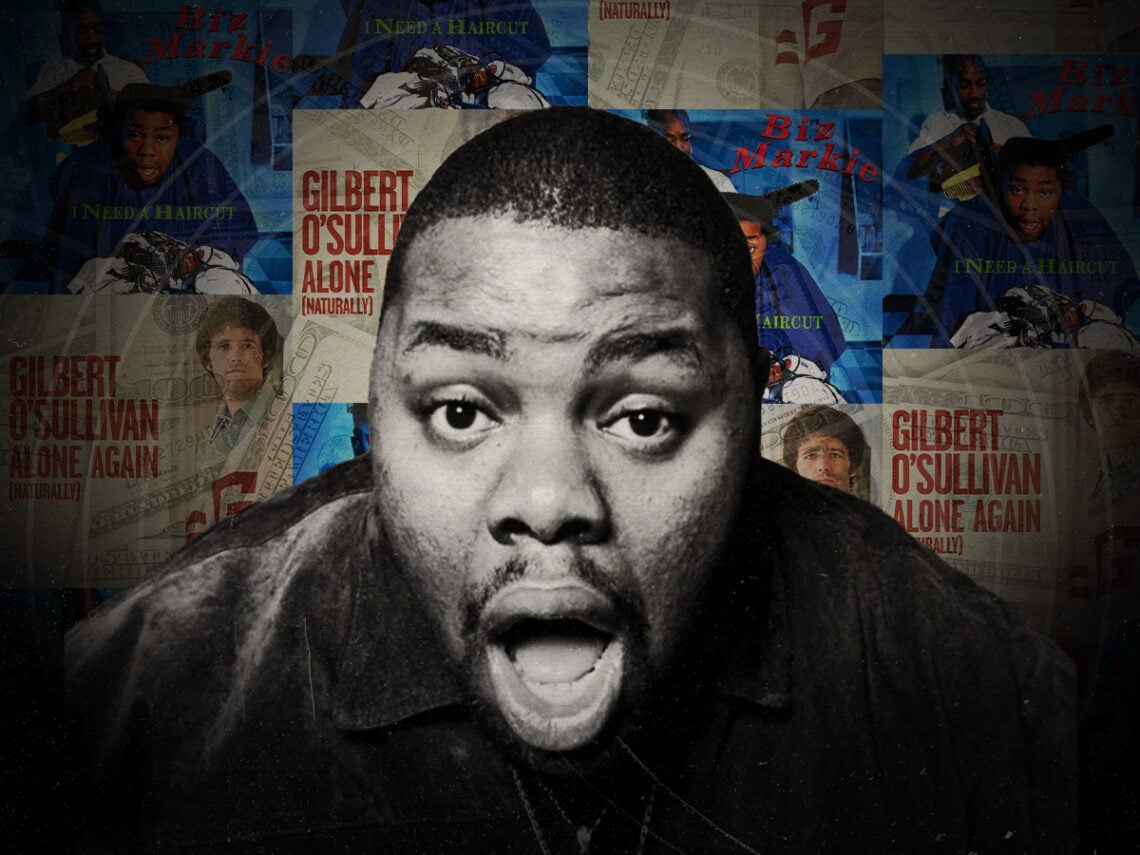
Some artists had begun to reach out to sample copyright holders every now and then to ask permission for their use, but it wasn’t so common an occurrence. This trend was reversed with the shamelessly copied ‘Alone Again’: Biz Markie’s production team had reached out to Gilbert O’Sullivan to request permission for use of elements from his almost identically named ‘Alone Again (Naturally)’, a soft-sung ballad from 1972. O’Sullivan withheld permission, but that didn’t matter – Markie’s team went and did it anyway.
Markie’s song, released on his 1991 album I Need a Haircut, sampled about 20 seconds of O’Sullivan’s song, including a manipulated version of the chorus, which is an almost direct transposition from “I truly am indeed, Alone again, naturally” to “I’m alone again, naturally, Alone again, naturally”.
Biz Markie had hoped the record wouldn’t get across the pond, and definitely didn’t think that a British musician would come all the way to New York to claim justice for his song that had been forgotten for almost two decades. Yet against all expectations, Markie was dragged into federal court with Warner Bros.
O’Sullivan didn’t care for damages: he simply wanted the theft of his intellectual property to be put right, demanding ’Alone Again’ be withdrawn from the market. The defence argued that unauthorised use of musical samples was rife in the industry, and thought they’d have a clear shot at winning, so much so that Markie didn’t even show up to court. However, the judge found in favour of the copyright infringement, ruling against obnoxious labels and their exploitations of others’ ideas: “The defendants… would have this court believe that stealing is rampant in the music business and, for that reason, their conduct here should be excused.”
The rapper was ordered to pay damages of $250,000, and Warner Bros took the song off his record. The case was so damaging to Markie’s reputation that he vengefully named his next album All Samples Cleared!
The ruling had a chilling effect on hip-hop, with artists and their labels suddenly scrambling to secure the rights to samples they had already been using, and a notable example was Arrested Development’s song ‘Tennessee’ from their 1992 album 3 Years, 5 Months & 2 Days in the Life Of… since it was released simultaneously to O’Sullivan’s landmark ruling. The Atlanta hip-hop group had sampled the single word “Tennessee” from Prince’s 1988 song ‘Alphabet Street’.
The group’s frontman Speech explained that they didn’t ask for sampling permission as “I didn’t know to in 1991, the sample laws weren’t very clearly set out back then” – yet as soon as the legal ground was cleared, Prince was safe in charging them what ended up amounting to $100,000.
