


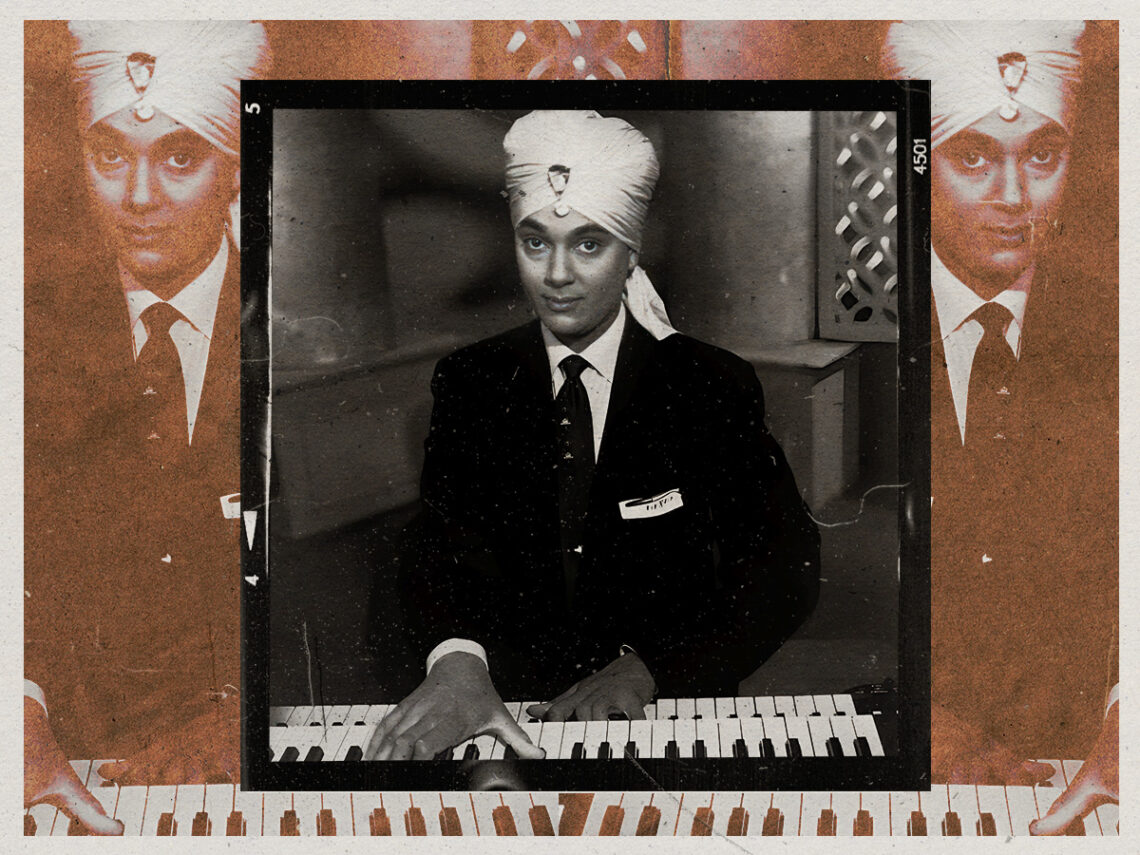
Korla Pandit: the curious Hollywood imposter who paved the way for Liberace

For fans all over the world, Liberace will always be the perfect intersection of music and flamboyant fashion. However, before the famous pianist became a bonafide cultural phenomenon, he had a lesser-known predecessor who entered Hollywood as an imposter. That man was none other than John Roland Redd, a Black American who appropriated an Indian identity in order to make it in the cut-throat world of show business.
Born in Missouri in 1921, Redd showed signs of musical talent from an early age, and his family supported him by teaching him how to play the piano. He grew up in an environment that was appreciative of music, especially because his siblings were also involved in the scene. However, none of them had any idea about the crazy trajectory that Redd was going to embark upon after he decided to move to Los Angeles for a better life.
Initially, Redd managed to get a job at a local radio station by pretending to be a Mexican named ‘Juan Rolando’. There’s a darker reason behind this deception, given that Black Americans weren’t allowed to be a part of the Musicians Union back then. Eventually, he brainstormed with his wife to create an improved onstage persona, and they landed on ‘Korla Pandit’: a French-Indian music expert from New Delhi who was a devoted student of the craft.
John Turner, the director of a documentary on the enigmatic musician, explained the historical significance of choosing an Indian identity. During an interview, Turner elaborated: “At that time (1949), if you were from India, you were classified, according to immigration, as Caucasian, which meant you could work in the White Musicians Union, which offered more opportunities than those available in the Black Musicians Union.”
Creating an interesting cover story, Redd claimed that he received musical training in England when he was young and came to the US at the age of 12. According to the newly born Korla Pandit, he was a graduate of the University of Chicago, and music was always his calling. After deciding to use the identity in his personal life as well, Redd started getting regular gigs on projects such as Hollywood Holiday before he got the opportunity of a lifetime.
As a result of a chance meeting with TV legend Klaus Landsberg, Redd was offered a television show titled Korla Pandit’s Adventures In Music, which was aired by a local station. Due to his mysterious personality and his impressive commodification of everything “exotic”, Korla Pandit attracted national attention. Experimenting with instruments such as the organ and the piano, Redd chose to let his music do the talking.
While detailing the Korla Pandit phenomenon, Turner added: “He wore a turban with a jewel in the middle and was very mysterious, as he never talked during any of his 900 shows, yet stared directly into the camera and into the hearts of his female viewers. At that time, most Americans knew nothing of the true culture of India, except for the cultural stereotypes they saw in movies that portrayed Indians as rope-climbing magicians and men of mystery.”
Of course, his career was complicated by the arrival of Liberace, who expanded on the on-screen persona in much grander ways. Redd, who had himself built a career out of lies, claimed that Liberace blatantly stole his act. In the years that followed, he became involved in lectures dedicated to spiritual philosophy and music, but he had to wait until the 1990s for a renewed wave of interest in his work from a new generation.
Redd passed away in 1998, leaving behind a complex legacy that continues to be examined and evaluated by scholars as well as fans.
Watch the trailer for the documentary below.
