


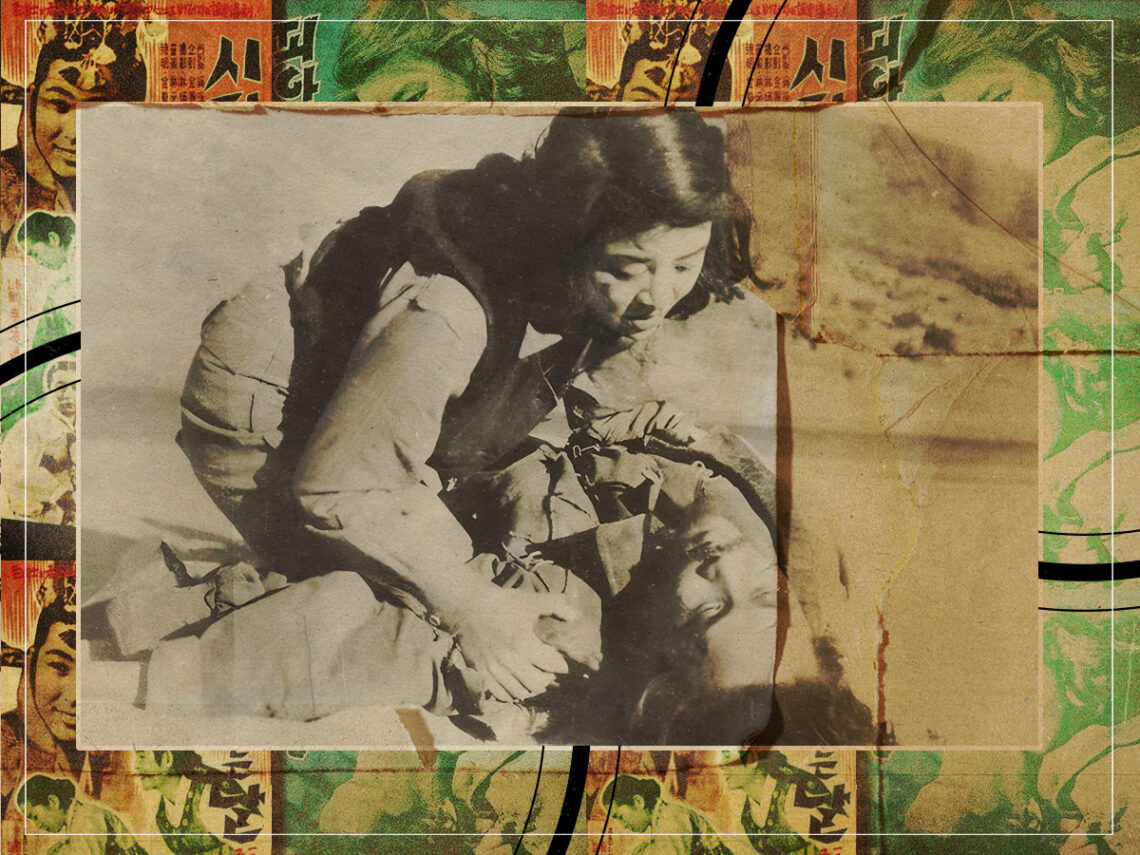
‘Piagol’: the Korean movie banned for violating national security laws

Movies can be banned for any number of reasons, but breaching national security laws is definitely among the rarest. Thanks to its perceived disregard for the legislation passed in the wake of the Korean War, director Lee Kang-cheon’s Piagol was initially banned from being screened.
The conflict between the Soviet and China-supported forces of the North and the United Nations and United States-backed South had only ended in July 1953 when an armistice was signed, with tensions continuing to linger in all aspects of society, art, and entertainment.
As North Korea was a communist state, anyone seen to be supporting or sympathising with those political leanings opened themselves up to scrutiny. As it applied to Piagol, the absence of any South Korean troops within the story and the humanisation of North Korean forces—who acted as the protagonists of the story—was tantamount to illegality.
Since the war began in 1950, local audiences had become accustomed to Northern soldiers being portrayed as faceless, inhumane monsters from all walks of life. Piagol, on the other hand, centres on a squadron that refuses to acknowledge the armistice and instead holed up in the mountain region of Jirisan to carry out its operations in the name of its home nation.
By turning North Korean army personnel into fully realised characters with emotions, motivations, and interpersonal dynamics, Piagol went against the grain of an entire nation. Whether or not it was overly sympathetic didn’t matter to the authorities, who decided to ban the film outright in line with the staunch anti-communism laws that had been implemented in South Korea.
The principal players in the narrative all harbour strong communist ideologies, something Kang-cheon didn’t shy away from. It would be an understatement to say it was unusual for a film made in the South to zero in on figures – fictional or not – who were unwaveringly loyal to communism. It’s not the driving force, though, with the meat on Piagol‘s bones coming from the circumstances they find themselves in, not the belief system that got them there in the first place.
The local Ministry of Culture and Education especially didn’t care for the last scene, which showed No Kyeong-hie’s Ae-ran as the sole survivor coming down from her mountain hideaway. Kang-cheon opted for a more open-ended conclusion that left her fate up for debate, but the ruling bodies felt that the finale made South Korean security look weak by having a Northern battalion survive for so long.
As a result, an ultimatum was laid out for the filmmaker that would allow the ban to be lifted. Acquiescing to the demands, Piagol was re-edited to show Ae-ran becoming overlapped with an image of the South Korean flag to signify that despite her former allegiances, she was now in the safe and solid embrace of a free nation.
In his mind, Kang-cheon made an anti-communist movie with an underlying humanist message. Unfortunately for him, he came under fire for not making those feelings strong and/or clear enough, with his film initially being outlawed for being pro-communist. Once the final scene was altered, the issues between the two parties were resolved, and it’s been regarded as the official ending to Piagol ever since.
