


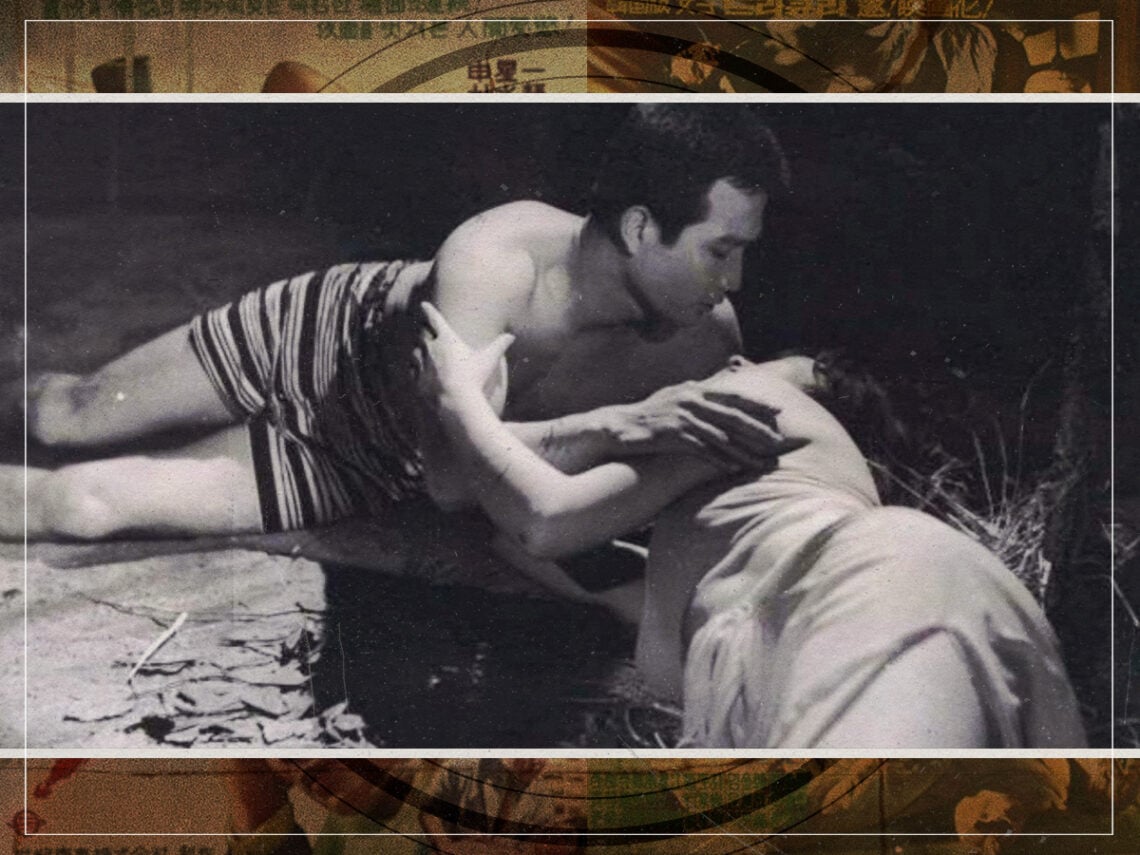
‘Empty Dream’: the Korean film outlawed and charged with obscenity

Thanks to ever-evolving censorship laws and lax attitudes towards films that push boundaries and convention, movies don’t get banned anywhere near as much as they used to. Unfortunately, 1960s Korean cinema hardly embraced the hedonistic ideals of the decade, which did no favours for Yu Hyun-mok’s Empty Dream.
Inspired by Japanese director Takechi Tetsuji’s 1964 erotic drama Daydream – which was itself based on a short story by author Jun’ichirō Tanizaki – Hyun-mok sought to put his own spin on the material. He admitted to reading the screenplay of his spiritual predecessor but stopped short of watching the movie because he didn’t want to be subconsciously influenced by its content.
Shin Seong-il, Park Soo-jeong, and Park Am play the three lead roles in a narrative revolving around a love triangle. While that seems fairly straightforward, routine, and inoffensive in microcosm, Empty Dream‘s combination of surrealism, expressionism, existentialism, and eroticism proved so shocking to the ruling bodies they felt they had no other choice but to ban it from public view.
The story follows a young man and woman who become familiar and friendly with each other while attending the same dentist’s office. When they’re put under anaesthesia for a routine procedure, it becomes a transcendental experience that draws them into a love triangle with the dentist that unfolds within their drug-induced hallucination.
Thanks to their unique experiences within the shared dreamscape, any chance of a real-life love affair is thwarted as they re-enter the real world. Even though it premiered in 1965, it wouldn’t be for another two years. Director Hyun-mok found himself fined for public obscenity, and the ban covering Empty Dream lasted for almost 40 years until it was screened at the Bucheon International Fantastic Film Festival in 2004.
Soo-jeong was heralded as one of the brightest stars emerging in the decade’s local cinema scene, but six seconds of nudity – tasteful nudity, at that – was clearly six too many. According to the Korean Film Archive, the local Information Agency didn’t just hit Hyun-mok with obscenity charges but sentenced him to 18 months in prison for producing sexually explicit content and placed him on probation.
There was a political element in play, though, with the filmmaker being partly castigated for supporting fellow director Lee Man-hee and publicly blasting Korea’s anti-communist policies. Feathers sufficiently ruffled, a combination of suggestive cinema and open opposition to existing legislation created a double-whammy that saw Empty Dream lumped in with its director’s worldviews and treated as a violation of national security laws.
Empty Dream was penalised as a direct result of its creator’s comments despite the outrage being barely perceptible among the wider Korean public, underlining the wide-ranging power the authorities held over fictional stories and the people who made them, never mind the consequences that could befall anyone who stepped out of line.
