


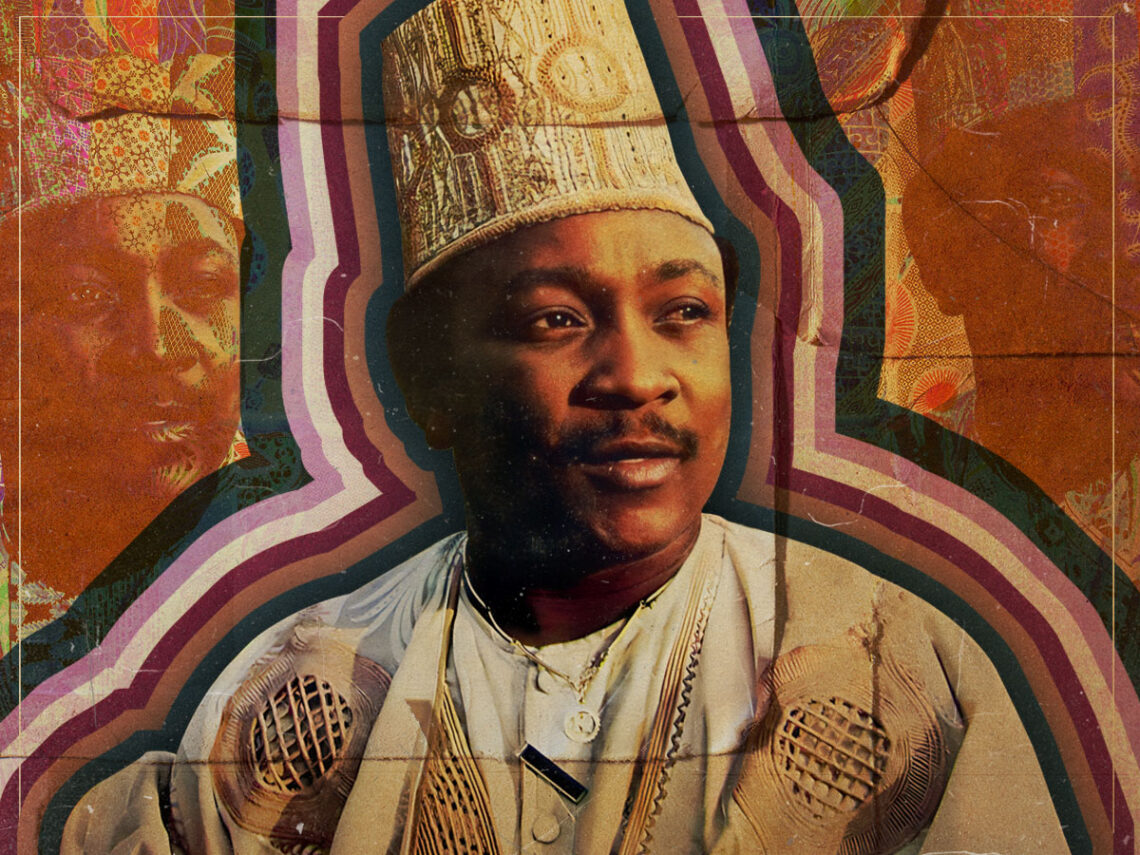
Kollington Ayinla: Bringing Nigerian Fuji music into the modern age

The year is 1970, and the nation of Nigeria is emerging from its bloody civil war. However, the horrors were not yet over for much of the population. The military regime which led the country post-war ruled over its people with an iron fist, suppressing the rights of ordinary people. Out of every tragedy comes new strength, and the artistic response to these tumultuous political times in Nigeria was profound.
In the years following the civil war, legendary artists like Fela Kuti, William Onyeabor and Ayinde Barrister rose to prominence. Often using their music as a means of speaking out against Nigeria’s military rule, these artists managed to produce some of the most innovative sounds of the 20th century, though much of their work has remained largely ignored by Anglo-centric music scenes.
Fuji music developed in Nigeria during the 1950s, with its roots in traditional Yoruba wéré music, an improvisational style performed by Muslims during Ramadan. Alhaji Sikiru Ayinde Barrister is credited with coining the term ‘Fuji’ after seeing a poster for Mount Fuji in an airport. The style is characterised by joyous expression and traditional Yoruba instruments. In the modern day, the influence of Fuji can still be heard in Nigerian hip-hop and dance music, but one of the first artists to update the traditional sound was Kollington Ayinla.
If Ayinde Barrister coined Fuji, then Kollington Ayinla was the one to popularise the genre. Leaving his life as a soldier to pursue music in the early 1970s, Ayinla took the Fuji sound pioneered by his close friend Ayinde Barrister and updated it to include the influence of more modern instruments and sounds. Quickly becoming one of the country’s most prolific artists, Ayinla has released a frankly ridiculous amount of music over the years. His most exciting period, however, occurred in the 1980s, when he formed Alhaji Chief Kollington Ayinla & His Fuji ’78 Organization.
‘Alhaji’ literally refers to a West African muslim who has made the pilgrimage to Mecca, but it is more often used as a general mark of respect. With this title, Ayinla was not only reaffirming his commitment to Islam but also making it known that he was a well-respected artist and individual within Nigerian society. The Fuji pioneer recorded his magnum opus with 1988’s Blessing, an album that encapsulates the joy and political activism of the musical style, accompanied by modern sounds of synthesisers and electric guitars.
The album captures the pioneering synth music of William Onyeabor, with the political activism of Fela Kuti and the innate danceability of Fuji music. Throughout his illustrious career, Ayinla has repeatedly shown his incredible ability to blend traditional Yoruba musical styles with more modern methods and sounds, but it is perhaps most exciting on Blessing. Speaking to its universal appeal, the record recently received a remastered reissue from iconic record label Soul Jazz after only being released in Nigeria under Ayinla’s own independent label, Kollington Records.
Now in his seventh decade, Ayinla has remained one of Nigeria’s most prolific artists throughout much of his life. Never jaded by his success, Ayinla remains humble with an obvious adoration for Nigerian music scenes. In 2019, he told The Sun in Nigeria, “I pray for the young ones to do more and achieve more than we did. In my latest release, I prayed for new and younger artists that all of them will prosper. I also admonished them to respect their elders because someday, they too will grow old.”
