


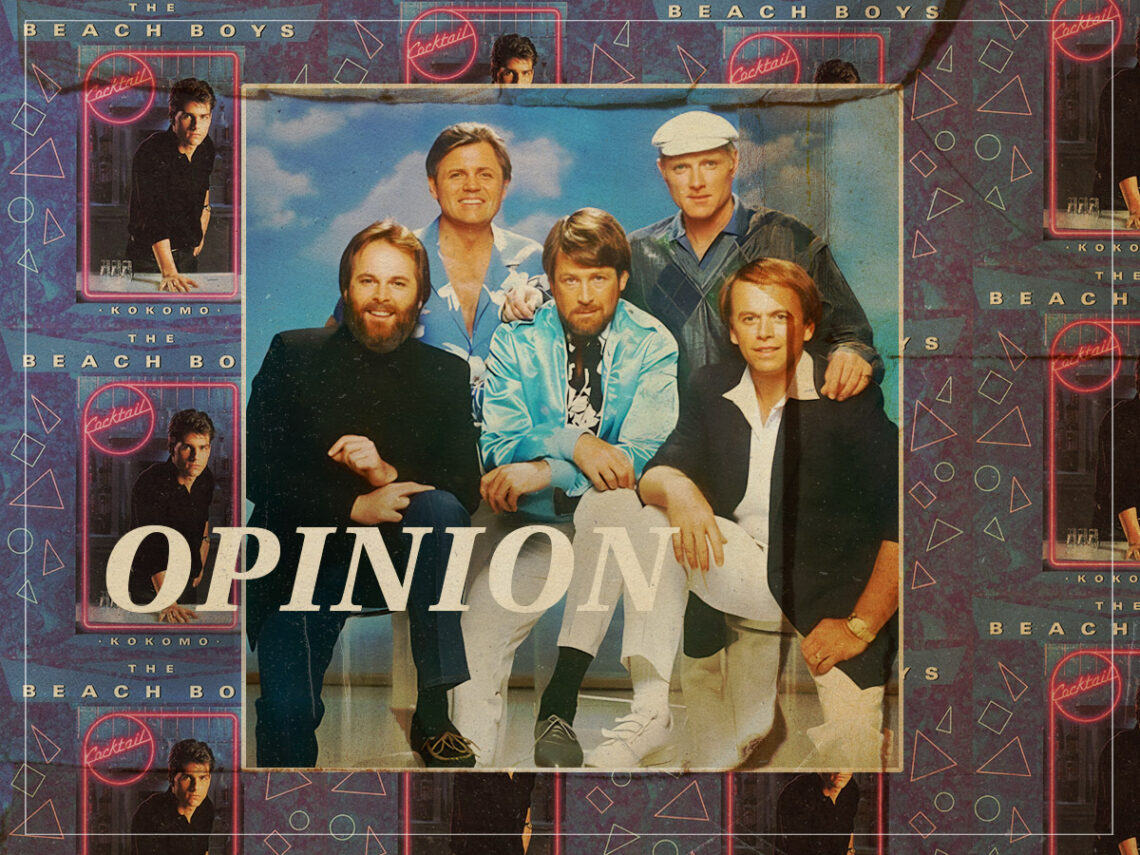
Hear Me Out: ‘Kokomo’ is the worst Beach Boys song by far

For a moment in 1966, the entire music world’s eyes were on The Beach Boys. One of the first to realise the studio’s capacity as an instrument in its own right, principal songwriter and creative force Brian Wilson had studiously worked with Phil Spector’s Wrecking Crew band, learning their signature ‘Wall of Sound’ technique, and coupled with his gift for god-given harmonies and unorthodox instrumentation, pushed the group away from Surfin’ USA to Pet Sounds in three short years.
Coupled with the tales of the aborted Smile sessions, sandpits in the living room, and copious amounts of LSD, Wilson carried a legacy of troubled yet innovative pop genius that paved the way for the ‘album’ as a coherent artistic statement before Sgt Pepper’s Lonely Hearts Club Band perfected it.
As the band hit rocky creative waters with a string of critically lukewarm releases and a crisis of relevancy toward the end of the 1960s, younger brother Carl stepped up in place of Brian’s erratic presence and steered the group toward a new era of commercial and creative rejuvenation, producing and captaining the “comeback” records Surf’s Up and Holland, penning the fan favourites ‘Feel Flows and ‘The Trader’.
Co-founder and Wilson family cousin Mike Love enjoys a less celebrated role in The Beach Boys’ lore, however. Often depicted as the ‘sell-out’ who fought against Wilson’s move toward personal songwriting away from the sunny beach hits of their beginnings, Love’s reputation as a resistance to the group’s experimental direction might be unfair.
‘Good Vibration’s essential counter-pop chorus to Wilson’s shimmering verse harmonies was Love’s creation, writing its lyrics in the car en route to the studio during its recording. Having contributed lyrics to some of their biggest hits, including ‘I Get Around’, ‘Fun, Fun, Fun’, and ‘Help Me, Rhonda’, Love was certainly instrumental in helping shape The Beach Boys’ classic material.
Like many artists before punk and new wave, the 1980s weren’t kind to The Beach Boys. Fractured with various solo efforts and the death of drummer Dennis Wilson, the band had hit a commercial lull deeper than even their late-1960s wilderness years. Desperate for a hit, their calling came when the director of Cocktail, Roger Donaldson, wanted a track of theirs on the movie’s soundtrack. Resurrecting a demo co-written by The Mamas and The Papas’ John Phillips and ‘San Francisco (Be Sure to Wear Flowers in Your Hair)’ singer Scott McKenzie, Love decided to polish a cut which should have stayed deeply buried in their studio vault.
Released in the summer of 1988, the yacht rock atrocity of ‘Kokomo’ abandons any of The Beach Boys’ stirring melodies and affecting arrangements for an excruciatingly tepid mulch of cod-calypso soft pop so painfully facile and evocative of vacuous, white guy wealth it conjures traumatising mental images of cultureless, booze-cruises of brain-dead docility in the day and flabby, nasty ‘upside-down pineapple’ parties at night, all set to Love’s geriatric yuppie nightmare of a single, an anthem to Boomer betrayal. It’s fitting that ‘Kokomo’ features alongside Bobby McFerrin’s ‘Don’t Worry, Be Happy’ on Cocktail‘s soundtrack, another cut that triggers a white-hot flash of rage from its simpering embrace of bloodless, gaslighting optimism.
Love got what he wanted. The Billboard number hit one thrust the group to the MTV age; even Brian counted himself as a fan despite his lack of involvement. Doing Love’s standing with The Beach Boys’ creative legacy no favours, ‘Kokomo’ is a blight on an impressive body of work that still reeks of cold, crass commercial grab.
Session drummer Jim Keltner concluded with a charitably sanguine reflection: “Just sooo syrupy pop … but while the critics killed it with their words, they couldn’t kill the ‘hitness’ of it. It’s just a bona fide hit record, that’s all there is to it.”
