


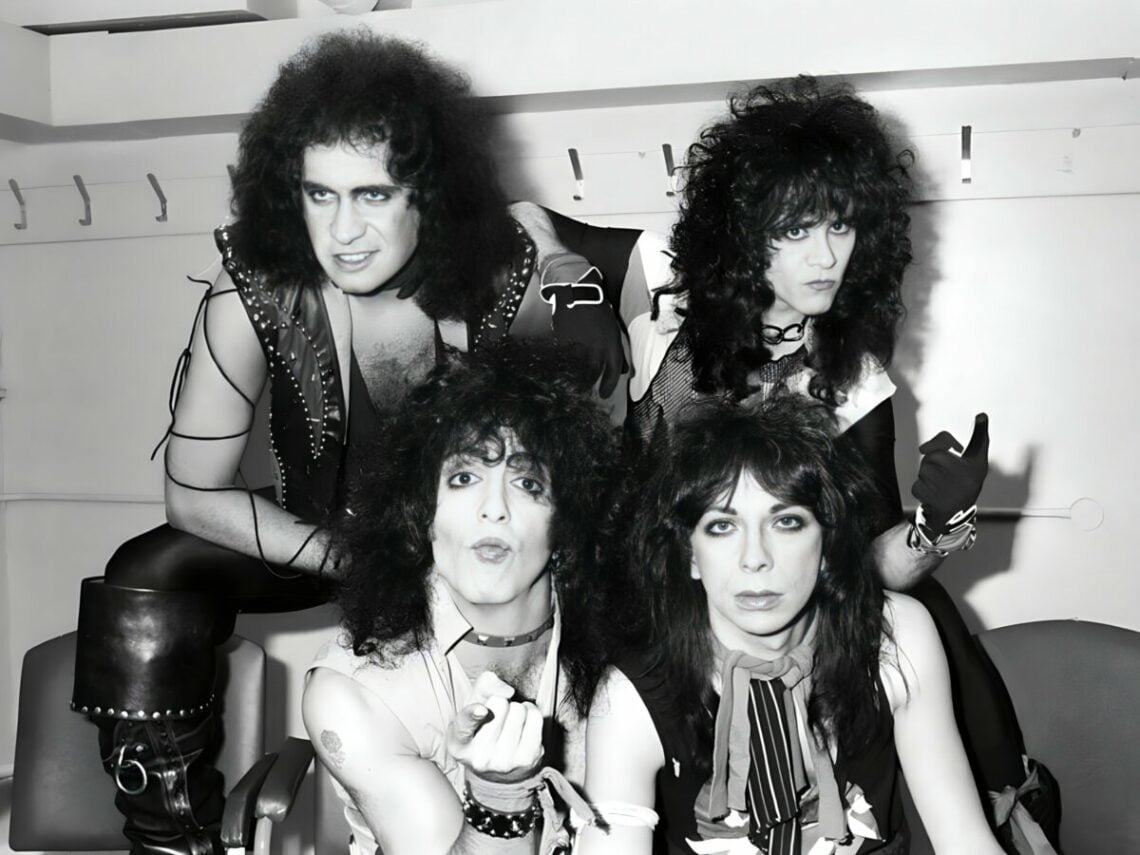
Why did Kiss stop wearing makeup?

Much of the visual embodiment of 1970s rock music revolved around exuberance and paraphernalia –just ask Elton John– but Kiss were also without doubt the unrivalled kings of a striking look. Complete with their stark, white faces and dagger-black eyes; the band unquestionably had their trademark image down to a tee. But when it came time to wipe away the monochrome mask, were their true colours that much more revealing?
Ever since their inception in 1973, Kiss had always adorned their famous stripes as a staple of their shock rock calling card, but inevitably as the years wore on, the veil became increasingly thin. In their case, image was as important as the music, so when the time came for a shake up on a sonic front, the makeup wipes had to come out with it.
Frontman Gene Simmons recalled that with the turn of the decade into the 1980s, a new look was firmly in order to match the fresh sonic tides. Kiss’ last makeup album, 1982’s Creatures in the Night, marked the end of a chapter on multiple fronts, not least because, from a sonic perspective, the band’s trademark hard rock was headed well and truly out the door.
Commercially, the album didn’t do Kiss any favours, with Simmons explaining that: “We liked the record. We’re kind of headed in the right direction. But it’s not working in America because, at the same time, you’ve got all these different… Punk and New Romance and Adam and the Ants and everything else happening. You’ve got a younger fan base that are more active. So, we don’t know what to do.”
The answer, it seems, was coming to terms with rock stardom in their own skin – in this case, quite literally. Simmons continued: So, Paul [Stanley] comes up with the idea of, ‘Maybe it’s time to take the makeup off.’ And I’m going, ‘I’m not sure about that. We have a quote legacy,’ whatever.”
So why did they remove their make-up?
Despite his initial reticence, Simmons trusted his co-founder, especially when he stopped to consider the impact that bands like The Beatles continued to make as they perpetually evolved their image and sound. Giving in to the pressure, Simmons said: “’Okay, let’s see what happens.’ And this Lick It Up record happened.”
The move paid dividends for the band as their hotly anticipated unmasking was covered by MTV, and the resulting record Simmons mentioned, Lick It Up, reinvigorated Kiss’ chart success and ensured their longevity throughout the rest of the 1980s, despite a starkly contrasting sonic background of new wave mania.
But in true rock and roll style, the whole drama of removing the makeup ultimately proved to be a pointless endeavour as only three short years later; the paints were getting slapped back on again. Roll your eyes all you want, but there’s no denying that the black and white mask is the quintessential Kiss image that, to this day, makes them instantly recognisable amid a notoriously indistinguishable crowd. The whole mantra about being comfortable in your own skin might be the best one to live by in most other cases, but when it comes to Kiss, it’s clear that the opposite is true.
