


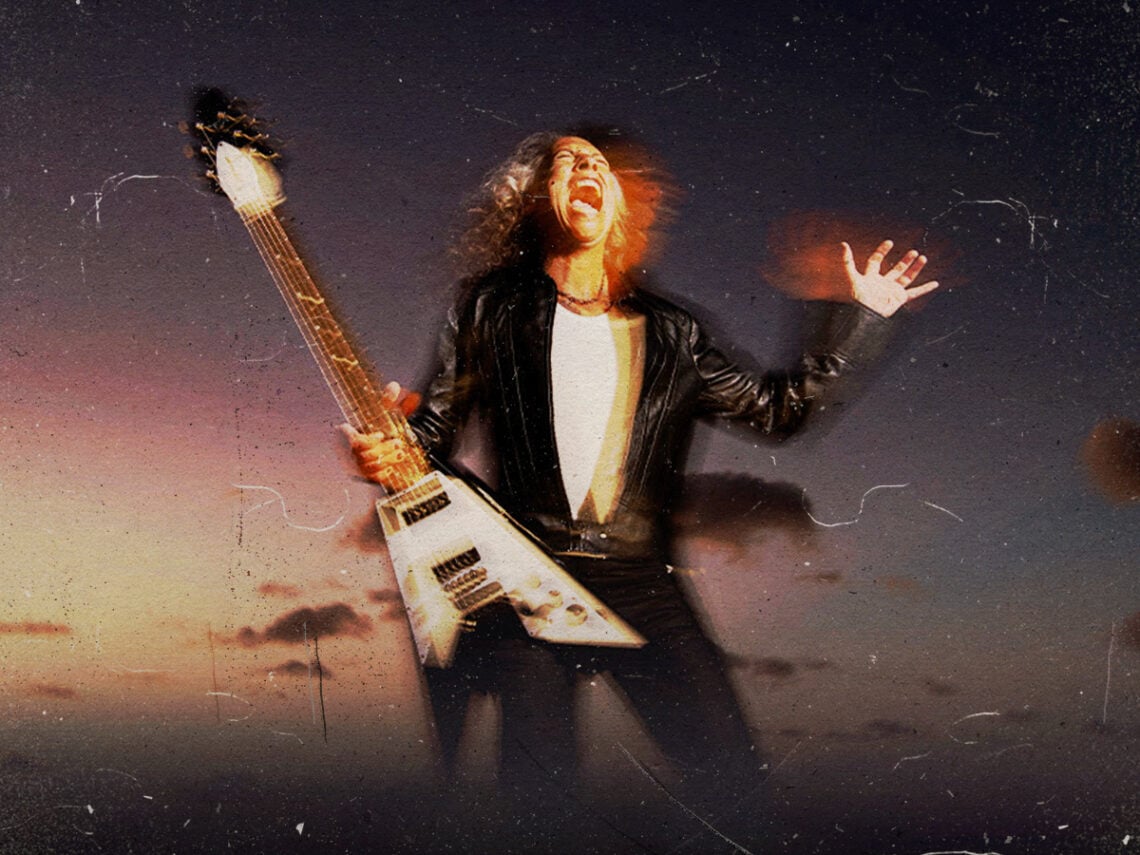
“Perfect”: The overlooked guitarists Kirk Hammett calls his favourite

For many, Metallica set a new standard for metal. Even the maestro of the genre himself, Slipknot’s Corey Taylor, once regarded their opus Master of Puppets as “perfect” and above anything ever achieved by other pioneers like Black Sabbath. Many attribute this to James Hetfield’s unmistakable vocals, while others suggest it was the hefty guitar work of Kirk Hammett, who channels those you least expect.
Like many pioneers of the metal genre, Hammett’s abilities spring from the same arena, taking notes from names like Jeff Beck, Jimi Hendrix, Peter Green, Jimmy Page, and more. These influences were crucial building blocks for what would later become metal music, with many taking aspects from traditional rock ‘n’ roll and 1980s rock to create something that sounded more raw and often aggressive.
Once Metallica found their groove, they weren’t just metal innovators in a stereotypical way—they had somehow managed to balance sounding refined and polished with a headiness and melodic charm that stood them apart from the rest. Like Sabbath, Metallica weren’t concerned with sounding heavy for heavy’s sake: they wanted to have depth but understood when the time was right to erupt into explosive riffs and choruses.
At the same time, many of these makers were inspired by names usually associated with guitar legends, but Hammett also paid close attention to the overlooked stars, the ones who laid the groundwork for countless rock aficionados but didn’t gain as much recognition as their peers at the time. Unlike others, Hammett understood the importance of observation, even if it only served as a means to be aware of the work of those nearby.
In most cases, however, those he gravitated towards ended up influencing his own approach, with eight names forming the basis of his own sound—from the world of blues to the more surprising realm of jazz. Tuck Andress was one of his favourite players who emerged from this scene, who he described to Guitar World as someone with “amazing fingerpicking” and incredible multi-talents, like “that jazz thing where he’s playing the bass line, chords, melody and a solo all at the same time.”
While others might not seem so surprising, like Adrian Belew and George Helm, others, like Dave Hole and Marc Ribot, might appear lesser-known in the realm of guitar greats but pivotal nonetheless, demonstrating Hammett’s affinity for guitar players who know how to layer their performances just so, enough to make the entire sound to seem simplistic, when in reality there’s a lot at play.
This is the case with Hole, who Hammett admitted mastered this exactly, saying, “When I listen to him it sounds like he’s doing a hybrid picking and sliding thing, but I saw some footage of him and he’s sliding all the notes. He plays so fast, and his phrasing, intonation and tone are perfect.” He hinted at a similar capability with Ribot, saying, “His playing is way outside, but it works because his sense of melody and swing pulls it back in.”
Taking inspiration from other jazz greats, like Jimmy Rainey, Hammett took their ability to apply authenticity with confidence, utilising previous tropes through a fresh lens and coming up with new ways to make metal sound rhythmic and exciting but swift and dynamic all the same. Metallica might be criticised for sometimes playing it safe, but one thing Hammett never will be is stale.
Kirk Hammett’s favourite guitarists:
- Tuck Andress
- Adrian Belew
- Dave Hole
- Marc Ribot
- Charlie Hunter
- The Champs
- George Helm
- Jimmy Rainey
