


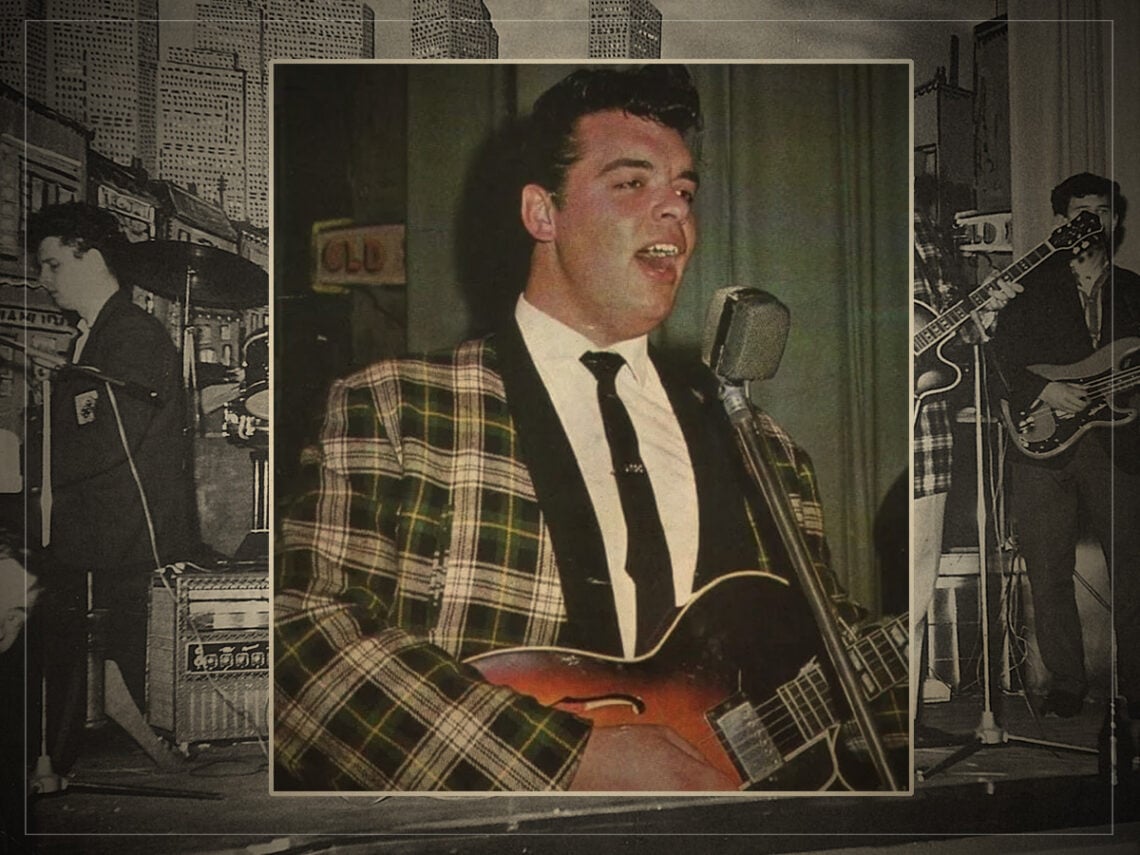
Kingsize Taylor and the Dominoes: The band that could’ve been The Beatles if it hand’t been for £5

The Beatles are, without question, the biggest band the world has ever witnessed, but spare a thought for those who just missed out on the opportunity to be up there with them.
Music is full of famous ‘what-ifs’, questioning just how different the cultural landscape would look if, for instance, Jimi Hendrix had stayed in the army, Oasis never played that set at King Tut’s, or Ian Curtis never saw the Sex Pistols. Many of the most infamous of these hypotheticals are attached to The Beatles, as every musician who ever crossed paths with the band vainly holds on to the hope that they could have been just as successful as the Fab Four if it weren’t for X, Y, or Z factors.
It is no surprise that The Beatles represent a deluge of missed opportunities for various other musicians. After all, many of the instances that helped the Merseyside heroes reach the dizzying heights of rock and roll stardom were, in their own right, fairly miraculous.
If George Harrison hadn’t taken the same bus to school as Paul McCartney, had Brian Epstein not chanced upon a meeting with George Martin, had the band not been dosed with LSD by a dentist in 1965, The Beatles as we know them would have never existed. Life is a series of unpredictable encounters that make stars of some and missed opportunities for others.
Kingsize Taylor and the Dominoes tend to fall on the latter side of the spectrum. First formed in Liverpool back in 1958, during which time the future Beatles were still playing skiffle as The Quarrymen, Taylor and the Dominoes were utterly instrumental in establishing the Merseybeat sound, and even launched the career of Liverpudlian legend Cilla Black. What’s more, the Dominoes had a lot of crossover with The Beatles in their respective histories, making it all the stranger that Kingsize Taylor and the Dominoes never achieved mainstream success.
It was in Hamburg that The Beatles honed their craft as songwriters and live performers, putting the ‘Mop Tops’ on the musical map and setting them on a path to that fateful meeting with EMI a few years down the line. However, they were not the only Scouse outfit to make a name for themselves in West Germany. At the Star Club, Kingsize Taylor and the Dominoes became a regular act in 1962, becoming friendly rivals with The Beatles in the process.
Shortly after the band’s arrival in Germany, their drummer, Dave Lovelady, left the group, so the band looked to recruit Ringo Starr, who’d established himself on the Hamburg scene with The Hurricanes a couple of years earlier. Starr, as we are all surely aware, ended up joining The Beatles instead of the Dominoes. As it turns out, though, his decision came down to a measly fiver.
The story goes that Starr was offered £25 per week by John Lennon and Paul McCartney, whereas Kingsize Taylor was only offering £20. So, ever the businessman, Starr replaced Pete Best as the drummer for The Beatles, a decision which would quickly see him become one of the most recognisable drummers in musical history, as well as earning him a lot more money than an extra £5 per week.
It would be egregious to claim that Kingsize Taylor and the Dominoes could have been as successful as The Beatles had Starr chosen them instead. After all, it was the songwriting mastery of Lennon and McCartney, along with a great deal of luck, that saw the Fab Four rise through the ranks during those early days. Nevertheless, it is impossible to ignore the numerous similarities between the two groups back in the early 1960s, particularly when you look at the vast disparity in their subsequent stories.
Kingsize Taylor and the Dominoes broke up in 1964, following a continued lack of commercial success and a number of recordings which were ignored virtually everywhere other than in Hamburg. Taylor himself stayed in Germany for a few more months, attempting to get a few more bands going, but to no avail. By the mid-1960s, he was working as a butcher in Crosby; meanwhile, The Beatles were on every turntable, jukebox, and radio station around the world.

Never Miss A Beat
The Far Out Beatles Newsletter
All the latest stories about The Beatles from the independent voice of culture.
Straight to your inbox.