


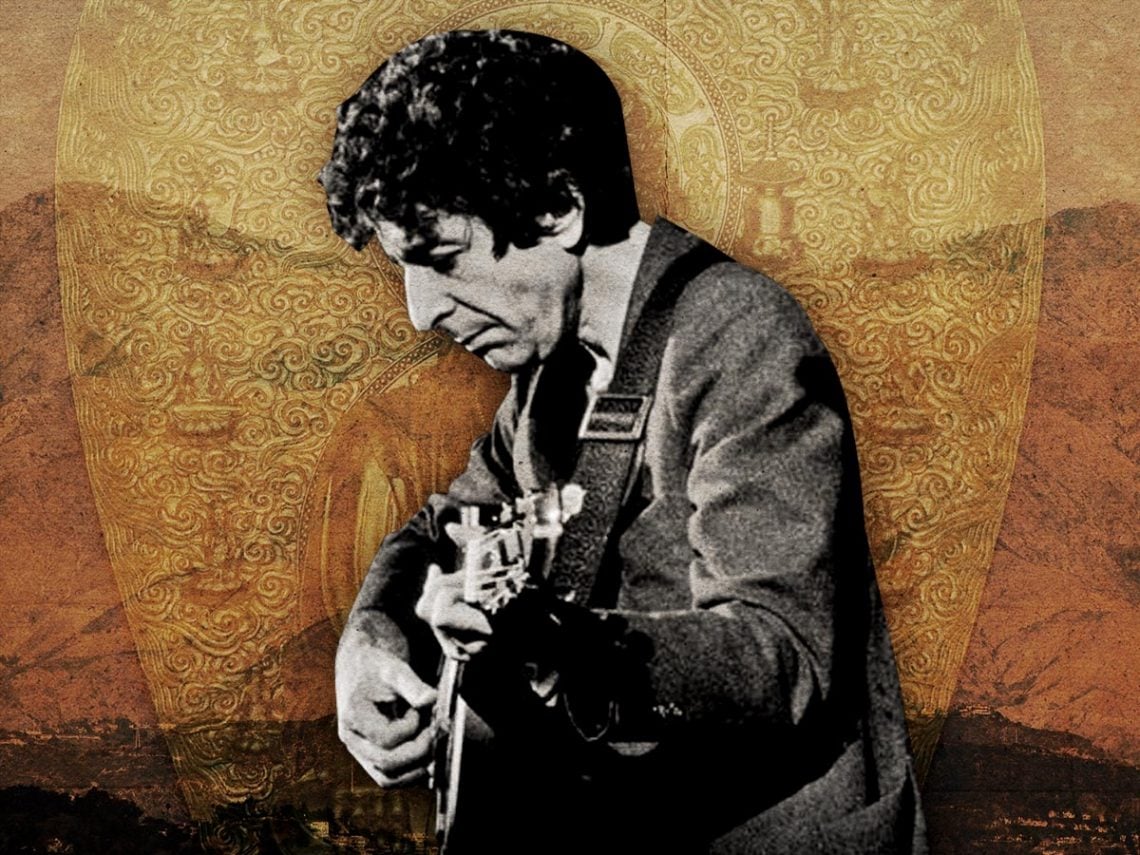
‘Hallelujah’: How King David helped Leonard Cohen out of depression

There were several themes and motifs that informed the expert poetic lyricism of Leonard Cohen; some of those that stood out the most were the explored expressions of love, loss and lust, social redemption, and isolation. However, one theme that Cohen consistently drove home was an examination of his religion and faith.
After all, Cohen was raised an Orthodox Jew and lived an intense religious childhood. He said in 1967: “I had a very Messianic childhood. I was told I was a descendant of Aaron, the high priest.” In fact, the surname Cohen comes from the Hebrew word Kohen, meaning “priest”, which is rather fitting for the way Cohen expressed his faith throughout his music and poetry.
A book entitled Leonard Cohen: The Mystical Roots by Harry Freedman sought to examine the ways that Cohen would scour sacred and religious texts to inspire his poetry and found that several songs of the iconic singers indeed had their origins in different stories from both Christianity and Judaism. “I think he sees himself a little bit as a prophet,” Freedman told The Guardian. “His lyrics are full of references to the Bible, the Talmud and Kabbalah, but they are easily missed – he wove them so skilfully into his songs before reinterpreting them in completely new erotic, spiritual or mystical ways.”
Perhaps Cohen’s most famous song is ‘Hallelujah’ as later sung exquisitely by Jeff Buckley on his debut album Grace, and we find the opening lyrics: “I heard there was a secret chord, that David played and it pleased the Lord.” These words are taken from the Biblical story of King David, who was said to please the heavenly angels when he played his harp late at night.
However, that was not the only reference to the story within ‘Hallelujah’, as David angers God when he commits adultery after seeing Bathsheba bathing. Cohen’s words read: “You saw her bathing on the roof. Her beauty and the moonlight overthrew her.” So too is there a reference to Samson (noted for his strength-giving mane) in the song, where Cohen has his protagonist’s hair cut off, thus losing his strength, as David lost his throne in the eyes of God.
According to Jewish folklore, David was said to have come up with the word “Hallelujah” when writing the Book of Psalms, which means “Praise God”, serving as a reminder to put the considerations of the Lord before any personal human lust or desire. Freedman believes that Cohen, who was known to suffer from depression, found kinship with the figure of King David.
“David messed up. David’s kingdom was destroyed. And yet he sang Hallelujah,” Freedman noted. “Because when you don’t know how to make sense of anything, when you’ve failed, when things go wrong, all you can do is sing Hallelujah. All you are left with is ‘praise God’. It’s a very religious idea.”
So there is the sense that by consulting the stories that religious texts provide, Cohen was able to confront his depression through an understanding that even the King of Israel had experienced such grief and a similar questioning of his faith and relationship with God.
Of course, ‘Hallelujah’ was not the only song in which Cohen explored Biblical and Jewish tales to inform his own beliefs. In ‘So Long, Marianne’, Cohen’s narrator tells the titular love that he has forgotten to pray to the angels, so even as far back as his debut album, we understand that religious doubt was on Cohen’s mind, and looking right to the end of his work with You Want It Darker, we see that he held such anxiety right up until his final moments.
