


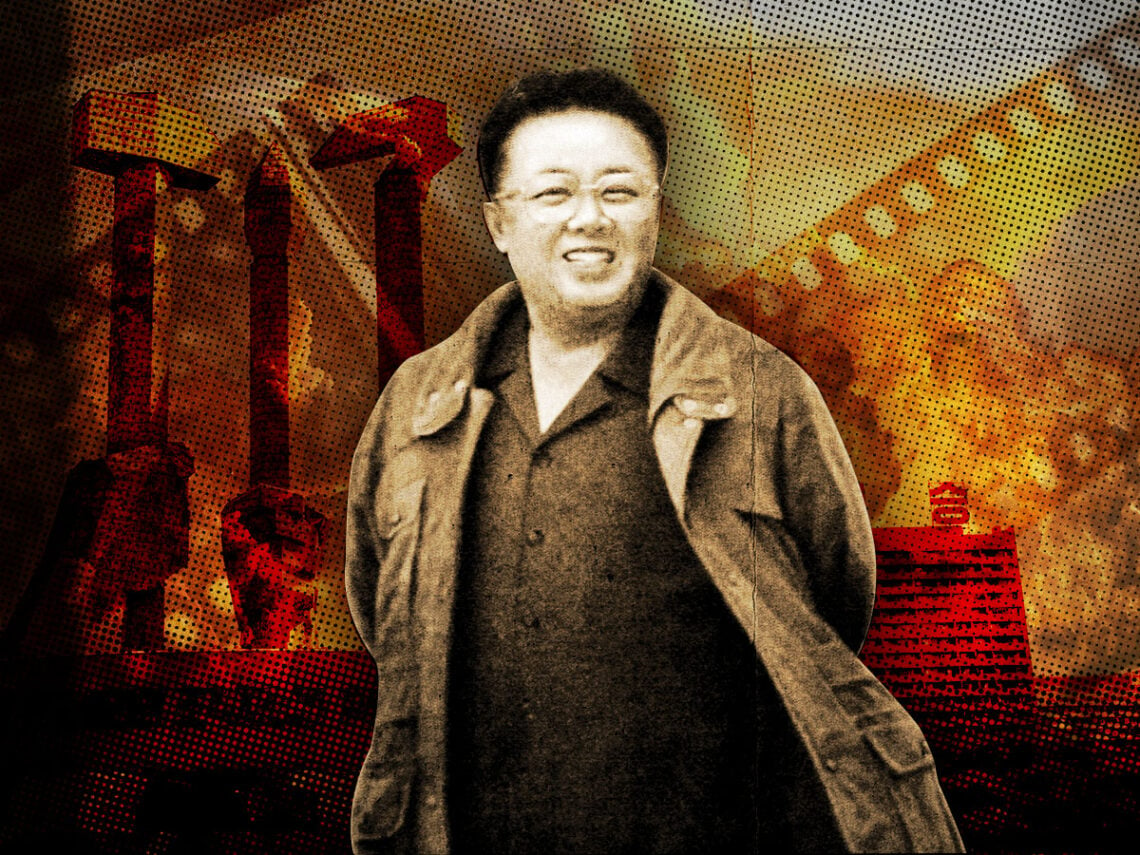
Kim Jong Il: The most unlikely of cinephiles

The former leader of North Korea, Kim Jong Il, who reigned from the death of his father, Kim Il Sung, in 1994 to his death in 2011, was known for his repressive and authoritarian dictatorship. Beyond the oppression of his subjects and his controversial policies, though, lay a man with a deep passion for the artistic medium of cinema and an understanding of its propagandist qualities.
Kim wrote several treatises on cinema, including his 1987 essay ‘The Cinema and Directing’, in which he wrote, “The cinema occupies an important place in the overall development of art and literature. As such, it is a powerful ideological weapon for the revolution and construction.”
Unlike many North Koreans, in his position of affluence as the son of the country’s leader, Kim spent time out of the country. When he studied undercover in Switzerland, he spent much of his time watching foreign cinema, gaining knowledge of its many styles and techniques, an understanding that would later find its way into his own propagandist and manipulative works.
“A film with an untidy plot cannot grip the audience and define their emotional response,” Kim wrote in 1987. “No production of high ideological and artistic value can evolve out of a creative group whose members are not united ideologically and in which discipline and order have not been established.”
Slowly, Kim began to amass an impressive personal collection of films, favouring the large-scale epics of Hollywood, including the works of John Ford and James Cameron, plus the James Bond movies of the 1960s and 1970s and Japanese monster films like Godzilla.
Before long, Kim assumed a position of power as the head of the North Korean Propaganda and Film Division and used his knowledge of global cinema and its emotive techniques to create films that gloried the mythology of his family and set about a directive in the North Korean people to accept their ongoing nationalist regime.
It was because of that precise knowledge of cinema itself, though, that Kim was able to craft films with solid narratives that stood up against the works of other countries. Paltry and ridiculous movies these were not, and the likes of Unsung Heroes, The Fate of a Self-Defence Corps Man, The Blood Stained Route Map and The Rimyongsu Rebellion all bore the mark of genuine artistic quality.
A moment of political and historical jealousy actually saw Kim kidnap the acclaimed South Korean director Shin Sang-ok and his actor wife Choi Eun-hee in the late 1970s, forcing them to make a series of films with a North Korean propagandist flavour, proving that despite his love for cinema, Kim was still a cold-blooded future ruler in the shape of his father.
But beyond the works of cinema that Kim himself produced, his real passion seemed to lie on the global stage. With a collection of over 20,000 films, ranging from classics in European cinema, Hollywood productions and several Asian movie masterpieces, Kim’s personal catalogue allowed him a rare glimpse into the world beyond North Korea itself, an utter privilege to any person from the problematic communist country.
Under his father’s (and later his own) totalitarian regime, global cinema allowed Kim a form of escapism whilst simultaneously inspiring him to uphold that very same political system. Kim was an enigmatic leader for sure, one that caused unyielded trauma and pain in his subjects whilst hypocritically consuming the best works of cinema from across the world at an unceasing rate.
