


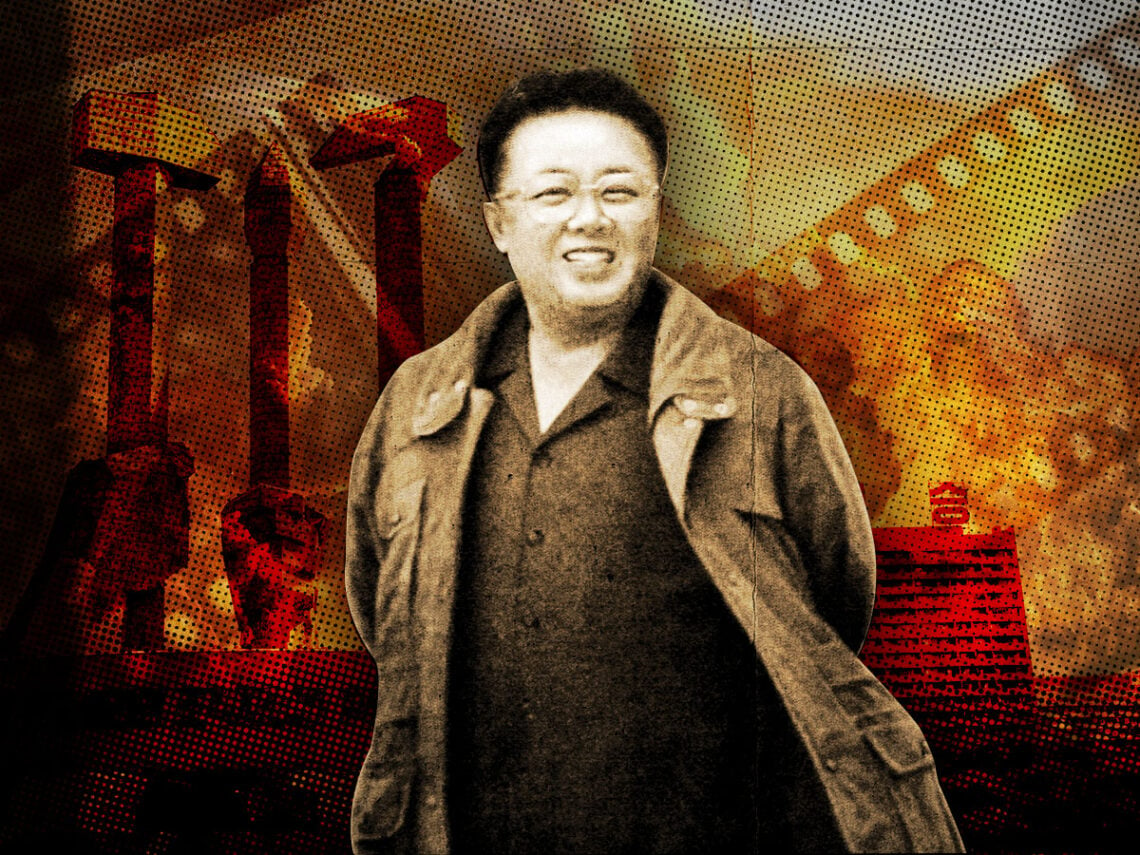
When Kim Jong-il abducted South Korea’s biggest movie stars

When his father, Kim Il-sung, was the General Secretary and leader of North Korea, Kim Jong-il developed a profound love for cinema and was said to have a particular admiration for Hollywood action movies and James Bond films. In fact, the young Kim had amassed a personal collection of over 15,000 films, which was relatively unheard of within North Korea, where citizens were denied access to anything made outside of the country’s borders.
With a widespread knowledge of world cinema history and an understanding of the emotional impact that films can have, Kim began to recognise that he could use cinema to spread propaganda, as North Korea’s former allies, the Soviet Union, had done to great effect.
In 1966, Kim Jong-il joined the Propaganda and Agitation Department, where he quickly became the director of the Motion Picture and Arts Division. Kim Il-sung understood the importance of perpetuating myths surrounding his power to North Korean citizens and knew that no one within the country knew cinema better than his son.
Kim Jong-il set about making propaganda movies for his father with a focus on his past as an anti-Japanese rebel. However, Kim, the younger, quickly found he had a problem. While he had a vast knowledge of cinema from an audience member’s perspective, he had no working understanding of how to actually make movies, and by the early 1970s, he was utterly frustrated with his works.
Of course, there was no one else in North Korea who could make a half-decent film either, so Kim had to turn to illicit methods to improve his cinematic efforts. Over the border in South Korea, Shin Sang-ok had earned international acclaim in the 1960s, and he had once been married to the actress Choi Eun-hee, who performed in several of his features.
Kim quickly devised a plan to abduct both South Korean cinema stars and use them to improve his North Korean propaganda films. He contacted Choi under the pretence of hiring her to direct a new movie, and Choi was taken from Repulse Bay in Hong Kong by boat and arrived in North Korea in January 1978. Choi was not tortured as many Koreans (both Northern and Southern) had been during Kim Il-Sung’s reign as leader.
Rather she lived in a luxury villa in Pyongyang, visited the opera and the theatre, and was told all about Kim Il-sung’s achievements as a leader. She did not find out that she was mere bait for Shin Sang-ok until five years after she was abducted. Just six months after Choi was kidnapped, Shin suffered a similar fate, but unlike his ex-wife, he did not live a luxurious lifestyle and did not know she, too, had been taken to North Korea.
When Shin tried to escape twice, he was sent to prison. It was the spring of 1983 by the time Shin was released from imprisonment and was reunited with Choi. Kim Jong-il soon revealed his master plan for North Korean cinema, and Choi and Shin seemingly had no choice but to accept his proposition.
Over the next few years, Choi and Shin made several feature films for Kim, including An Emissary of No Return, written by Kim Il-sung. The biggest production was Choi and Shin’s final film for Kim. Pulgasari drew heavily from Godzilla, the Japanese monster film that had drawn acclaim from across the world.
It was after Pulgasari was completed that Choi and Shin finally managed to escape North Korea. Kim had requested that the pair travel to Vienna to seek finance for a film about Genghis Khan. When meeting a journalist for an interview, Choi and Shin managed to convince their North Korean bodyguards to leave the room, at which point they escaped to the United States embassy with the journalist.
Just prior to their escape, Choi and Shin had recorded Kim speaking openly about their abduction and used the recording as evidence that they had not openly defected to North Korea. They worked in the United States for many years before eventually returning to their native South Korea. Official reports in North Korea maintain that Choi and Shin openly defected to North Korea and had taken a large amount of the country’s money with them when they escaped.
Kim Jong-il knew the power that cinema had and understood that he could use it to further influence the populace of North Korea during both his father’s (and his own) reign of the country. However, North Korea had begun to fall into poverty, and there were few people in the country with the diligence and knowledge to create excellent films.
Kim had to turn to North Korea’s enemy neighbour to make his propaganda films, as well as those with hopes to be internationally recognised, and for a while, this worked. Thankfully though, two of South Korean cinema’s stars escape Kim’s effective imprisonment, somehow with their lives still intact.
