


‘Outside the Gate’: Killing Joke’s maligned foray into soft synthpop

Amid punk’s explosive impact, London’s Killing Joke always cut a distinctly alloyed weld of shifting styles, a sonic diversity that wriggles and writhes against each other even from their 1980 self-titled debut. Equal parts smoggy post-punk, dilapidated heavy metal, and bruising industrial heft, the curious mutant hybrid’s consistencies centred on frontman Jaz Coleman’s shamanistic, chernobog presence and guitarist Geordie Walker’s monstrous hack.
Burnishing such a powerful reputation, even Led Zeppelin’s Jimmy Page counted himself a fan, telling Classic Rock in 2010: “I go back a long way with Jaz Coleman and the band. I used to go and see the band, and it was a band that really impressed me.”
Commercial success did follow, however. With original bassist Youth swapped for future Prong and Ministry member Paul Raven, cracks of teasing accessibility shined on 1985’s Night Time. Shifting toward a gothic rock direction, they scored two hits with ‘Love Like Blood’ and ‘Eighties’, the latter’s distinctive riff finding its way to Nirvana’s ‘Come As You Are‘ six years later. Killing Joke’s embrace of new wave’s ‘light’ continued, hiring Chris Kimsey for production duties again after the success of Night Time, 1986’s Brighter Than a Thousand Suns delved further into glossy melodicism, beginning to bewilder their dedicated fanbase.
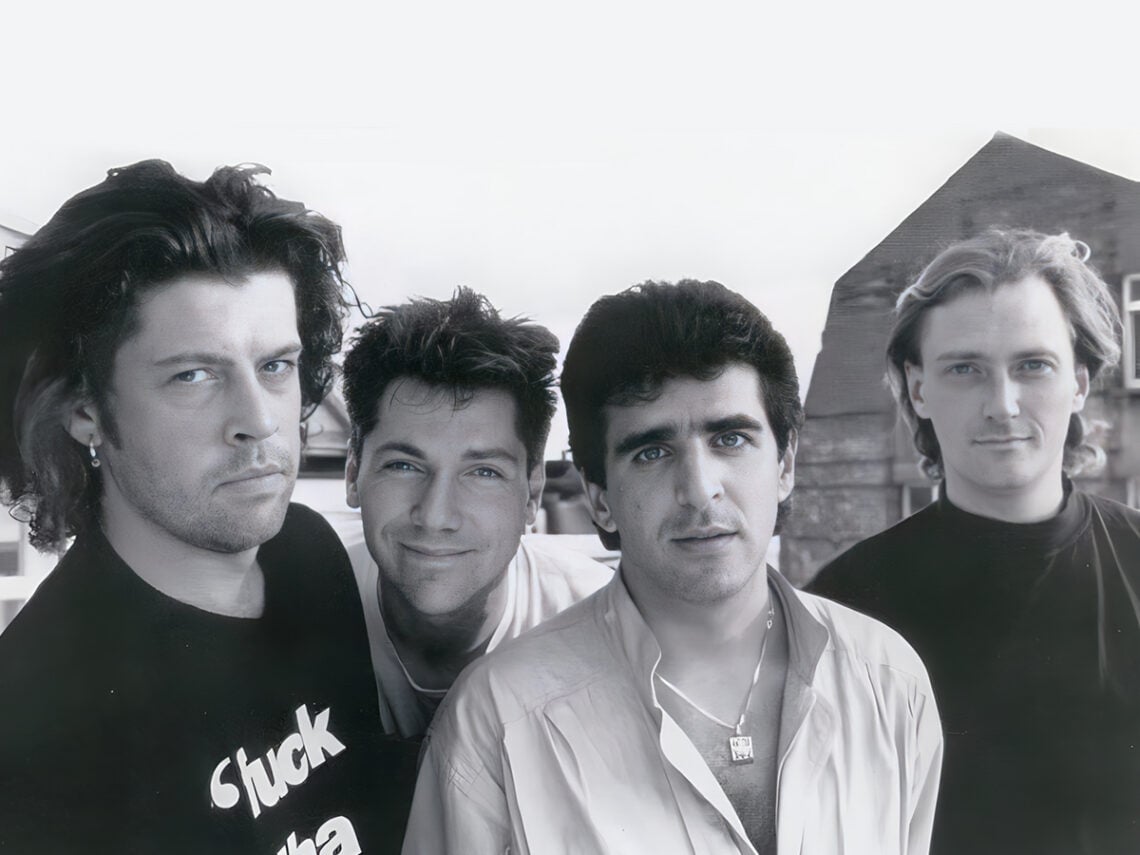
By the late 1980s, Coleman had a good few years behind him as a serious classical composition student. Seeking to put his symphony skills into practice, Coleman and Walker demoed a set of songs with greater complexity in their arrangements and initially intended for a Coleman solo release. With the mounting studio costs worrying EG, the label pushed for the sessions to be polished as the next Killing Joke record. This decision alienated half the band so much that Raven requested his credits withdrawn and founding drummer Paul Ferguson dismissed for allegedly being unable to perform the intricate beat required for Coleman’s lofty pieces.
Speaking to Louder Than War in 2016, Ferguson shared his account of the fraught sessions: “The record company decided it should be a Killing Joke project, but that Raven and I shouldn’t be involved in the writing. We were both very unhappy with this arrangement. When I acquiesced and went to record drum tracks with Geordie, personal grievances were getting in the way & acrimony reigned in the studio.”
Ferguson added: “I couldn’t listen to any of Jaz’s keyboards when I recorded the drums and threw away the ‘click track’, so I played drums to just the guitar, and it all made perfect sense. Unfortunately, when the keyboards were brought back in, the timing was all over the place. My answer was: “Do all the keyboards again”, and Jaz’s answer was: ‘’get a new drummer’’.
Through bad blood and band disintegration, 1988’s Outside the Gate finally dropped to an underwhelming critical thud and a deeper degree of bafflement from their fanbase missing their thunderous snarl. A bizarre fuss of wimpy synths and tedious grandiosity that’s nagged with a sonic ‘thinness’ despite its eager bombast, an unforgivable crime given Killing Joke’s notoriety for awesome, powerhouse performances.
Is Outside the Gate that bad? When viewed as a side-project, it’s easier to glean the record’s merits. The lead single ‘America’ is a goofy stomper that revels in its camp bluster, painfully obvious lyrical critiques of US imperialism pertinent in Reagan’s corporatised lurch. Follow-up single ‘My Love Of This Land’ could exist easily enough on their prior LP, but the record’s true saving grace is ‘Tiahuanaco’, an impassioned poetic invective against the West’s corrosive foreign policy toward the Latin world, ending with a full-chested guitar attack filled with genuinely soaring majesty.
As the 1990s arrived, Killing Joke jumped back into their scabrous roots for Extremities, Dirt and Various Repressed Emotions, yielding a steady string of following alternative metal albums winning new fans, and Coleman’s classical ambitions saw work with the London Philharmonic Orchestra and serving as composer in residence with the Prague Symphony Orchestra. Like many maligned albums, Outside the Gate is an interesting failure which exists as a necessity for future greatness.
