


Kidlington: The tourist destination you’ve never heard of

In Oxfordshire, England, there’s an old village called Kidlington, where nothing much has ever really happened, but it appears in records from nearly 1,000 years ago, finding mention in the Domesday Book of 1086.
In village terms, it’s big: there are shops, banks, a library and seven pubs, and it was once the site of the Oxford Zoo. However, it doesn’t have a huge historical significance, best known for being around five miles from the city of university city of Oxford and the town of Bicester, home of the Bicester Village, a luxury shopping outlet.
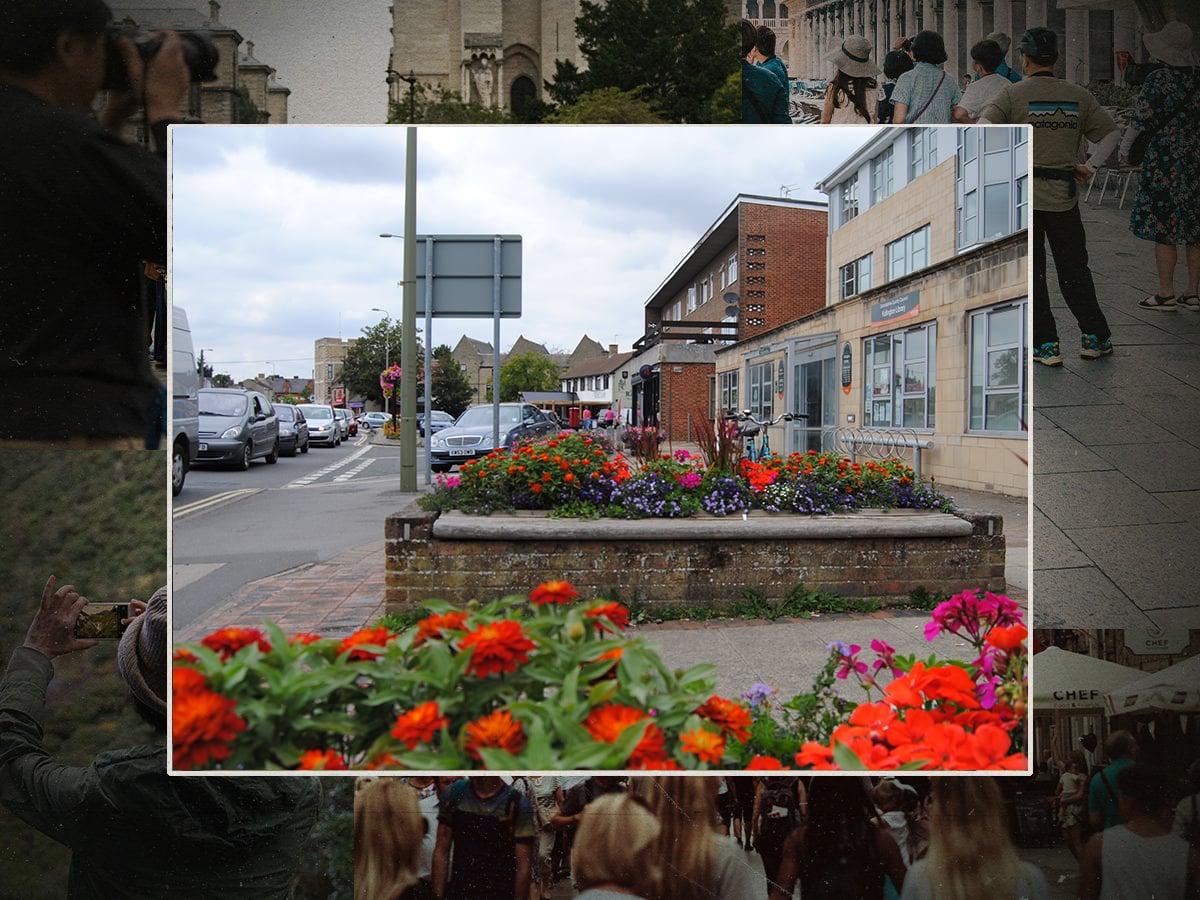
Then, in 2016, something strange happened, wherein a coach of Chinese tourists arrived in the village and stopped on Benmead Road, an ordinary street, filled with modern semi-detached houses, with cards on the drive and dustbins by the roadside.
The tourists got off the bus and walked around, taking photographs of houses, their gardens and pavements, with bemused residents looking out of their windows and seeing people queuing up for photos in front of their parked cars, before walking to the church and taking photos there.
Then, what was to be a one-off kept happening again, and again, this time confusing the locals as to why on earth coach-loads of tourists were landing up in their sleepy village, and why were they were so interested in taking photos of such normal things.
Questions abounded about whether the tourists had mistaken Kidlington for somewhere else, if Inspector Morse, filmed in nearby Oxford, was big in Beijing, had they been hoodwinked into believing that this was the street where Harry Potter grew up in the books and movies, or if it was all an elaborate prank that none but the ones orchestrating it were in on.
Before too long, the residents required answers as none of it simply made any sense, and of course, the village didn’t have anyone fluent in Mandarin, which made the quest all the more difficult.
However, when the next coach pulled up, a questionnaire was handed out that had been translated into a number of languages to cover as many bases as possible, and it was then that they found their innocuous little answer: “Because we don’t have [these] in China. Here, we are looking for the true sense of this country”.
So there you have it, the visitors were looking to see the ‘real Britain’, not the Big Ben of London, or the famous colleges of Oxford, but the humdrum villages of the country and to see real, suburban British life. As bland as suburbia is for those who have lived it, it must be unique if you’ve spent your life living in a flat in one of China’s megacities. As somebody who has made an effort to see Brutalist apartment blocks in Belgrade and Hong Kong high-rises, I can understand the appeal.
But why Kidlington and not one of the other thousands of villages that look similar across the UK? It seems like some opportunistic Chinese travel companies had found that this very normal village was situated on the route to Bicester Village, with its Gucci, Prada, Balenciaga and Balmain outlets, hence it made economic sense for one. And, not only that, but it also fitted nicely into the drive to Blenheim Palace, one of the country’s largely stately homes, and the former home of Sir Winston Churchill.
The locals have grown used to their visitors now, with local businesses seeing an uplift in trade, and travel operators ensuring that their customers are more respectful of the residents and not entering their gardens. While Kidlington’s modest boom in tourism is small, it is perhaps to a wider trend of micro-destinations, in which nondescript places can be fascinating for people from further afield, who aren’t used to them.
