


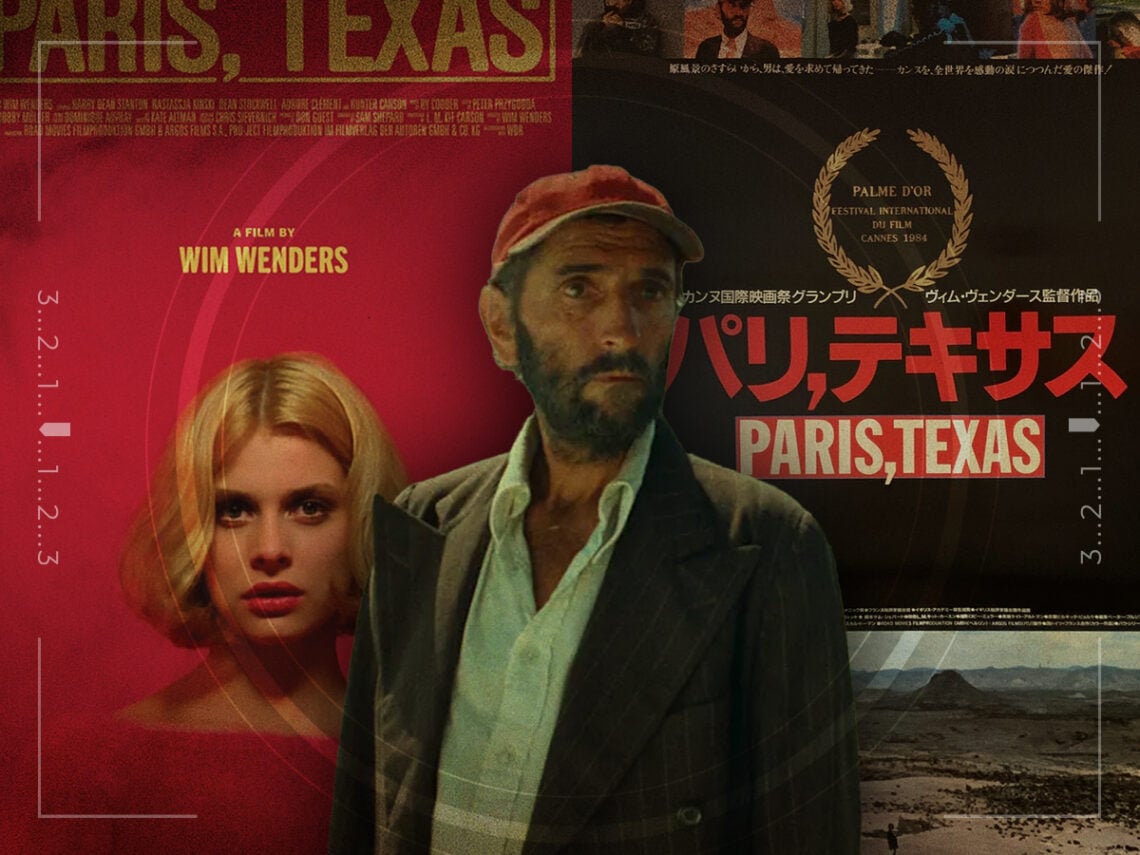
The emotional roots of Wim Wenders’ most tender masterpiece ‘Paris, Texas’

Wim Wenders was already a successful filmmaker when he made Paris, Texas, but the movie marked a turning point in his career, elevating him from his status as a New German Cinema icon to a widely known and award-winning figure. He took home the ‘Palme d’Or’ at the Cannes Film Festival for the film, and it remains his most beloved work—a tender yet brutal journey into the meaning of family, freedom, and the ‘American Dream’.
The film captured the desolate landscapes of America perfectly, with Wenders’ foreign eye making everything seem bigger and brighter. The way that cinematographer Robby Müller captured huge billboards, neon-lit buildings, distant city skylines, as well as dry, dusty expanses and freeways is truly unforgettable, and it certainly helped that Wenders had a background in photography.
In fact, the visual world of Paris, Texas, which is vital to the understanding of the plot, took significant influence from various sources, including a road trip that Wenders had embarked on, armed with his medium format camera, to get a feel for the atmosphere he wanted to create in the film. The photos he captured, which were taken in locations like Texas and California, reflect his own lonesome cowboy mission in search of beauty and inspiration. While Harry Dean Stanton’s Travis wandered aimlessly around these roads and deserts, Wenders had a mission, and the results can be found in his book Written in the West.
You only have to look at images like Flammable, where an orange sky is contrasted by the blue lights of a building that looks like it exists in the middle of nowhere, or Quiet Sleep, in which a neon motel sign illuminates the page, to see how important this trip was for Wenders. “It was another way of preparing for the film, a different kind of research that had less to do with locations than with the light in the west,” he once explained.
The filmmaker also looked back at his earlier work when it came to shaping Paris, Texas, which follows his thematic penchant for road trips and the life-changing journey of the main character in the process. His stunning Road Movie trilogy, which includes Wrong Move, Alice in the Cities, and Kings of the Road, all feature these key themes of discovery and aimlessness at the core of Paris, Texas.
Wenders doesn’t simply rehash old ideas, however. He fine-tunes them and expands on these themes with each movie, and the latter sees him at his best, with unforgettable performances from Stanton and Nastassja Kinski elevating the film to the best possible heights. They bring these themes of longing for connection and reflecting on past sins to life beautifully, recalling the characters of the director’s earlier work who reckoned with deeply introspective feelings as they traversed the open road.
Another key influence was Sam Shepard’s Motel Chronicles, which the incredible writer expanded on in his Paris, Texas screenplay. A combination of prose, poetry, and photographs by Johnny Dark, the world that Shephard, his name alone reminiscent of a cowboy, paints with his book was a vital precursor to Wenders’ modern take on the western.
It’s these photos and stories that came to shape the world of Paris, Texas, one that is so evocative of a distinctive kind of melancholy perfectly emulated in Ry Cooder’s slide guitar score. The desire for freedom and understanding isn’t easy, and these vast landscapes, where seedy motels and gas stations line roads that are otherwise barren for miles, create the perfect backdrop for retrospection and timelessness.
