


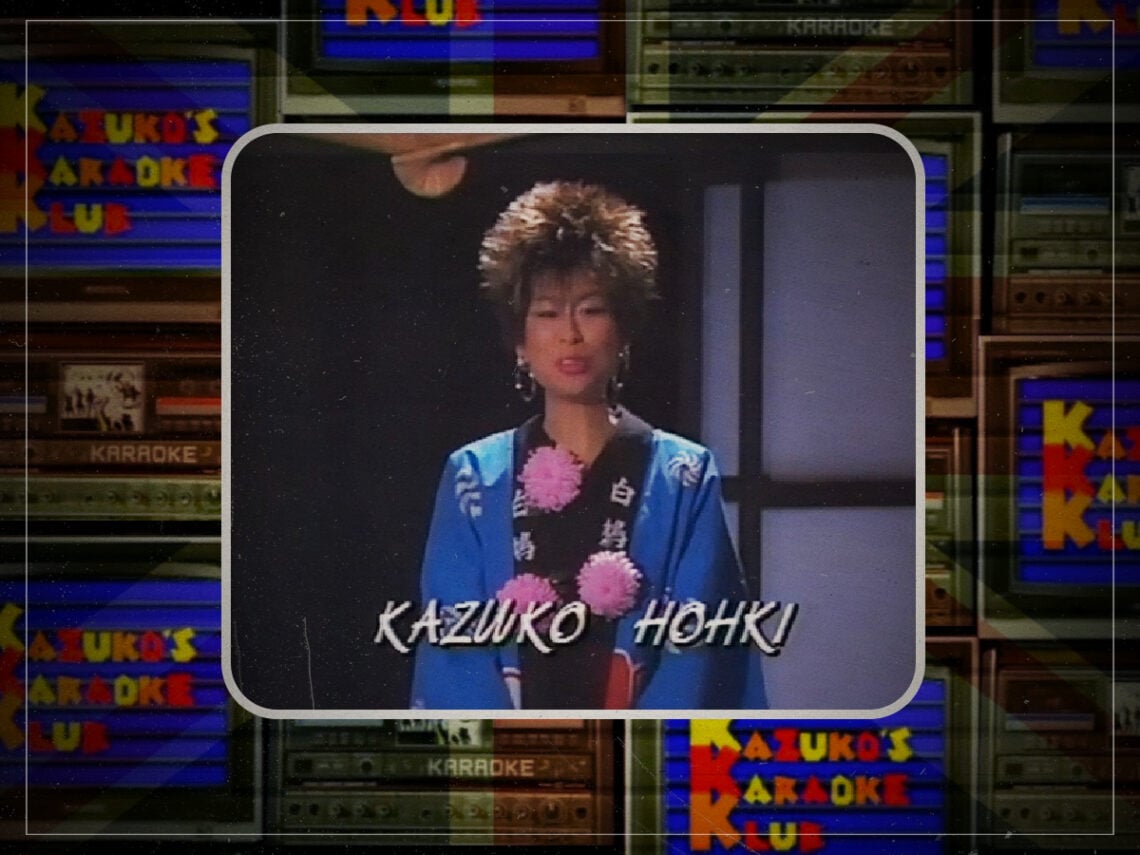
Kazuko’s Karaoke Klub: How a Japanese performance artist helped introduce the UK to karaoke

Birthdays, Christmas work parties, nights out on the town – there are few social occasions that cannot be ruined by the introduction of karaoke.
What first began in late 1960s Japan has since spread to every flat-roof pub and student bar around the world, and with it comes an unimaginable wealth of godawful renditions of all your favourite songs. In the UK, though, it was actually a pair of punk performance artists who introduced karaoke to the masses.
First formed amid the backdrop of London’s early 1980s alternative comedy boom, Frank Chickens became a staple of the Edinburgh Comedy Festival over the course of the neon-hued decade, carving out a niche for themselves in the form of Japanese art rock and surrealist performance art.
Despite earning the adoration of John Peel, though, the band – somewhat expectedly – never quite broke into the mainstream, although they have since amassed something of a cult following, as every obscure 1980s-era art band is bound to have done.
Despite the relative obscurity of Frank Chickens, though, the group’s leader, Kazuko Hohki, soon expanded her repertoire into other avenues of cultural expression. Namely, the Tokyo-born artist scored her own Channel 4 chat show in 1989, entitled Kazuko’s Karaoke Klub – presumably in the hope that nobody would ever acronymise it.
Much like Frank Chickens, the chat show was arguably too off-the-wall and odd for mainstream consumption, which is perhaps why it only lasted for one series. However, the show seemingly did enough to help popularise karaoke across the United Kingdom, which went from being a relatively obscure social oddity during the 1980s into an absolute staple of nightlife and social occasions from the 1990s onwards.
What’s more, Hohki managed to pack quite a lot into the nine total episodes of the show that were ever broadcast. Essentially, the format saw Hohki interview a wealth of celebrity guests – some more deserving of that title than others – who would then perform a karaoke song of their choosing in front of a live Mancunian audience who often seemed pretty drunk. It’s about as bizarre, ramshackle, and brilliant as you might expect from 1980s-era Channel 4.
Among those many guests were local heroes like Frank Sidebottom and John Cooper Clarke, but the show also pulled in some unexpectedly colossal names like Spike Milligan, Tom Robinson, Magnus Magnusson, and – regrettably – Jimmy Savile. There didn’t seem to be any rhyme or reason for the guests selected, which is a fact perhaps best reflected by the fact that the penultimate episode of the series featured weather reporter Michael Fish alongside legendary Irish folk outfit The Dubliners.
It is fair to say that broadcasting standards were rather different during the late 1980s to what they are today, but Kazuko’s Karaoke Klub unintentionally embodied the future spirit of karaoke in the UK: performed half-heartedly, often by people you barely know or who have been contractually bound to perform, in front of an increasingly unenthusiastic crowd of drunk people.
Nowadays, the odd clip from Kazuko’s Karaoke Klub can be found on specific corners of YouTube, often taken from fuzzy VHS tapes, but it seems unlikely that it’ll be added to Channel 4’s streaming service anytime soon. After all, its bizarre combination of karaoke, chat show interviews, and various shoehornings of Japanese culture – much of which has aged about as poorly as you would expect – doesn’t exactly reflect the pinnacle of broadcasting.
Regardless of how the show stands up in the light of modernity, though, it does deserve at least some credit – or blame – for helping to integrate karaoke into British pub culture, for better or worse.
Since the show ended, Kazuko Hohki has continued to perform with Frank Chickens. In fact, their more recent efforts to unite Japanese and English cultures form the basis of the annual Ura Matsuri Festival, which does a much better job of celebrating East and Southeast Asian artists and their impact on the cultural landscape of the UK than that fledgling karaoke chat show.
