


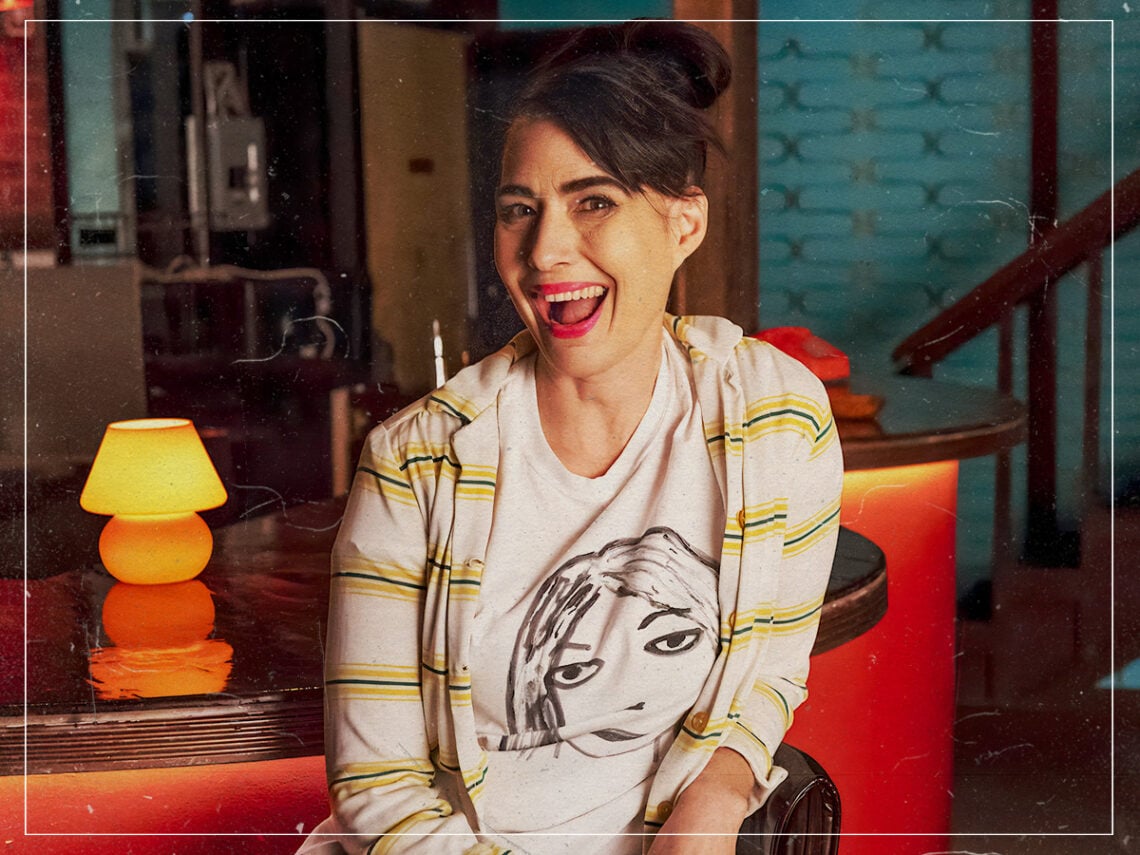
“I had a lot to say”: The advice that led Kathleen Hanna to form Bikini Kill

Some musicians find their way much later in life, after years of identifying how to transform their feelings into art. Kathleen Hanna knew where her heart lay at the age of nine after her mother took her to a rally where she caught a glimpse of Gloria Steinem. “It was the first time I had ever been in a big crowd of women yelling, and it really made me want to do it forever,” she later recalled.
Somewhere in between first learning the power of unabashed feminism and jumping into audiences during shows to give toxic men a reckoning, Hanna made the career-defining choice to pivot from spoken word poetry to music. As a writer, before fronting the force that would become known as Bikini Kill, Hanna channelled her strong views into her poetry, addressing several persistent societal issues like sexism and violence.
Many of her pieces were filled with the same hard-hitting analysis that later became a staple within her music but filled with the rawness and authenticity of the art form itself. During one performance, for instance, she began with the words: “I am your worst nightmare come to life / I’m a girl who you can’t shut up / There’s not a gag big enough who can handle this mouth / I’m going to tell everyone what you did to me.”
Her words were stark because they were real and uncomfortable, spotlighting the many facets of society that people often shun. She delivered the words sharply, mirroring her snarling opposition to rape culture, even during moments when she gets rudely interrupted by a male member of the audience who interrupts her repeated phrase, “It was the middle of the night in my house” with a snarky, “Nothing was happening!”
As Hanna recalled in her memoir, Rebel Girl: My Life As A Feminist, this type of behaviour wasn’t unique, and would continue long into her Bikini Kill reign. However, the convergence of her art with such indisputably disgusting heckling often served the very purpose she sought to outline from the beginning: to expose such toxicities and hold them accountable, even when they peer in their ugliest of forms.
As a spoken-word poet, Hanna was a force. However, her niche conjured up concerns about longevity, siloing her to a world where she would forever appear as the opposition rather than be embraced by those who wanted to join her movement. One day, while speaking with one of her favourite writers and thinkers, Kathy Acker, the idea of pivoting her craft to reach the big-time became clear.
“Acker asked me why writing was important to me,” Hanna reflected during an interview with The Nation. “I said, ‘Because I felt like I’d never been listened to and I had a lot to say,’ and she said, ‘Then why are you doing spoken word—no one goes to spoken word shows! You should get in a band.'”
Ever since she emerged as a performer, Hanna has faced the unbridled world of misogyny and tried to fight back with her intelligent wit, heartwrenching personal recollections, and desire to never settle for anything less than basic respect. Her world has always been scorned with the thistles of the unjust, but as a spoken-word poet, her reign would only last for so long.
Two years after hearing Acker’s advice, she formed Bikini Kill and continued her important mission with Revolution Girl Style Now!, an unexpected mainstay not just of the broader feminist movement but in the recognition of women and girls as a notable audience segment. Her pivot was undeniably the transition she was destined to take, as what better to guide the hands of revolution than the power of music?
