


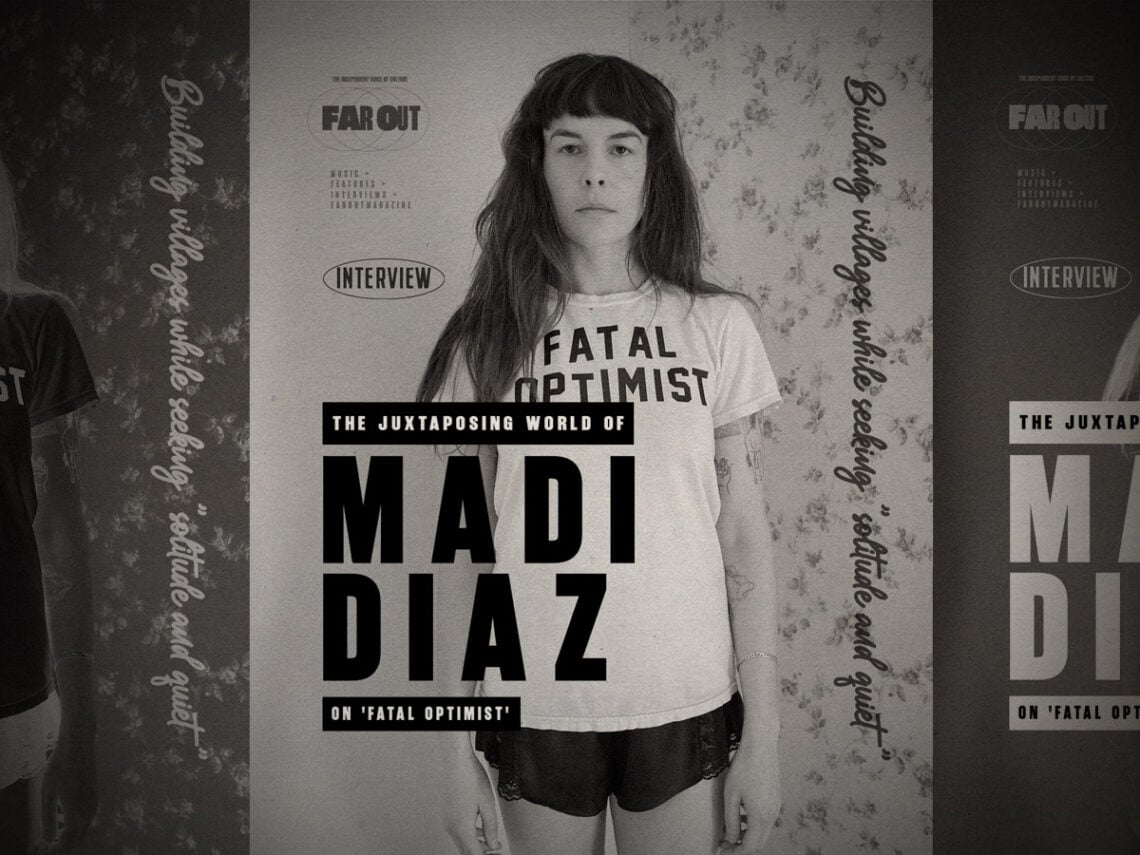
Building villages while seeking “solitude and quiet”: the juxtaposing world of Madi Diaz on ‘Fatal Optimist’

Imagine yourself in this position: for years, you’ve grafted away at your talent, working the circuit and slowly releasing albums to more and more acclaim. Suddenly, you find yourself on the world’s stage. Then, two years later, you find yourself back on that same track you had always known. It must be quite dizzying, to say the least.
There’s a whole mix of rampant emotions that are bound to come with this – exhilaration, fear, excitement, trepidation, along with all the other more mundane struggles that life has to throw at you. In the midst of it all, this is where we find Madi Diaz in the wake of her most recent album, Fatal Optimist, a record that reflects on the sound of silence when you’ve managed to shut the door on the screaming of the world.
“I would say this record was extremely cathartic to make,” Diaz crackles over the phone, bunched up in a hotel room somewhere in the middle of her American tour. “I was in a place where I had just been around hundreds of thousands of people all the time, 24/7 for a few years, and I started to get to the point where I just really needed solitude and quiet.” Certainly, she was never going to find that as Harry Styles’ guitarist in his live band for Love on Tour. But by the time she arrived here, for her seventh studio album, the landscape was very different.
“Every time I tried to make these songs sound bigger or more than what they were, it just really didn’t work,” she candidly admits. “And so, yeah, I mean, it’s kind of what the songs asked for – for me to really lean into them and the writing, rather than covering them up with drums and bass and a million things.” Of course, on the face of it, a record like Fatal Optimism seems to be simply spelling out a tale of heartbreak – but the true web of reality in Diaz’s musical world came to represent so much more.
As such, through a stripped-back score of tracks including ‘Ambivalence’ and ‘Why’d You Have To Bring Me Flowers’, there’s also a politics of identity that gets woven into the very walls and fabric of the album, elevating it from a status of romance into something much more complex and intriguing. Yet with something so deeply personal and introspective, it would have been easy for Diaz to fall down the rabbit hole and never see the light of day again.
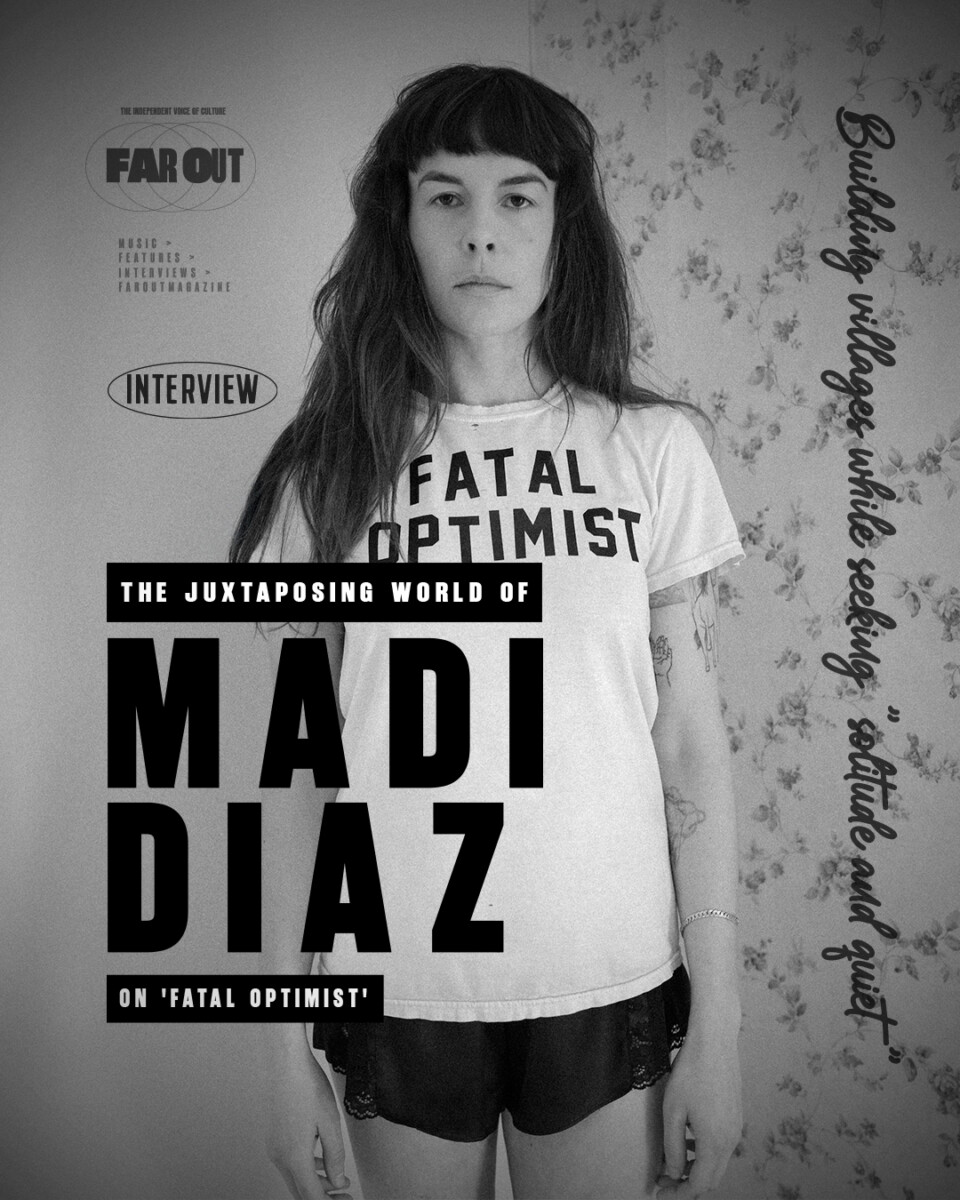
In her eyes, that’s why she sees the value of her closest family and friends as being so integral to the process. “Specifically in the recording process, they held me to capturing what I set out to capture with this record, which is isolation and a solo singer-songwriter, acoustic record,” she explains, before quickly adding that it “takes a village” to build an album of this kind. This is strikingly at odds with the image of isolation she found herself portraying during Fatal Optimist, but it is the simple truth.
Diaz insists that she is “not looking to be inspired by other people” when creating any of her music, not least this latest record, and as such rebukes any obvious comparison to stalwarts of female folk music that she may otherwise find herself chalked up to. Instead, she cites an eclectic mix of pop influence, from Phil Collins to Madonna, as having steered her musical psyche from her childhood through to now. But rather than taking over the world in stadium after stadium like her heroes – after all, she’s already had a taste of that – Diaz prefers to cultivate her audience right from the homegrown seeds.
“It’s been really bizarre to experience audiences that have gotten as quiet as they have to listen to these songs and to this record,” Diaz laughs when asked how her current tour is going. Realising she may have painted this with a slightly awkward slant, she is quick to counter: “It’s been a really beautiful experience. It’s almost awkwardly quiet when I play.” But intimate venues and mouse-like crowds almost add to the viscerality, because for once, the world is brought to a firm standstill.
That allows the audience to truly open their minds as they are said from the creator’s mouth – sentiments like “I hate being right” from the titular track Fatal Optimist, which acts so much like a window to the soul in the whirlpool of emotions Diaz found herself surrounded by at the time of writing. She says it reflects sarcasm, resignation, and even a sense of “‘well, I walked into that one again’.” This torrent of multiplicity, politics of identity, and reckoning to the self may seem like a lot to contend with – but really, it was just the story of a woman wanting to be left alone.
“I’m probably still metabolising what it feels like to some degree,” the singer says, now that the album is out in the world and she has exposed her deepest thoughts for all to hear. “Sometimes it feels very powerful. Sometimes it feels like I have a vulnerability hangover.” But where does she go from here? “I really could not even begin to say, I think every time I’ve ever predicted anything, it does not end up how I thought it was going to go. So I’ve kind of given up on that absolutely.”
After all, she knows more than anyone that it’s the hope that kills you.
