


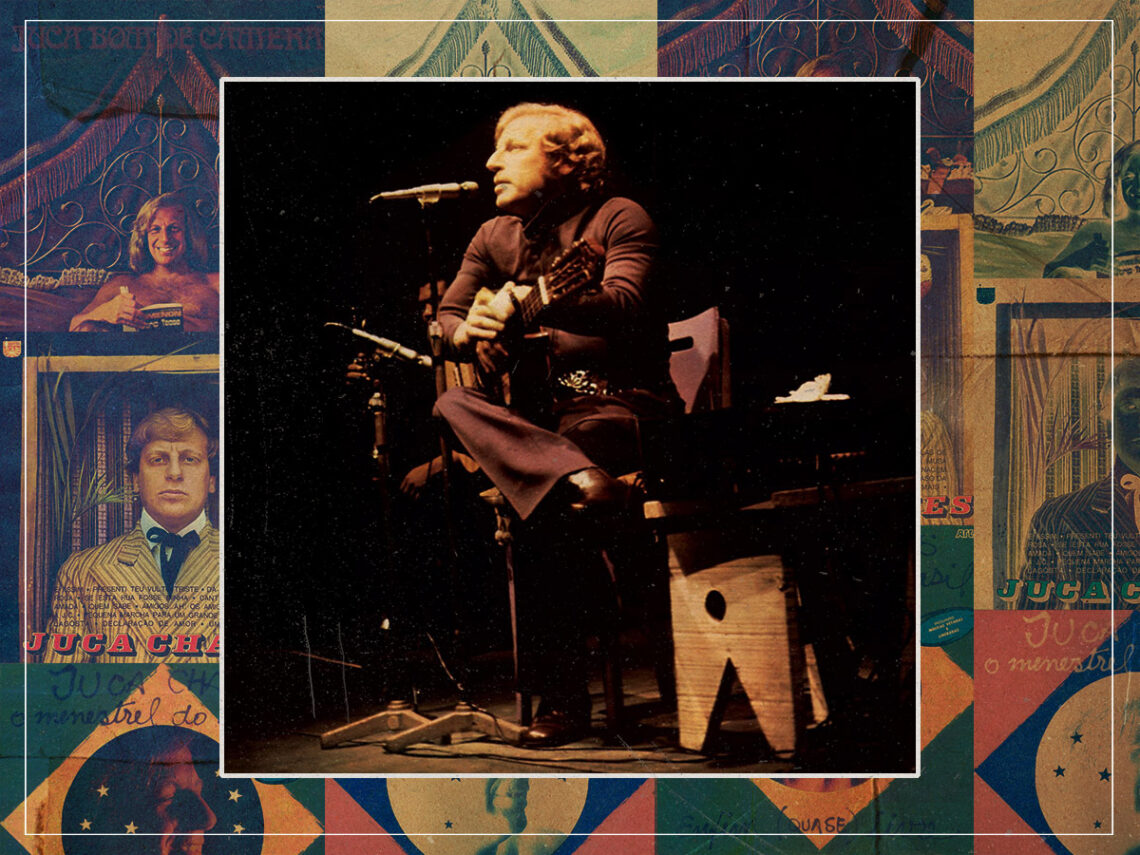
Juca Chaves: the Brazilian musician exiled to Europe

The music scene of the 1960s was famous for challenging abuses of power and oppressive governments. In the USA, hippie outfits like Jefferson Airplane were rebelling against the Vietnam War. In France, artists were protesting against the presidency of Charles De Gaulle, and in England, groups like The Kinks were providing a voice to an angry post-war generation. However, not many artists were effective enough in protest that their nation’s government sought to exile them entirely. This is just what happened in the case of the musician and satirist Juca Chaves in Brazil.
Born Jurandyr Czaczkes in Rio de Janeiro, Chaves began learning musical composition during his childhood in the ’40s. Around that same time, the nation of Brazil was experiencing an incredibly turbulent period politically, storied by rebellions, revolts and subjugation. All of this came to a head in 1964, when a coup d’état saw President João Goulart replaced by the Fifth Brazilian Republic, an authoritarian military dictatorship.
Chaves was the son of Austrian Jewish immigrants who had fled their homeland amid the rise of Nazism and anti-semitism in Europe, so he clearly knew a thing or two about the dangers of authoritarian governments. As such, his music quickly began to take aim at the increasingly totalitarian military government of Brazil. He first began releasing records in the early ’60s, usually featuring a mix of comedy tracks and MPB styles, but his career did not really take off until he began to challenge the powers that be.
Admittedly, the phrase ‘took off’ is debatable here. Chaves’ work was proving to be incredibly popular among mainstream music audiences in Brazil, but his criticisms of the Brazilian state were not going down particularly well with the military government. In 1967, the state imposed a new constitution on Brazil, which heavily restricted artistic expression, freedom of speech and criticism of the state. Countless artists and musicians were heavily impacted by this change in legislation, but few more so than Chaves, who was exiled to Portugal during the early 1970s as a result of his criticism of the dictatorship.
When faced with the prospect of being rejected from their home country and sent across the Atlantic to an unknown land, most normal people would roll over and admit defeat to the oppressive powers that be. In contrast, Chaves continued to create incredible music and satire, criticising both the Brazilian government and the fascist government that was in power in Portugal at the time. His period in exile also brought new meaning to his defining anthem, ‘Take Me Back To Piauí’, a beautiful samba celebration of Chaves’ home nation.
Inevitably, the fascist state in Portugal was not any more pleased with Chaves’ criticism of them than the Brazilian government had been, and soon, the artist was forced to relocate to Italy in fear of what might happen to him if he stayed in Portugal. Although he had faced suppression and persecution at every turn, Chaves never stopped creating, and he never lost his incredibly receptive audience.
Following the dissolution of the Brazilian military dictatorship in 1985, Chaves was finally able to return to Brazil, the country he held such adoration for. Upon his return, the artist found the recognition he so desperately deserved, both for his incredible music and his criticisms of the previous government. As he once quipped, “The press is very honest; if you pay, they will even publish the truth.”
