


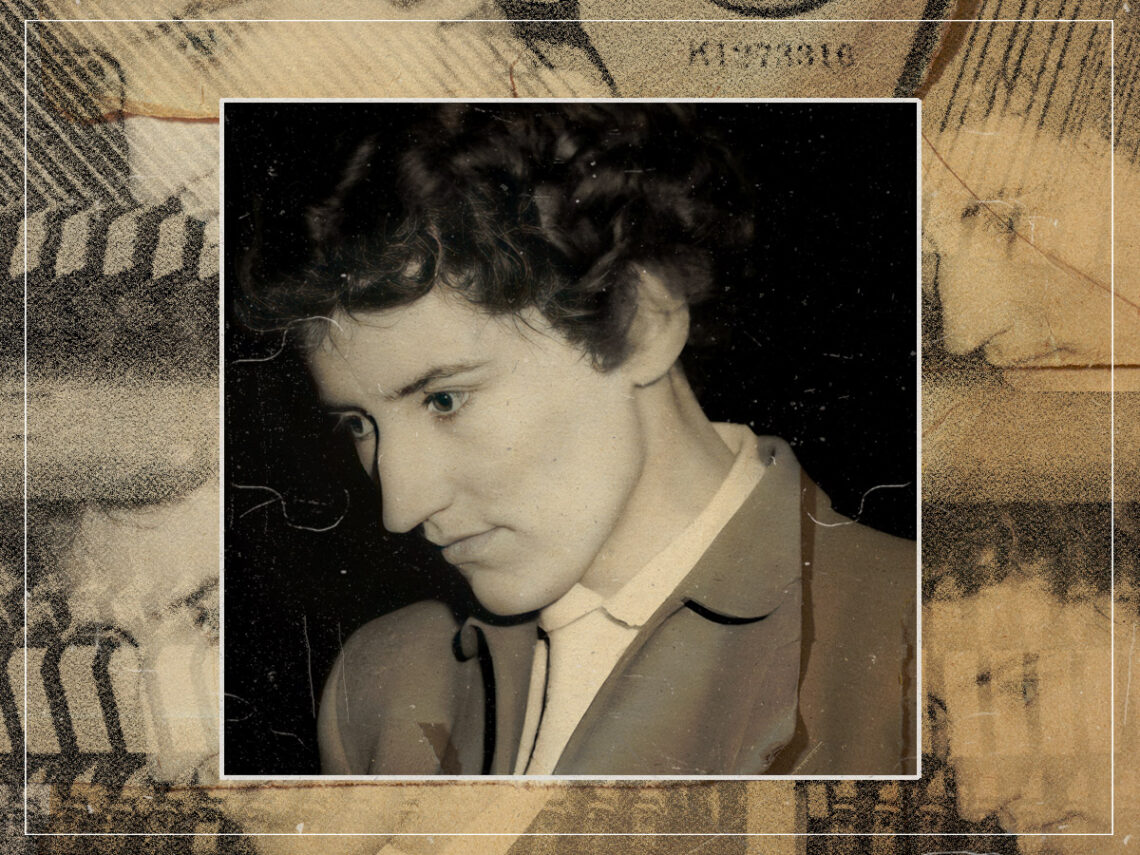
Joyce Hatto: the pianist enmeshed in a fraud scandal

We’ve all seen those daytime television programmes where somebody buys a diamond ring off eBay for a fiver and then is shocked to find it isn’t genuine – usually called things like ‘Scam World’, ‘Fraud Britain’ or some other hyperbolic title. When it comes to the world of music, however, fraud becomes a much broader grey area. Was Jake Bugg a fraud for pretending to write his first two albums? Were The Rolling Stones frauds for ripping off ‘The Last Time’? That’s all up for debate, but in the case of Joyce Hatto, there is little doubt that she was, indeed, a fraud.
Born in 1928 into a musical household, Hatto had found her calling at a very young age. Her father was an antiques dealer and piano enthusiast, and Joyce soon found a natural home in front of the keys. Beginning in the 1950s, she found work as a skilful pianist, playing concerts across the United Kingdom as well as in mainland Europe, accompanied by high-profile and well-respected musicians, including the likes of Boyd Neel and the London Symphony Orchestra. Clearly, Hatto was a talented pianist, and she supplemented her modest income by holding piano lessons in schools as well as privately.
That could have been the end of it; Joyce Hatto was a fairly talented pianist who enjoyed a nice, quiet life in her Hertfordshire home. The end. But, of course, that was not how it happened. In the early noughties, decades after Hatto’s heyday, various concert recordings started popping up on CDs and online, attributed to her under the conductor René Köhler. Released by Concert Artist Recordings, the label set up by Hatto’s husband, William Barrington-Coupe, these recordings proved to be incredibly popular and well-respected, with various magazines and music critics quick to praise the continued talents of Joyce Hatto. The longer this went on, though, the more suspicions were raised.
After all, Hatto had not performed publicly in decades – she was an elderly woman battling ovarian cancer. How could she have produced such polished recordings, and why were there no other records of the conductor René Köhler? The answer should be obvious: the recordings were not made by Hatto, and Köhler did not exist. Barrington-Coupe, who had previously been convicted of tax evasion in the 1960s, had sold recordings made by other artists under the name of his wife.
The operation was blown wide open by the advent of iTunes. A music fan by the name of Brian Ventura put a CD of Liszt’s Transcendental Études credited to Hatto into his computer when iTunes identified it as a recording made by the Hungarian pianist László Simon. After this, more and more plagiarised tracks released under Hatto’s name came to light. By the time it was discovered, the pianist had already passed away, succumbing to ovarian cancer in 2006. Her husband, the mastermind of the fraud, claimed that Joyce had no knowledge of his operation and that he only plagiarised the tracks in an effort to honour the musical talent of his dying wife.
Although he initially denied any claims of fraud, Barrington-Coupe eventually admitted to what he had done. However, he refused to help identify any of the original artists who had made the recordings issued under Hatto’s name. Seemingly, he did not see the issue with musical plagiarism, once saying, “I don’t consider I’ve hurt anybody. A lot of attention has been drawn to forgotten artists.”
For the most part, Barrington-Coupe did not receive much in the way of punishment for his extensive case of fraud, and the record producer died in 2014 at the age of 83. Whether or not Joyce Hatto had any real knowledge of the scandal that would become synonymous with her name, the case of Hatto and Concert Artist Records remains one of the biggest fraud cases in musical history, all brought down thanks to the advent of iTunes.
