


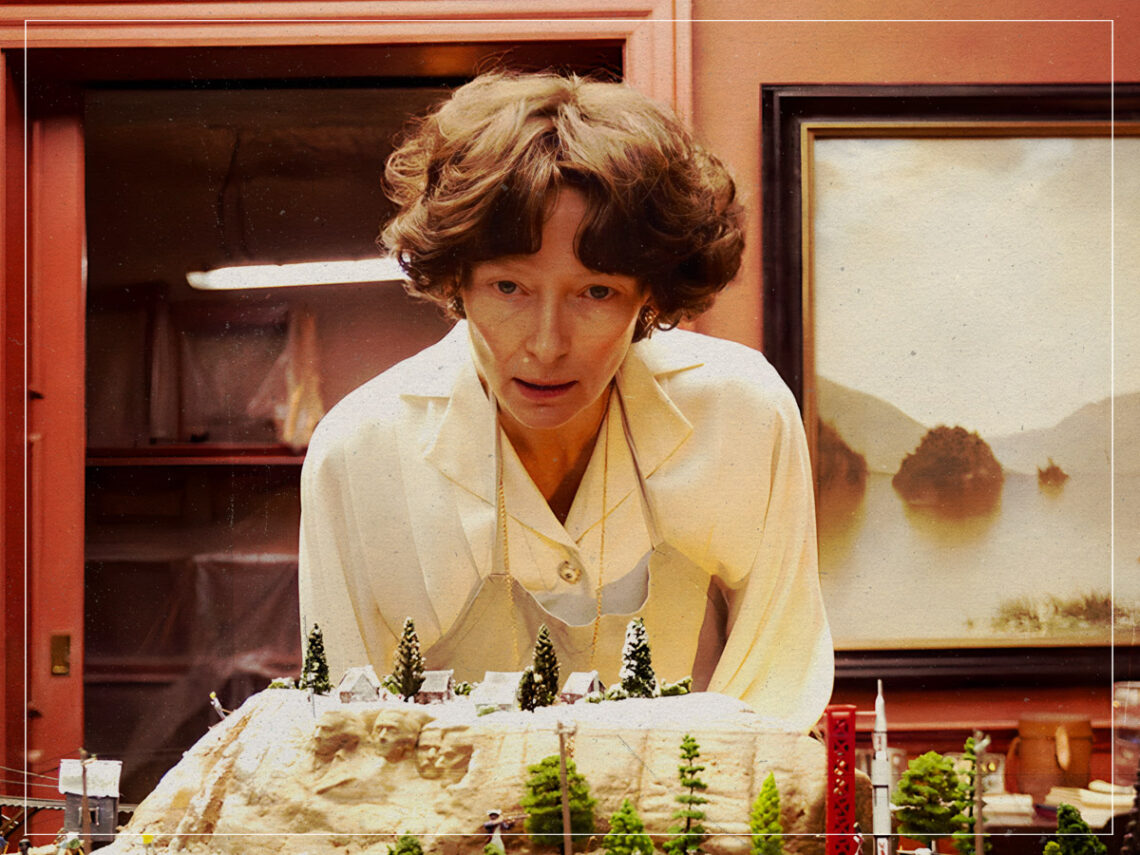
‘The End’ movie review: a disastrous attempt at fictional storytelling

After hearing that the esteemed documentary filmmaker Joshua Oppenheimer was making his first fictional feature, I was significantly intrigued – would his genius also extend to the world of fictional storytelling? Unfortunately, the answer is, absolutely not.
The End is described as a satirical musical set in an underground bunker after complete environmental collapse, following a family in their attempts to create a new life underground and find joy within the confines of their new world. With a stellar cast consisting of Tilda Swinton, Michael Shannon, George MacKay and Moses Ingram, not even this is enough to elevate what might just be the worst film I watched last year.
I feel as though The End took many years from my life, with the only benefit of watching it being the united experience of a cinema full of people who were collectively bewildered at the sheer awfulness of what was happening on screen, with so many walkouts that it felt like an achievement for the few people who managed to make it to the end.
Through the setting of a nuclear bunker, Oppenheimer has attempted to create a microcosm through which to explore the class divide in America, centring the story around a super-wealthy white family who is forced to reckon with their own complicity in the climate crisis after a mysterious survivor turns up at their home. In the safety of their underground bunker, the family have distanced themselves from the tragedy above ground and created an elaborate web of lies to excuse their refusal to help others.
While it is certainly an interesting premise, every aspect of the film is executed so poorly that it makes for a weak and laughable story that derives no weight from the themes it supposedly explores.
To begin with, the script is an aimless monstrosity, with no discernible plot or end goal and painfully clumsy lines of dialogue that attempt to create conflict around the circumstances of their survival. Essentially, the entire film is littered with scenes of the family carrying out their daily routines, and every 30 minutes or so, someone will temporarily be plagued with guilt about their lavish lifestyle and say something like, “What about the people up there?”, to which everyone goes deathly silent before launching into another musical number about missing the earth above ground. This exact formula is repeated for nearly three hours, with little respite offered during the musical sequences, which contain no memorable melody or lyric and are as uninspired as the script.
Despite signalling towards weighty subject matter, there is no nuance or depth to Oppenheimer’s story, with the director somewhat communicating a vague message in the first 15 minutes and then leaving the film spinning on its wheels for the next three hours to justify its torturously long existence. There is no momentum to the overall story, instead just repeating the same monotonous story beats in every scene until it shudders towards the end.
While the film could perhaps be elevated through its visual style, it is unfortunately shot in a dull and thoughtless way, with the DOP seemingly being averse to close-ups or any kind of shot that isn’t medium-wide. Each image is composed in the same way, quickly becoming boring and predictable. It has an emotionless and clinical look that looks something like an IKEA showroom.
There is no redeemable quality to The End, which is executed in a flat and unimaginative way, with an otherwise interesting concept being crushed through poor direction and cinematography, rendering its stab at social commentary entirely meaningless and extremely disappointing.
