


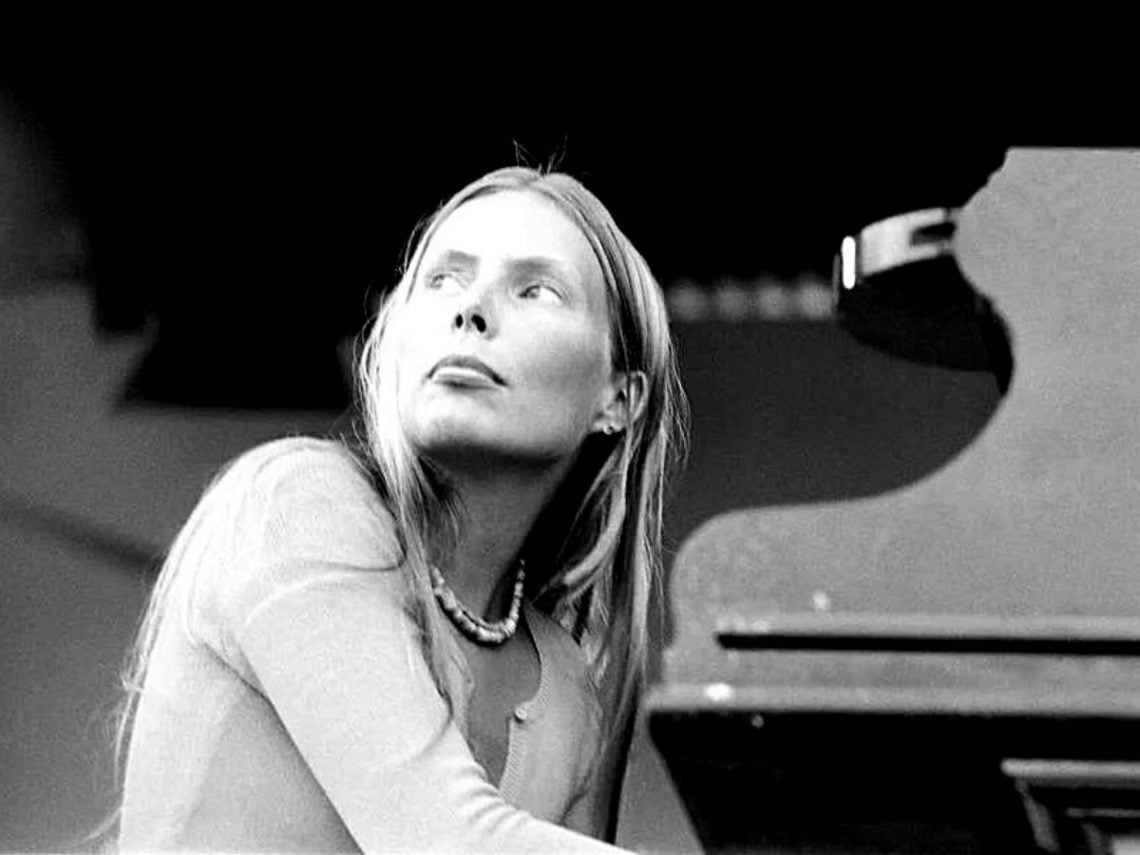
Joni Mitchell discusses her biggest musical influences

Some of the greatest Joni Mitchell songs tend to fall out of the sky. There’s a certain quality to songs like ‘Help Me’ and ‘Big Yellow Taxi’ that feel like they’ve existed since the beginning of time. Since everybody gets their muse from some form of life, Mitchell found her calling outside of her generation.
While initially working on her own songs, Mitchell mentioned that only a little from her generation inspired her to write. As she talked about her biggest influences, the Canadian spoke of some of the biggest artists from genres like jazz and classical music, singling out acts like Rachmaninoff and Billie Holiday.
Whereas most other artists were cribbing from old-school rock and roll, Mitchell’s musical palette ran much bigger, borrowing from different classical composers that instilled a love for melody into her. The improvisational nature of jazz tends to shine through Mitchell’s greatest recordings, as her lyrics come across in a far more conversational tone, almost like she’s using her vocal cords as the main instrument of the tune.
Since all these artists were outside the realm of proper rock and roll, Mitchell brought that unorthodox approach into rock and roll, experimenting with different tunings throughout most of her career. Outside of her simple folk songs, the average guitar player might have struggled to work with Mitchell’s guitar setup, often tuned to open chords to give her songs a more airy feel on tracks like ‘Amelia’.
Although Mitchell might have been looking to express herself through her writing, it wasn’t until a few years after she began writing poetry that she decided to write music. After picking out jazz giants like Miles Davis, Mitchell talked about being unable to latch onto that brand of musicality until much later, saying: “That didn’t come out in my music initially. I didn’t write my own music until I crossed the border into the US in 1965. And then people who encouraged me to set poetry to music were Leonard Cohen and Bob Dylan”.
Throughout rock history, people like Cohen and Dylan were laying the groundwork for what Mitchell would do later, penning songs that had more to do with political conflict and the complex emotions that couldn’t be contained in a standard love song. By the time Mitchell started, she had arguably surpassed both of them regarding how to paint pictures with music. Across an album like Blue, songs like ‘River’ make Dylan’s lonesome songs feel like kid’s stuff.
Despite the simple lyrical structure, Mitchell did have an affinity for rock and roll, discussing with Elton John that Chuck Berry was one of the greatest of all time in his field. In essence, Berry’s take on small-town America has the same tone of simple literature from decades before. While Chuck Berry may have been the Ernest Hemingway of rock, Mitchell was certainly the Emily Dickinson.
In the years since her debut in the ’60s, Mitchell finally had a handle on farther-reaching genres, infusing jazz into albums like Hejira while working with the best musicians in her field, like Larry Carlton and Jaco Pastorius. Genres might set parameters for some artists, but Mitchell always saw her favourite music as just another paint to put on her artistic canvas.
