

Sex Pistols singles sell for over £20,000 at John Peel sale
Read More


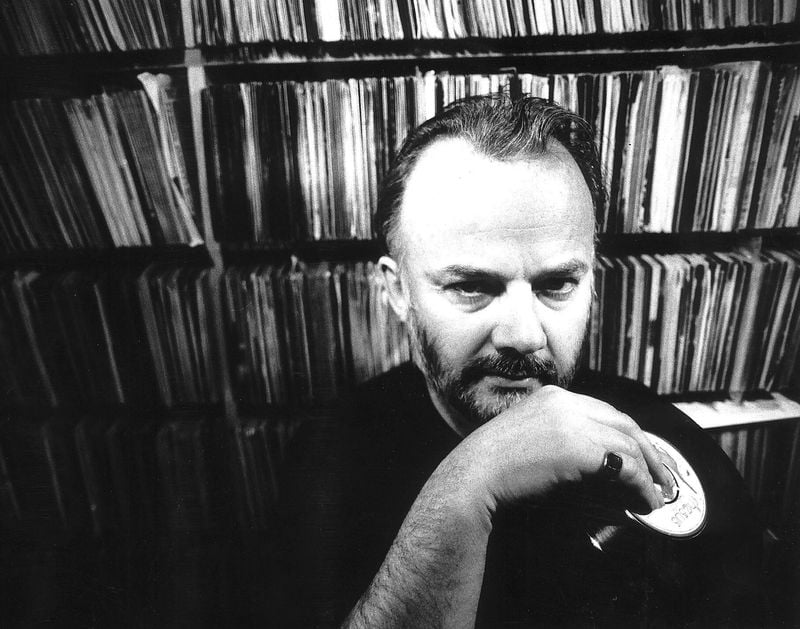
John Peel, born John Robert Parker Ravenscroft, was a BBC DJ whose domineering presence in the music industry put him at the very top of the most revered DJs in British history. He’s even got a stage at Glastonbury named after him. In recent weeks, however, his legacy has been somewhat tarnished by posthumous sexual abuse allegations, and a petition has been launched to have the Glastonbury stage renamed.
Whether Peel’s legacy is one to be rebuked or revered, one can’t deny that the broadcaster had an extraordinary life. Long before his fame as a BBC Radio 1 DJ, Peel was living in Texas, USA, working in the cotton industry. The Liverpool-born grafter moved to Dallas aged just 21 in 1960 and worked for the cotton business as it had business connections with his father.
The young music fanatic had aspirations beyond cotton. Over the space of two or three years, he found himself in a number of different jobs but really saw himself in music or the media. In 1960, while working as a travelling insurance salesman, Peel had the chance to converse with presidential candidate John F. Kennedy and his running mate Lyndon B. Johnson who had been in Dallas on their election campaign tour. As an aspiring journalist, Peel took the chance to get some photographs of the politicians. Later that year, Kennedy was made president, and Johnson was his vice president.
In 1963, Peel found himself amidst one of the most shocking and pivotal moments in modern American history. On a return trip to Dallas in November ’63, Kennedy and his wife Jackie were carrying out public relations duties, waving from a convertible in the presidential motorcade when Kennedy was assassinated. One shot struck his neck while a second hit his head.
The assassination has been subject to conspiracy and conjecture over the decades since. Still, it was determined that Lee Harvey Oswald, a US Marine veteran and order filler at the Texas School Book Depository from which the shots were fired, was the culprit.
A few days later, Peel passed himself off as a journalist working for the Liverpool Echo to shoulder his way into Oswald’s arraignment. Peel can be seen in the famous footage from Oswald’s press conference, as he wired information back to the Liverpool Echo in the UK. This brazen foray into US history in the making marked his first exploit in the media.
One year later, Peel moved to Oklahoma City to join one of the city’s radio stations, called KOMA, where he spent the next 18 months. It was at this point that he underwent his first name change, dropping the ‘s’ from his surname. He later explained it was because “the Americans apparently believed ‘Ravenscroft’ was too much for any one person to remember.”
With the rise of Beatlemania, Peel’s career in radio broadcasting took off thanks to his Liverpool connection and apparent in-depth knowledge of the Fab Four. “I became a Beatles expert,” he later told NME. “But of course, I hadn’t been in Liverpool for years and didn’t know anything about them. In those days, though, America was full of DJs who were all called James Bond who pretended to be English and were really Canadian and who were all Ringo’s cousin. I don’t know why they chose Ringo. So, in the sense that I wasn’t called James Bond and I really did come from England, I was almost unique.”
In 1967, Peel moved back to the UK with his newfound knack for radio broadcasting and began working for the offshore pirate radio station Radio London. During his short stint with the station, he developed a late-night programme, ‘The Perfumed Garden’, which he used to bring his passion for blues, folk music and psychedelic rock to the nation. He found his niche in introducing some of his favourite acts from America to the ears of Britain.
After Radio London closed down in August 1967, Peel joined the BBC’s new station, BBC Radio 1, which began broadcasting in September 1967. Over his long career with the BBC, Peel made a name for himself for his acute musical and cultural knowledge. He became known for helping aspiring musicians by giving them that all-important airtime and public exposure, especially over the late 1970s during the punk explosion.
All the latest stories about The Beatles from the independent voice of culture.
Straight to your inbox.
