


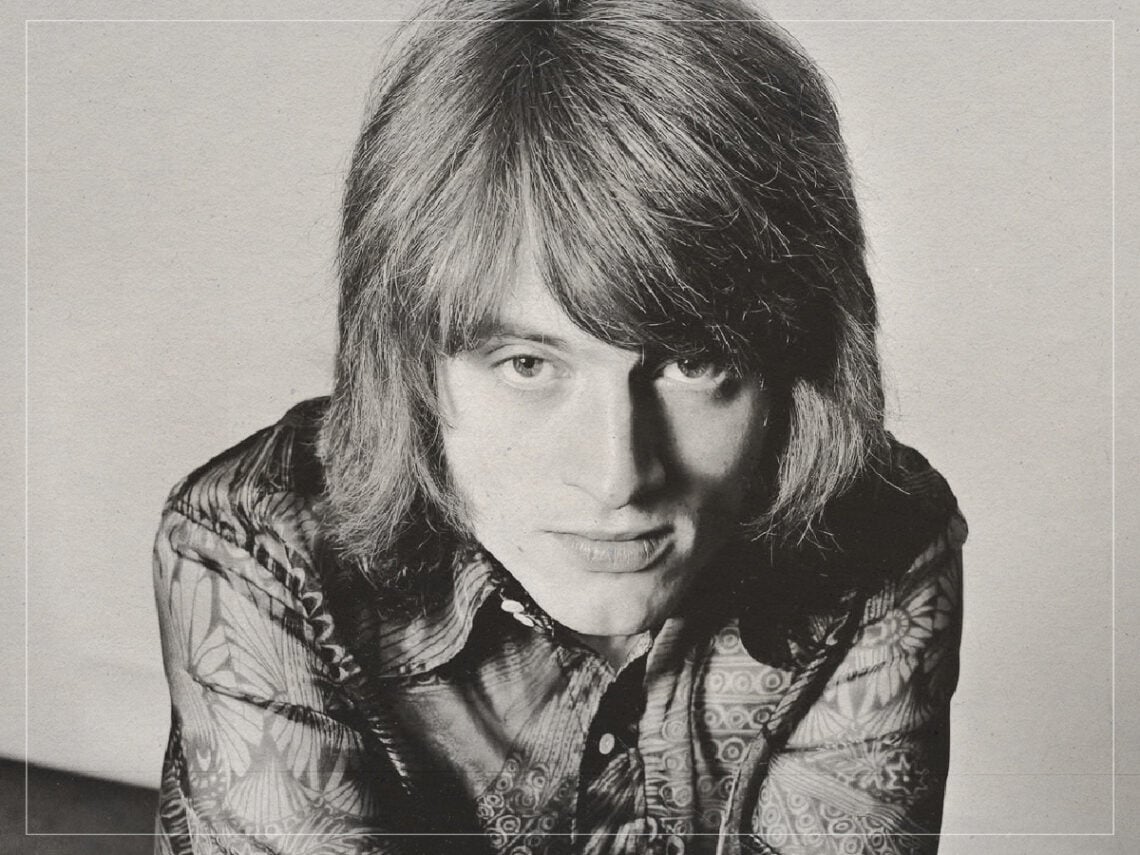
John Paul Jones: the world’s greatest bassist prefers the piano

Faced with the hypothetical of being stranded on a deserted island, with only one instrument to accompany him, which would the prolific John Paul Jones choose: a piano, bass or mandolin?
Jones describes the hypothetical as “horrible,” imagining that he could get his guitar manufacturer, Hugh Manson, to make a “monstrous instrument” that would allow him to keep all three. “I guess if it really came down to it on a desert island,” he conceded to Uncut, “it would have to be the piano, because you can do so much on it. You’re a whole band. The bass is not much fun on your own.”
Jones first tested his talents on the piano at the age of six, compelled by his father, Joe Baldwin, who was a pianist and arranger for big bands in the 1940s and ’50s. Notably, Baldwin worked with the British dance band Ambrose & His Orchestra, led by Benjamin Baruch Ambrose. “He was a very open-minded musician, and I just followed along,” Jones explained of his father on the Soundboard podcast in 2024. “Blues, flamenco, everything – he just loved it all. And he passed that love and curiosity of music… on to me.”
Jones’ musical foundations flowed from his mother’s side, too: she was in the music business, as well, allowing the family to tour together and perform around England as a vaudeville comedy act. The bass guitar would become Jones’ instrument of choice as a teenager, spurred to pick up the instrument in order to join a rock ‘n’ roll band forming at his school, who had no need for a pianist. Later, the bass would become his defining companion in Led Zeppelin, but his artistry always coincided with the keyboard, as his early love of the piano remained central to his music.
“With keyboards, of course, I had bass pedals,” Jones explained, of how he balanced his two chosen instruments. “Having been an organist, that was easy, rather than having people say, ‘Who’s playing bass?’”
On the Mellotron electronic keyboard, he captured the beauty on ‘The Rain Song’ from Houses of the Holy, and the scales across ‘Kashmir’ from Physical Graffiti, as well as a Clavinet keyboard on ‘Trampled Under Foot’ (also from Physical Graffiti). During Led Zeppelin’s live performances, Jones centred his keyboard playing on the tune ‘No Quarter’, with his solos often continuing for over a half-hour on his Fender Rhodes electric piano, combined with a synthesiser. He’d weave various pieces from his favourite tunes into his keys, as well: elements of ‘Amazing Grace’, for instance, alongside the Spanish classical guitar tune ‘Concierto de Aranjuez’ by Joaquín Rodrigo or Jones’ own renditions of classical pieces by Rachmaninoff and the like.
Such varied interpretations of Led Zeppelin’s ever-evolving sound surely came from Jones’ time as a session musician. Then still going by his birth name, John Baldwin, his roster of musicians boasted everyone from The Rolling Stones to Françoise Hardy, Jeff Beck, Cat Stevens, Dusty Springfield and many, many more. Eventually, renaming himself John Paul Jones, after the 1959 film of the same name, he worked his way up to recording two or three sessions daily and working the majority of the week. His persistent versatility as a musician, however, clearly served him well as a pillar of Led Zeppelin, endlessly inventive and imaginative in how the band’s sound could expand.
“I think he was much more in the front line of Led Zeppelin music on keyboard work because nobody else in the band played it,” Pete Townshend expressed of Jones to Rolling Stone in 2015. “It was a prog rock era in respect to him.” Jones may remain known in the rock ‘n’ roll canon as Led Zeppelin’s quietest, most reserved member, but he was undeniably their secret weapon, adding literal sonic layers that curated emotive ones, elevating them to an artistic level beyond comparison.
In 1970, Jones purchased a 1898 Steinway in London, where it made its live debut at Led Zeppelin’s essential Earls Court performances, across five nights in 1975. “I thought, ‘This is my chance,’” Jones recalled of his Steinway piano. “I had my Steinway at Earls Court for those five shows, and then it went straight into Steinway’s in London for complete restringing and everything like that. That’s my Steinway on-stage… and I just loved it ever since.”
He describes his beloved piano as his “go-to everything” instrument at home, where it now resides.

Never Miss A Beat
The Far Out Led Zeppelin Newsletter
All the latest stories about Led Zeppelin from the independent voice of culture.
Straight to your inbox.