


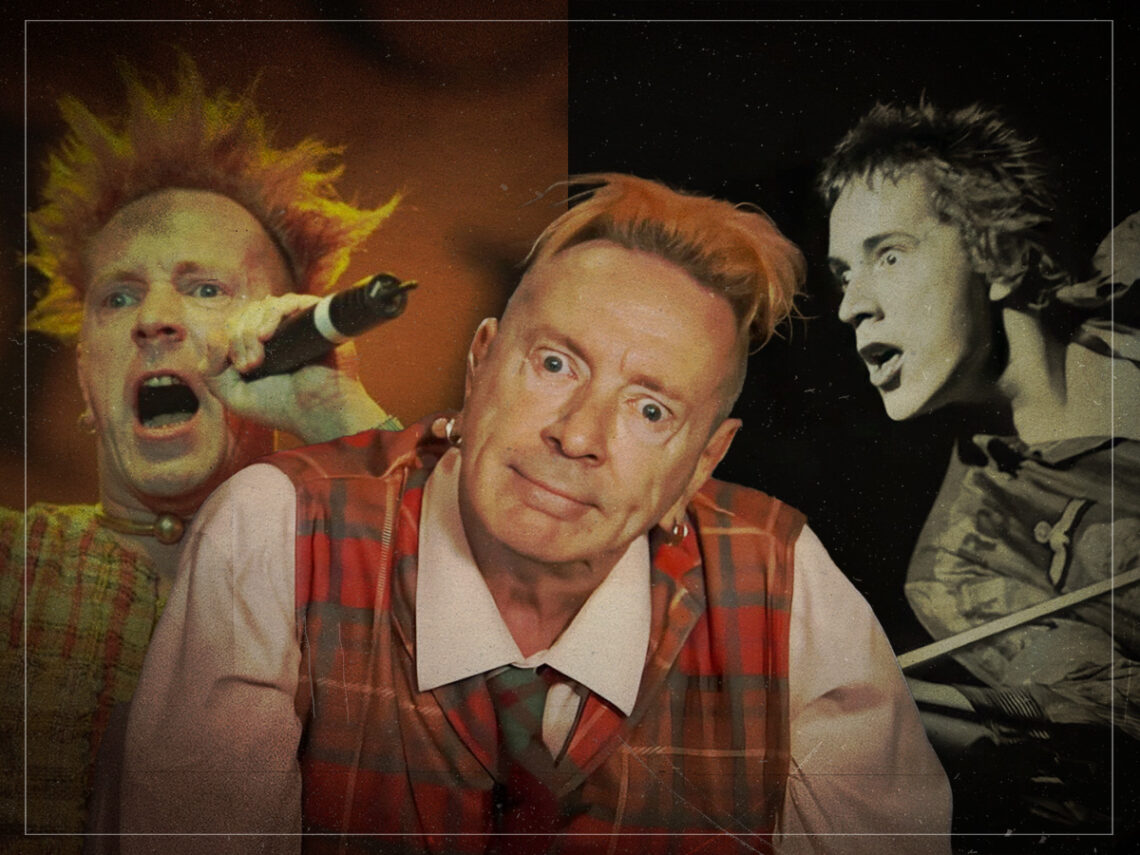
The rise, fall and unwanted reprise of John Lydon: The court jester of punk

John Lydon hit the UK music scene like a steamtrain. Rocking a t-shirt that said “I hate Pink Floyd,” and with an attitude that would put the country’s government and public on trial, Lydon’s approach could only ever be described as interrogative. This didn’t just project him and his band, the Sex Pistols, to fame, but it sparked a whole new movement: Punk.
There were bands and artists who acted in a way that became intrinsically punk before the Sex Pistols had even put two chords together. For instance, Iggy Pop’s performance upset the masses, as he constantly acted in a flamboyant and sometimes unsightly fashion. Pop has accredited this kind of style to Jim Morrison following the moment he watched him live while both drunk and likely on drugs.
“I loved the performance. Part of me was like, ‘Wow, this is great. He’s really pissing people off, and he’s lurching around, making these guys angry’. People were rushing the stage, and Morrison’s going, ‘Fuck you. You blank, blank, blank’,” he said, “You can fill in your sexual comments yourself. The other half of it was that I thought, ‘If they’ve got a hit record out and they can get away with this, then I have no fucking excuse not to get out on stage with my band.’ It was sort of the case of, ‘Hey, I can do that.’ There really was some of that in there.”
Additionally, The Ramones had many of the attributes that we now see as punk. There was distortion, unwashed hair, and tattered clothes aplenty. They also put on thrashing shows that were unlike anything people had experienced before. It wasn’t rock; it was a rawer version of that, which felt more grounded. However, it still wasn’t branded as punk.
John Lydon was responsible for the punk movement. While that foundation may have existed, there was a lot more to it than that. What Lydon brought to the scene with his interrogation of the world was the thesis that followed punk around, one that was also political and societal.

Lydon states when he first started with the band, Britain was “A very depressing place,” before adding, “There was trash on the streets, total unemployment – just about everybody was on strike, if you came from the wrong side of the tracks, then you had no hope in hell and no career prospects at all […] Out of that came the Sex Pistols and then a whole bunch of copycat wankers after us.”
It’s true. If the punk movement was ripples in water, Sex Pistols were the sinking stone that caused them. They made it so that people who were bored of a political system and a music industry that didn’t represent them fairly had a voice where they could vent their frustration. John Lydon paved the way for this interrogation of art and society to be normalised as opposed to just something that was mumbled under people’s breath.
This interrogation of Britain was unprecedented but entirely necessary, and the impact of this music and of John Lydon as a whole can still be heard in songs today. However, Lydon himself has not aged quite as gracefully. Sex Pistols burned bright and fast, only releasing one “proper” album and another record made up of garbage recordings from a movie no one saw. He has continued his musical career, but none of the material released has come close to scratching the itch that many fans can’t quite reach.
What’s most disappointing, however, was that Lydon has now become an intrinsic part of British culture, almost a comedic element of the thing he once scorned, the court jester of punk who seems to have less of a scholar-like opinion on society like he did in the ‘70s and ‘80s and instead enjoys to mock anything remotely mainstream. This has seen him release a plethora of controversial statements over the years, including an endorsement for Donald Trump, which has gone down about as well as the second Sex Pistols album.
There doesn’t seem to be any rationale behind his ramblings anymore. Instead, there is the same tired comedic routine, where Lydon is asked for his opinion on something, and he responds that it’s rubbish. He repeats this dance when there is new music or books to promote, seemingly playing into a system that he once rebelled so proudly against.
One of his most recent examples of unnecessarily lashing out revolves around his attitude towards the recent Sex Pistols reunion. Frank Carter has taken on lead singing duties for a newly revitalised version of the Sex Pistols alongside Glen Matlock, Paul Cook and Steve Jones. When Lydon was asked if he would ever consider rejoining the band, he shut down the notion as quickly as it was brought up (very on-brand).
“Never,” he said, “Not after what I consider their dirty deeds, let them wallow in Walt Disney woke expectations.” He said that he doesn’t believe in the band anymore because “They’ve killed the content, or done their best to, and turned the whole thing into a rubbish, childishness, and that’s unacceptable.”
Lydon seems unable to accept that over the course of four decades, the music he made might change form in some way. While it was responsible for starting the punk movement, it now feels incredibly tame in the face of much heavier punk bands with larger fanbases and more aggressive messages. Music is also allowed to be fun, and recognised as being as much, without using lazy and misguided terms such as “woke” to describe it.
Once again, people turn to John Lydon for these opinions because it has become routine. Let music and film do their own thing, and then a few lines from the angry punk in the corner will be the cherry on top. It’s sad to witness his anger misplaced, but that is all we are subject to today.
