


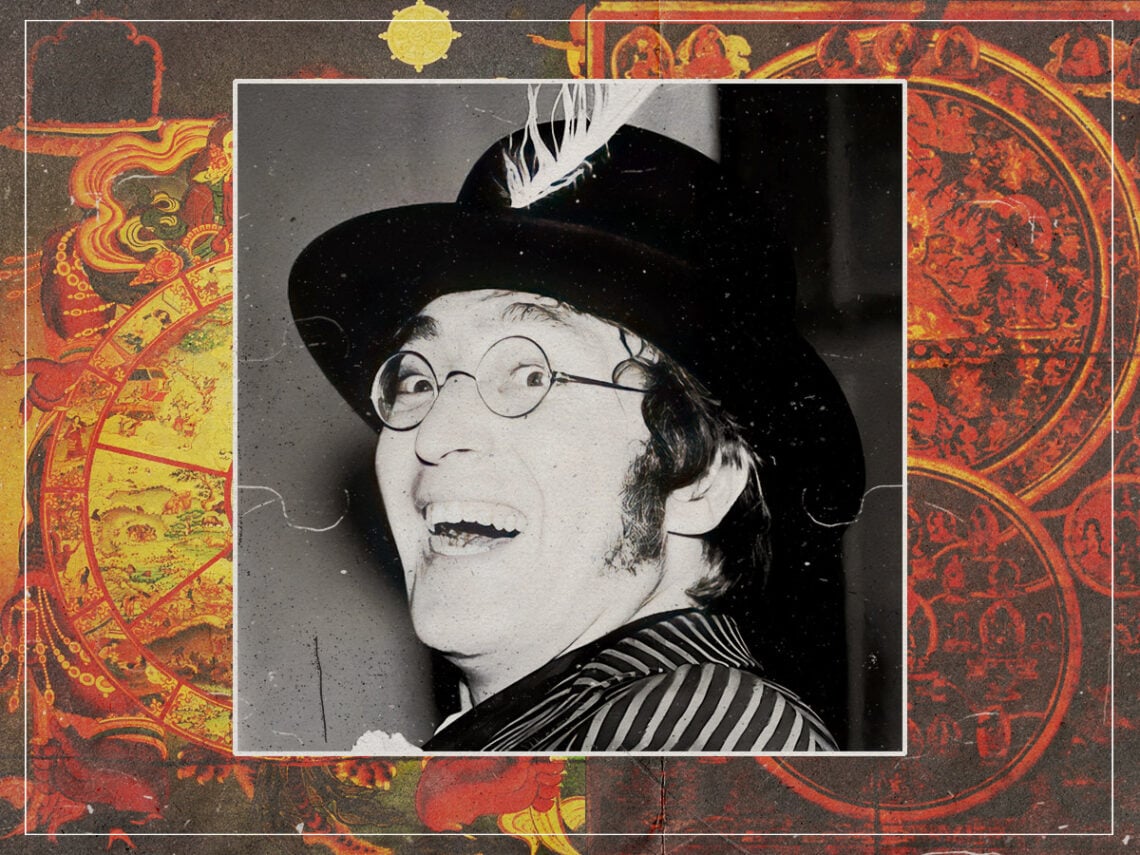
John Lennon’s five fiercest feuds

In the film Yesterday, as our protagonist, Jack, wakes up in a world where The Beatles never existed, he looks online, and it appears that one of the only change is that Oasis no longer exists either. While Oasis will openly admit the fact The Beatles inspired them, the idea that they would be the only band affected in lieu of the Fab Four is laughable. As posters of The Fratellis still fly and Ed Sheeran seems to have had an identical career, it becomes clear that trying to create an accurate portrayal of modern music without The Beatles is nearly impossible.
The Beatles weren’t just musical influences; how they acted and marketed themselves set a precedent for other bands to follow. They were a musical outfit, but all had their own identities, and they showed how you can exist as a band without having that band become your whole identity. John Lennon was commonly labelled an “Intellectual”, openly critiquing political and societal issues. He was never afraid to make his opinion known, and while a lot of the time, this manifested in honest music and quirky musings, he also managed to offend a lot of people with his free speech.
Lennon was never afraid to share his opinion on different artists, whether that meant showing them in a negative or a positive light. This precedent meant that other artists also didn’t shy away from critiquing him. While many would call him the greatest songwriter of all time, others call him condescending and fake. His intellect, for many, was see-through, as he used his image as a civil rights activist and working-class hero to stir outrage and garner attention.
This mindset will likely divide opinions, but that didn’t stop a range of feuds developing between Lennon and other musicians. Here, we will look at some of his biggest arguments with his fellow songwriters.
John Lennon’s five fiercest feuds
Paul McCartney
It’s worth acknowledging the elephant in the room early. Despite the astronomical highs that the Fab Four reached, years of resentment and bitterness followed as creative and personal differences drove a massive wedge between the band, particularly between Paul McCartney and John Lennon. This wedge wouldn’t be removed for years and, even then, was only partly fixed.
The main issue came in the direction Lennon and McCartney wanted to take the band. Lennon had an affinity for honest and experimental music, which is best reflected in his later Beatles contributions, such as ‘Revolution 9’ and songs like ‘Mother’, which he released following the band’s split. Meanwhile, McCartney always had an affinity for pop songs, and he liked to champion catchy choruses, rhythm, and melody in his songs.
One of the songs that best reflected their differences was ‘Hello, Goodbye’, which McCartney was happy with, but Lennon resented. “That’s another McCartney,” he said, “Smells a mile away, doesn’t it? An attempt to write a single.” As songs that followed The Beatles split verged on diss tracks and both band members spoke negatively about one another, a feud brewed for some time before any kind of reconciliation took place.
Todd Rundgren
In the ‘70s, Rundgren was responsible for a string of hits, as the melody with which he wrote was almost reminiscent of The Beatles but in a way that moved the sound forward. It didn’t feel like a tribute, but an influence was undoubtedly there. Like many people, though, Rundgren took offence to Lennon’s new style of music when he started releasing it as a solo artist, seeing the former Beatles’ cries for peace and equality as nothing more than pandering. “All he wants to do is get attention for himself,” he said, “And if revolution gets him that attention, he’ll get attention through revolution.”
Lennon, sharp-tongued and never one to shy away from controversy, addressed Rundgren in an open letter in which he referred to the artist as Sodd Runtlestuntle. “I guess we’re all looking for attention, Rodd, do you really think I don’t know how to get it, without ‘revolution?’” He said, “I could dye my hair green and pink for start!” Lennon continued, “It sounds like I represented something to you, or you wouldn’t be so violent towards me. (Your dad perhaps?)”
Joni Mitchell
“I know I’m going to get into hot water if I get into this, but I have controversial opinions about him,” said Joni Mitchell when discussing John Lennon. Mitchell wasn’t afraid to hold Lennon to task despite knowing that doing so would be met with fury from him. She was mainly frustrated with his constant separation of her and Bob Dylan. Lennon was a big fan of Bob Dylan yet always held Mitchell and him on different levels, which she saw as unfair. He told her to go for a more commercial sound and move away from folk music.
“When I met John Lennon, it was during his lost year in LA y’know,” said Mitchell, “And he came up to me say, ‘Oh it’s all a product of overeducation; you want a hit, don’t you?’” The overeducation comment is likely what annoyed Mitchell the most, given Lennon had championed himself as a product of the people, preaching for peace and equality yet undermining those he allegedly fought for.
Elvis Presley
Cultural icons don’t get much bigger than John Lennon and Elvis Presley; however, despite their standing in the musical world, they didn’t get along when they met, leading to a feud. The story goes that on a trip to Graceland, Elvis didn’t take too kindly to Lennon’s sharp tongue and wit.
“John had annoyed Presley by making his anti-war feelings known the moment he stepped into the massive lounge and spotted the table lamps,” said author Chris Hutchins, “Model wagons engraved with the message: ‘All the way with LBJ’.” LBJ referred to Lydon B Johnson, who succeeded John F Kennedy and escalated things in Vietnam. “Lennon hated President Lydon B Johnson for raising the stakes in the Vietnam War,” recalled Hutchins.
Frank Zappa
When you consider the comments that Lennon made to Joni Mitchell about overeducation, it’s interesting he criticises Frank Zappa by calling him “A fucking intellectual.” Zappa was synonymous with artistic integrity and celebrated for as much, he was uncompromising in his approach to music and while that meant some people didn’t like his work, it also meant he was celebrated for being unwavering.
Lennon seemed willing to embrace the contradiction of his comments about Mitchell and Zappa. He pined to have the same standing as Zappa, comparing them both frequently. “Zappa’s there screaming ‘Look at me, I’m a genius, for fuck’s sake, what do I have to do to prove to you sons-of-bitches what I can do and who I am and don’t dare fuckin’ criticise my work like that! You don’t know anything about it!’ Fucking bullshit!” He said, “I know what Zappa is going through! And a half! I’m just coming out of it now, just fucking’ hell. I just have been in school again. I’ve had teachers ticking me off and marking my work. If nobody can recognise what I am then fuck ’em.”
