


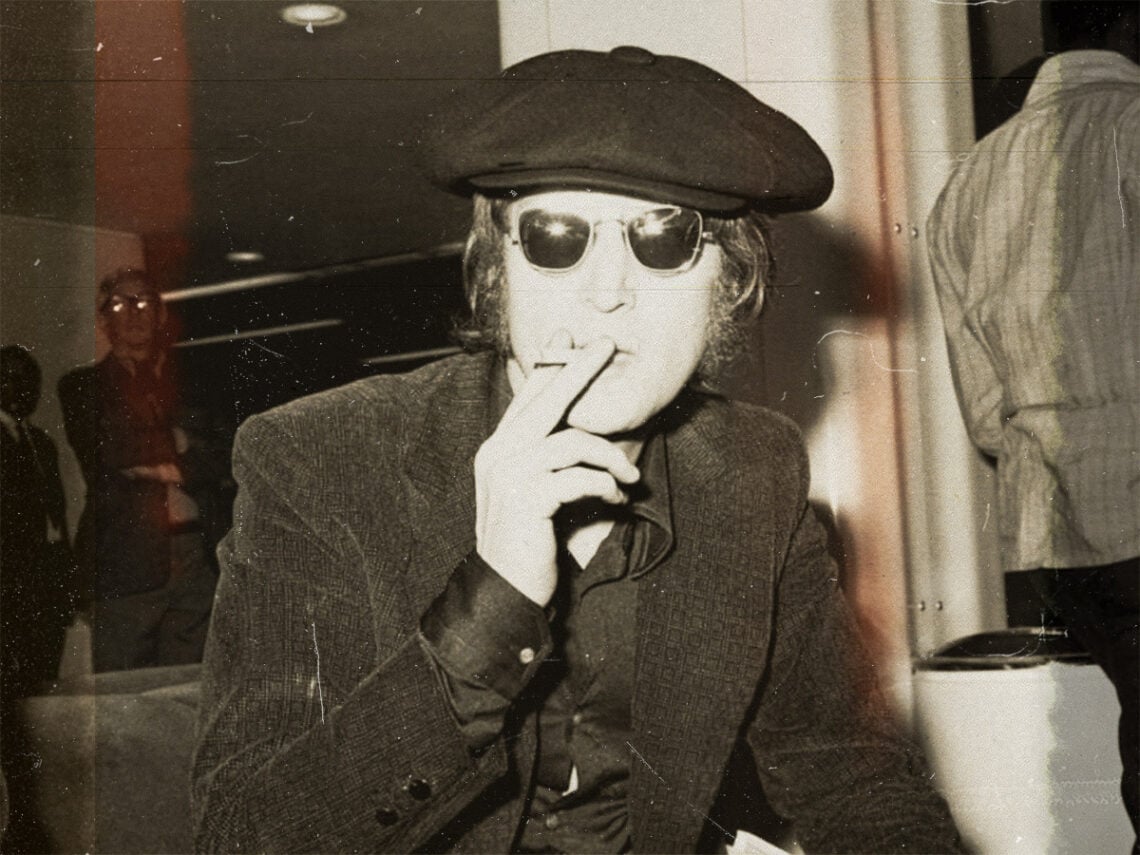
The seven deadly sins of John Lennon

Even though he passed away in 1980, and the heady days of the 1960s are just a distant memory, John Lennon remains a polarising character in popular culture. While his fans and many commentators hail him as one of the greatest songwriters of all time, a host of his problematic actions have cast a dark shadow over his musical efforts.
Of course, Lennon is a fascinating case study because rock and broader popular music would be completely different without him. It’s not too extreme to posit that without him and The Beatles, music might not be the wonderfully kaleidoscopic landscape that is today. A pioneer in songwriting, singing and guitar-playing, the moment he transformed the scene with the ‘Fab Four’ – widely deemed to be the band’s appearance on The Ed Sullivan Show in 1964 – is akin to the musical big bang.
However, running alongside Lennon’s undoubted talent was a larger-than-life character, a man noted for his humour and tenderness at points, but criticised for being problematic at others. From violence to wildly offensive comments and a penchant for general hellraising, a mythos emerged from his life more multi-faceted than any other of the so-called “rockstars” of the age. Full of contradictions and outlandish moments, the story of John Lennon will likely be told for years.
Indicative of the divisive nature of John Lennon are the comments from Todd Rundgren during a 1974 discussion with Melody Maker. At one point, the conversation turned to the former Beatle, and Rundgren delivered a scathing account of his character. “John Lennon ain’t no revolutionary,” he said. “He’s a fucking idiot, man. Shouting about revolution and acting like an ass. It just makes people feel uncomfortable.”
The Todd mastermind opined: “All he really wants to do is get attention for himself, and if revolution gets him that attention, he’ll get attention through revolution. Hitting a waitress in the Troubador. What kind of revolution is that? […] He’s an important figure, sure,” Rundgren continued, acknowledging Lennon’s standing within pop culture, “But so was Richard Nixon. Nixon was just like another generation’s John Lennon.”
As Rundgren attested, sometimes Lennon could act like an ass, and it was this that positioned him as one of the most confounding figures in music. For this reason, we have listed his seven sins. After all, the other side of his character has been praised enough. From the comedic to the outright damning, there’s a range of moments here that outline why the Liverpudlian is the topic of such intense debate.
The seven sins of John Lennon:
Wrath
One of the main criticisms of John Lennon is that he was a hypocrite. For many people, Lennon’s ‘Bed-in for Peace’ in 1969 with Yoko Ono was too rich as he was notorious for his violent outbursts. By his own admission, he was physically and verbally abusive to his first wife, Cynthia Powell.
There were other violent episodes in his life, including the time he threw a glass at the manager of The Smothers Brothers at The Troubador in Los Angeles. It might have missed, but as Rundgren mentioned, it is said to have hit an unsuspecting waitress, and Lennon’s apology was less than forthcoming.
Moments like these make lines in ‘Gimme Some Truth’ such as, “I’m sick and tired of hearing things from uptight/ Short-sighted, narrow-minded hypocrites” and, “I’ve had enough of reading things by neurotic/ Psychotic, homophobic hypocrites”.
His wrathful ways also extended to his peers. “So here we sit, watching the mighty Dylan and the mighty McCartney and the mighty Jagger slide down the mountain [with] mud and blood in their nails,” Lennon said with vitriol in a rambling dictaphone message from 1979. “McCartney, Dylan, Jagger et al. are all company men in various disguises,” he continued before delivering his cruellest comment, “Not forgetting the singing dwarf Mr Simon”.
Paul Simon would have the last laugh, though. Later, the ‘Mrs. Robinson’ songwriter would diplomatically say: “Many things he’s done, I think, have been pointless. Some have been in bad taste. Others have been courageous. I think he’s generally a well-intentioned guy.”
Lust
The most stomach-churning entry on the list is one we won’t mull over for too long. John Lennon had a complicated and ultimately tragic relationship with his mother, Julia. Famously, he was raised by his aunt Mimi, with his mother then hit and killed by a car when he was only 17. Understandably, this traumatised the young man and caused a dramatic shift in his behaviour. Alongside his father abandoning him, the tragedy is deemed the primary reason for his violent outbursts.
As pointed out in The Guardian, the big revelation of Albert Goldman’s book, The Lives of John Lennon, is that Lennon allegedly felt sexual desire for his mother, which he openly pointed out in a recorded 1979 interview. Most shockingly, he even expressed regret for not following it up. He said: “I always think I should have done it. Presumably, she would have allowed it.”
Sloth
Another of John’s greatest sins was his treatment of his eldest son, Julian. Not only did he rock Julian’s life forever by leaving his mother, Cynthia, for Yoko Ono, but his treatment of him was essentially rotten. The base of this neglect of care was seemingly rooted in the fact that Lennon was too slothful for the rigours of fatherhood at the time. Julian is documented to have been a sensitive child, but despite his soft demeanour, at points, his father would scold and sometimes physically abuse him.
In a damning 1968 letter from his housekeeper, Dorothy Jarlett, to lawyers, she claimed that Lennon would sometimes hit Julian for minor transgressions such as poor table manners. This unnecessary cruelty can’t even be poorly excused as a sign of the time, as Jarlett described the child’s etiquette at dinner as “better than average”.
Gluttony
John Lennon’s ‘Lost Weekend’ is one of the most storied chapters of his life. A drug and booze-fuelled romp that lasted for 18 months between late 1973 and 1975, it saw Lennon elope with Yoko’s personal assistant May Pang and get up to a plethora of what religious folk would deem as gluttonous sins. His wingman in these wayward times was often Harry Nilsson. During this period, the pair even recorded the album Pussy Cats, which featured cameos from Ringo Starr and Keith Moon.
The incident at The Troubadour is undoubtedly the most infamous moment from this ill-fated bender, which saw the waitress hit with a glass before Lennon and Nilsson were ejected. Aside from this moment, in broader terms, the ‘Lost Weekend’ is characterised by jaw-dropping excess and the affair that Lennon participated in. Needless to say, he was far from the moral messiah of rock ‘n’ roll.
Pride
When speaking to The Evening Standard in March 1966, Lennon said: “Christianity will go. It will vanish and shrink. I needn’t argue about that; I’m right, and I will be proved right. We’re more popular than Jesus now. I don’t know which will go first, rock ‘n’ roll or Christianity. Jesus was all right, but his disciples were thick and ordinary. It’s them twisting it that ruins it for me.”
Understandably, the God-fearing world was incensed by his comments, as no one is bigger than the son of God. The remark was so incendiary that it caused protests and threats, particularly in the Bible Belt in the US. It even saw the Ku Klux Klan picket Beatles shows.
Lennon would later clarify his comments by saying: “I suppose if I had said television was more popular than Jesus, I would have got away with it. I’m sorry I opened my mouth. I’m not anti-God, anti-Christ, or anti-religion. I was not knocking it. I was not saying we are greater or better.” However, the pertinent point had already been made. Lennon casually threw an incendiary comment into the tinderbox of a turbulent America without much due forethought.
Envy
It is well-known that the relationship between John Lennon and his old friend and Beatles songwriting partner Paul McCartney became fractious from 1968 onwards. Things came to a head in 1971 when the pair commenced a musical tit-for-tat wherein they wrote songs to attack each other after the bitter split of the band in 1970.
McCartney started this episode when he released the biting number ‘Too Many People’ on 1971’s Ram, where he flung multiple vague insults at his old friend. On learning this, Lennon retaliated with ‘How Do You Sleep?’, featuring George Harrison on guitar.
Dragging their long history through the mud, not only did Lennon abuse McCartney’s family (“Jump when your momma tell you anything”), but he also undermined one of his most significant contributions to The Beatles. “The only thing you done was yesterday,” he wrote about McCartney’s famous song, “And since you’ve gone you’re just another day.”
In the same dictaphone message where he rattled off heightist abuse of Paul Simon, he also displayed his wildly envious side, admitting to the “sense of panic and competition” he would experience when a creative rival would release a record was painful. He then explained, “now, at least I get pleasure in it instead of panic, the main pleasure being, of course, that it’s all a load of shit.”
Greed
While hypocrisy is not a deadly sin, it could well be used as an encompassing way to define the issues that hamstrung Lennon’s outward virtue. He might have sang “no possessions” in his virtuous prayer for communist-inclined peace, but as it happens, possessions were actually at the heart of The Beatles’ early motivations. As Paul McCartney would reveal when he was asked about the supposed anti-materialistic tenets behind the band: “That’s a myth,” he countered in a New Yorker interview, “John and I literally used to sit down and say, ‘Now, let’s write a swimming pool’.”
While nobody expected Lennon to give up all his worldly good fortune, as Steely Dan rightly pointed out, a lot of his lecturing failed to reference that it was conceived in the back of a custom Rolls Royce worth well over £180,000 in today’s terms.
What’s more, despite being the party guilty of committing adultery, Lennon actually initially looked to sue his first wife, Cynthia Powell, for divorce. She counter-sued when news of Ono’s pregnancy made his infidelity clear, but Lennon refused to pay out any more than £75,000, saying that such a sum was akin to winning the football pools and she wasn’t worth any more than that. His final greedy action was to add a codicil to the terms of Julian’s trust fund, which meant that if he was to have any further children, he would have to pay out less. This meant that when Sean Ono Lennon was born, Julian’s inheritance was cut to £50,000.
As Julian would later remark: “Dad could talk about peace and love out loud to the world, but he could never show it to the people who supposedly meant the most to him: his wife and son. How can you talk about peace and love and have a family in bits and pieces – no communication, adultery, divorce? You can’t do it, not if you’re being true and honest with yourself.”

Never Miss A Beat
The Far Out Beatles Newsletter
All the latest stories about The Beatles from the independent voice of culture.
Straight to your inbox.