

The Beatles song that ruined John Lennon’s voice
Read More


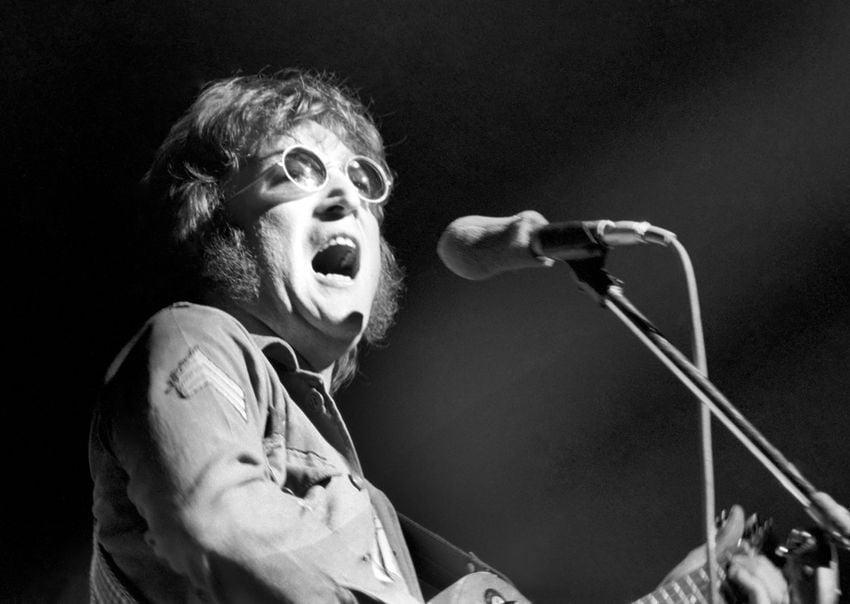
John Lennon lived through 40 years of anything but normality. He was arguably the Beatle with the most wit, charm and mystique, but behind this affable veneer of good humour was a psychologist’s dream patient.
Lennon was set to be a little different from his very early childhood. As with anyone, our formative years as a child tend to be of the most over-arching factors in who we become in later life. Our insecurities, relationship tendencies, friendships and behavioural demeanour can often be traced back to nurture.
Lennon suffered from maternal abandonment from the age of five when his mother, Julia Lennon, was put under increased pressure by her eldest sister Mimi Smith to give him up for care. Mimi repeatedly expressed to Liverpool Social Services her lack of confidence in Julia as a mother for John due to her “sinful” ways. It is still unclear just how fair Mimi’s accusations were regarding Julia, but it is likely that Mimi wasn’t happy with Julia’s fun-loving personality; she was known to be cheeky, good-humoured and impulsive – many traits that would later be attributed to her son.
In 1945, Lennon was finally forced into the care of his strict and prudent auntie Mimi who would take over parenthood with her husband, George Smith. While allowed to visit his mother regularly, Lennon became increasingly upset with the separation. Some 12 years later, Julia was killed by a drunk driving policeman when he was only 17; this was a source of severe trauma in Lennon’s life that would appear to be pushed to the back of his mind during the early years of success with The Beatles but emerged in his art later on with songs written about his feelings of abandonment like ‘Julia’ and ‘Mother’.
‘Mother’, the intense opener for Lennon’s debut solo album, John Lennon/Plastic Ono Band, builds into a screaming refrain of the word “mother”. This is the result of Lennon’s primal scream therapy sessions he had been undertaking under the guidance of the revolutionary psychologist Arthur Janov.
At the time, Lennon was revisiting his maternal abandonment and deemed it the source of his neurological struggles. While undertaking a four-week course with Janov, Lennon invited his wife Yoko Ono to join him. She once described the experience: “You really feel every painful moment of your life – it’s excruciating, you are forced to realise that your pain, the kind that makes you wake up afraid with your heart pounding, is really yours and not the result of somebody up in the sky.”
The remainder of John Lennon/Plastic Ono Band visits a series of different topics, including religion, war and politics, but for its short, one-minute closer, My Mummy’s Dead, Lennon returns to the opening topic. The song returns to his lamentation with the conclusive words: “I can’t explain/ So much pain/ I could never show it/ My mummy’s dead”.
According to the book Lennon on Lennon: Interviews and Encounters, he discussed his parents during a 1971 interview. “The thing we all seem to greatly fear is to show the want we have of love from other people, especially parents,” Lennon explained.
“To feel it and acknowledge it in your mind: ‘No, they didn’t want me. That is a fact. I was not wanted. No wonder I feel shit,’” Lennon continued. “’Cause I couldn’t explain it as a child. You just know that something is not right, something is not there. And that is the big trauma, to experience that.”
“And especially the middle-class people who have nice, imagey parents, smiling and all dolled up,” He added. “They’re the ones that have the biggest struggle to say, ‘Goodbye, Mommy, goodbye, Daddy. I never had you, and I must realise that I never had you, and I never will’.”
The song was purposefully sculpted as a haunting nursery rhyme pastiche. The basic melody copies the children’s classic rhyme Three Blind Mice, and according to Lennon, it was inspired by the haiku poem format. “‘My Mummy’s Dead’. It was just a feeling,” Lennon recalled in the 1971 interview. “It was almost like a haiku poem. Actually, I got into haiku in Japan just recently. I think it’s fantastic. God, it’s beautiful.”
Listen to John Lennon’s ‘My Mummy’s Dead’ below.
All the latest stories about The Beatles from the independent voice of culture.
Straight to your inbox.
